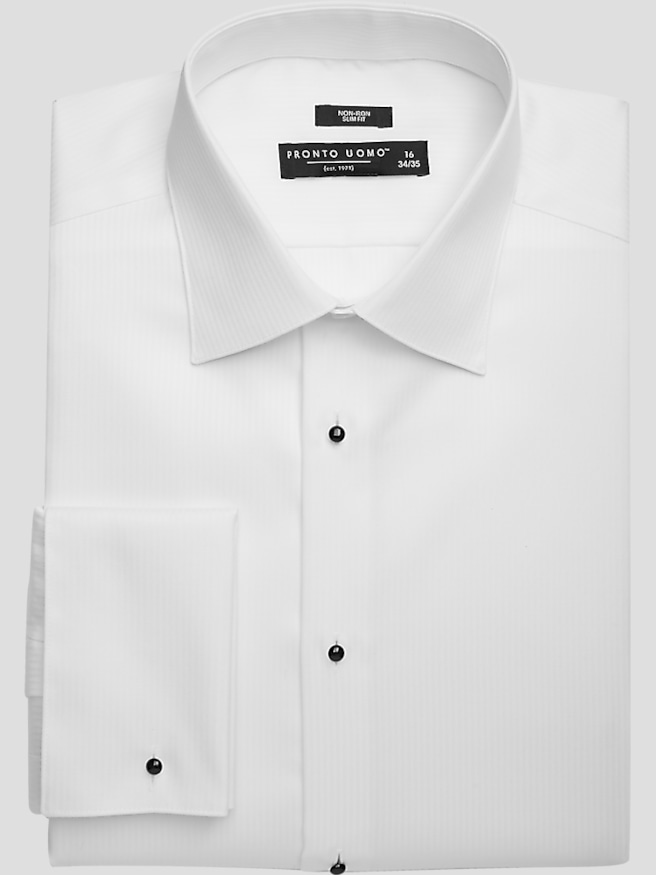
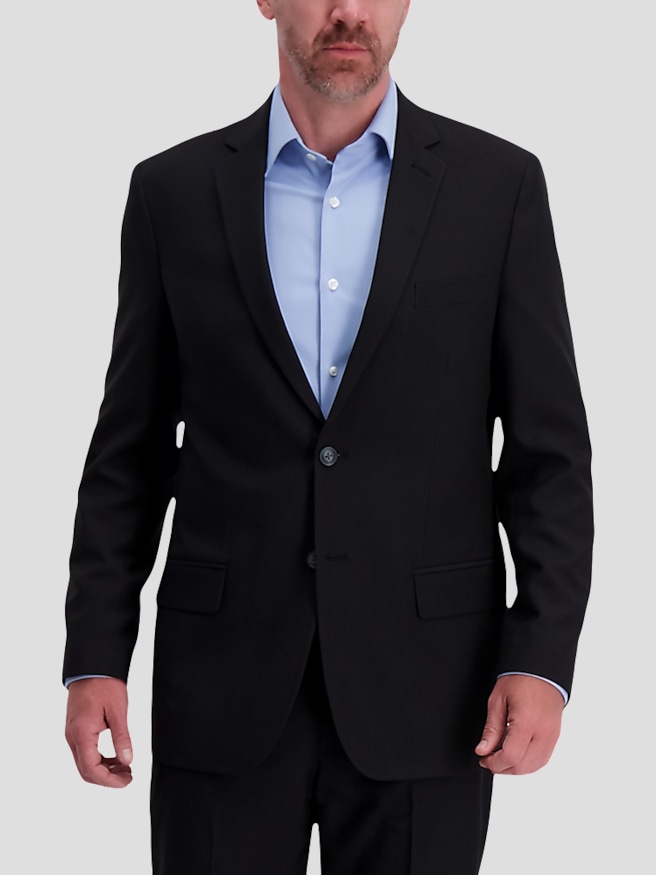
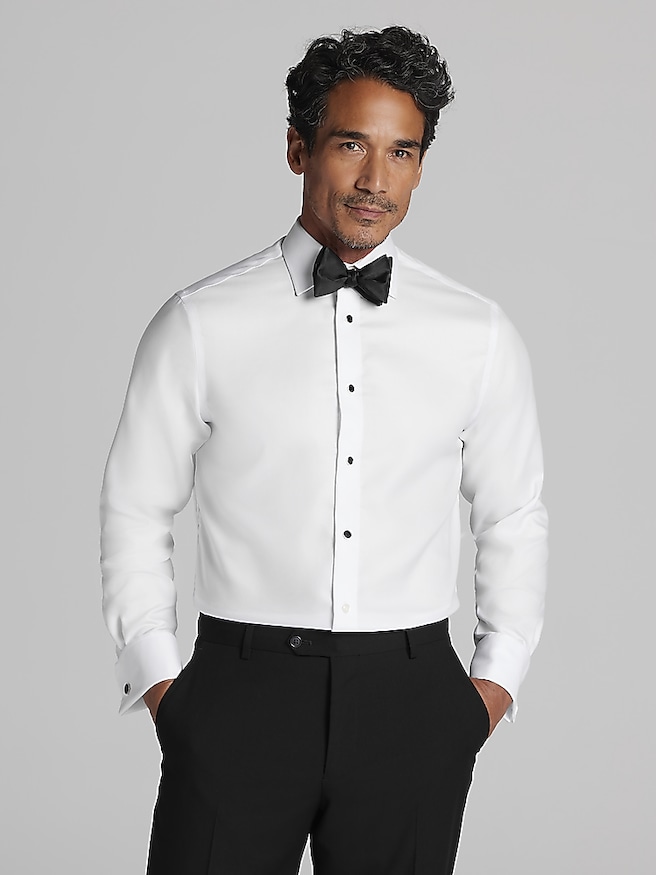
Black and white wedding outfits for guests bring together crisp contrast, familiar tailoring, and a polished appearance that suits many wedding settings. For men, a predominantly black outfit with a white dress shirt is generally appropriate when it matches the invitation’s dress code and any requests from the couple. The distinction is between wearing white as an accent and wearing an outfit that looks predominantly white or bridal. A black suit with a white shirt keeps that balance clear, while a black tuxedo with a white formal shirt belongs at celebrations that call for black tie. Black and white is a color combination, not a dress code in itself: a monochrome invitation might call for cocktail attire, formal attire, or a more relaxed interpretation, and each calls for a distinct level of tailoring. At a cocktail reception, a black suit, white shirt, and textured black tie can look polished without the ceremonial details of a tuxedo. At a black-tie wedding, satin lapels, a black bow tie, and formal footwear create the expected evening appearance. A white dinner jacket makes a stronger statement and is best reserved for an occasion where the dress code or couple’s preferences clearly welcome it. For guests attending a ceremony followed by dinner and dancing, the appeal of this palette is its continuity: the same combination looks composed in family photographs, at the table, and on the dance floor. Black provides a clear visual foundation, while white brightens the face and gives the collar and cuffs definition. Those drawn to a darker overall look can also find related styling possibilities in Black Wedding Outfits. Whether the setting is a hotel ballroom, a restaurant reception, or a place of worship, the most successful guest attire respects the celebration without looking like an attempt to join the wedding party. Matching the requested formality matters more than adding extra decoration.
Fabric and fit determine how black and white wedding guest attire feels over several hours, not just how it looks in a photograph. Wool suiting offers drape, breathability, and natural resilience, making it a useful foundation for tailored clothing intended for repeated wear. Wool blends can offer a balance of structure and easier upkeep, although the fiber content and care label matter more than a broad fabric description. A matte black fabric creates a restrained appearance, while subtle woven texture adds depth without interrupting the two-color palette. Under a jacket, white cotton shirting provides a clean contrast; poplin has a smooth surface, while twill adds a fine diagonal texture and often a slightly fuller hand. Fabric opacity deserves attention because a thin white shirt can reveal more than expected under strong lighting. An undershirt close to the wearer’s skin tone can be less noticeable than bright white beneath lightweight shirting. Fit brings these materials together. Jacket shoulders should sit cleanly without extending beyond the natural shoulder line, and the front should close without pulling into an X around the button. Sleeves that reveal a narrow band of shirt cuff give the black-and-white contrast a deliberate finish. Trousers should hang smoothly through the seat and thigh, with enough room for sitting through a ceremony or stepping onto a crowded dance floor. Slim, tailored, and classic fits describe different proportions rather than different levels of dressiness; the right choice follows the wearer’s build and preferred amount of ease. A closer cut should still allow comfortable movement, while a roomier cut can look equally sharp when the length and waist are well adjusted. For a guest who expects to stand for photographs, sit through dinner, and move between reception spaces, balanced tailoring is more useful than an especially tight silhouette. Alterations to trouser hems, sleeve length, or the waist can make familiar separates feel much more considered, particularly when the clean palette leaves fit in clear view.
Accessories give black and white wedding outfits their final character without requiring another color. A white pocket square with a simple straight fold reinforces the shirt’s crispness, while a black tie with a quiet woven texture adds interest against smooth suiting. A small-scale black-and-white pattern can work well at a cocktail wedding, provided it does not compete with a patterned shirt or an elaborate jacket finish. For formalwear, the relationship between the shirt collar, bow tie, and lapels deserves particular attention: each should feel proportionate rather than oversized or crowded. Footwear should reflect the same level of formality as the clothing. Polished black leather lace-ups complement a suit, while formal black shoes suit a tuxedo; a clean finish and comfortable fit matter throughout a long reception. Socks that maintain the dark line of the trousers keep the transition to the shoes unobtrusive when seated. A restrained watch or simple cuff links can supply a personal detail, especially for a close relative or longtime friend celebrating an important occasion. These smaller accessories can also make thoughtful gifts for someone preparing to attend several weddings, since they can complement tailored clothing already in a wardrobe. Lasting usefulness depends on care as much as styling. Jacket and trouser labels establish the appropriate cleaning method, and unnecessary cleaning can be avoided by airing garments after wear and addressing marks promptly according to fabric instructions. A shaped hanger supports a jacket’s shoulders, while careful trouser storage helps preserve the crease. White shirts benefit from attention to the collar and cuffs before discoloration becomes established, with laundering and pressing matched to the fabric. Shoes kept clean and stored with suitable support are better prepared for the next invitation. With thoughtful proportions, compatible textures, and consistent care, black-and-white guest attire can serve celebrations well beyond a single wedding, retaining the understated character that makes the combination so dependable.