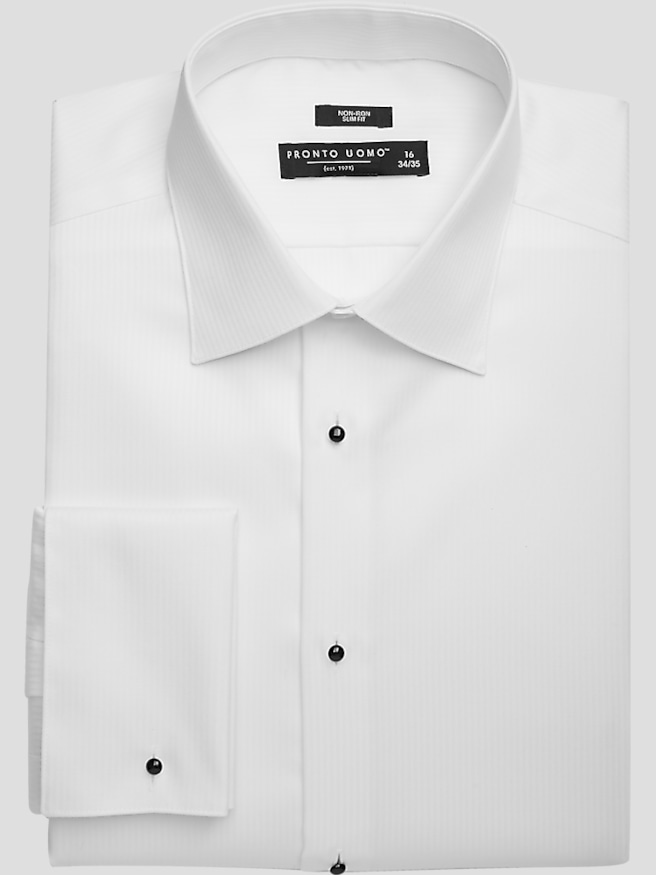
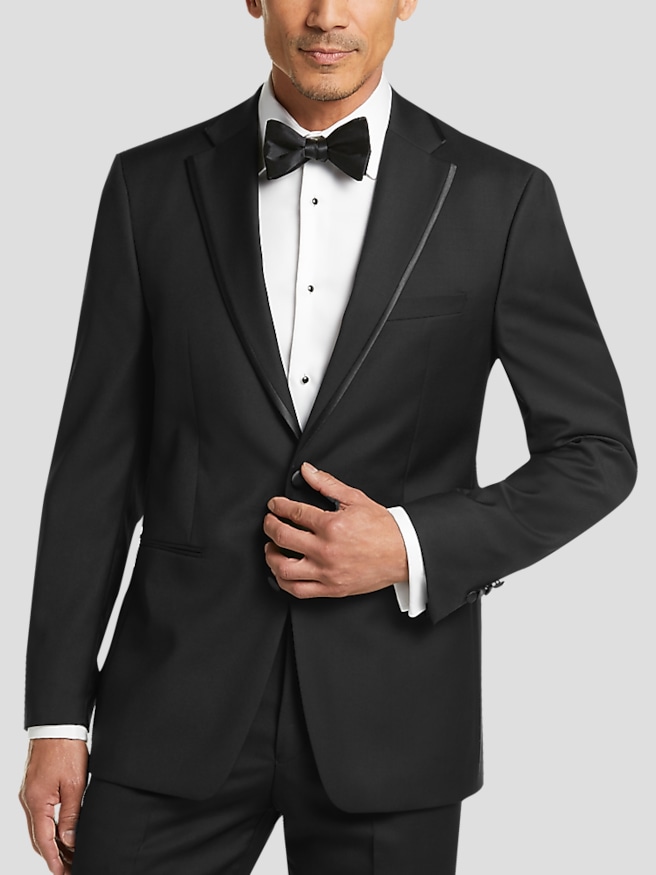
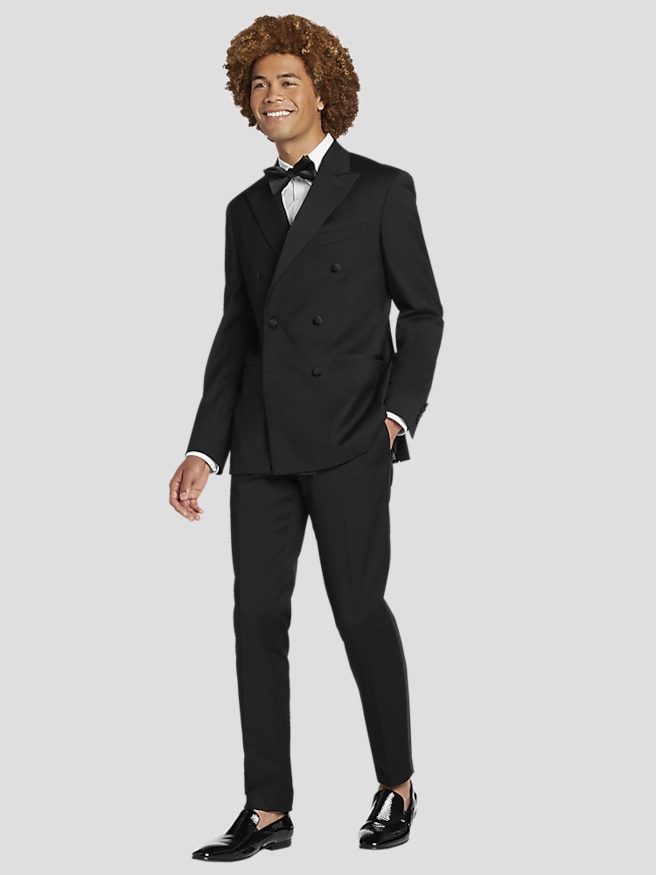
A black and white wedding tuxedo brings a clear sense of occasion to the aisle, balancing crisp contrast with the quiet detail that distinguishes formal clothing. Against a white dress shirt, a black jacket creates a clean frame for the face, while satin or grosgrain lapel facings catch the light without overwhelming the rest of the outfit. The effect works especially well for a groom, a wedding party, or a guest attending a celebration with a black-tie dress code. A white or ivory dinner jacket paired with black formal trousers offers another interpretation, putting more emphasis on the jacket while keeping the overall palette restrained. The invitation and the couple’s preferences should shape that choice, particularly when the wedding party has a coordinated look. Within this simple color scheme, small design decisions carry considerable weight. A peak lapel gives the chest and shoulders a more defined outline; a shawl collar draws a smooth, continuous curve down the front of the jacket. A notch lapel feels closer to familiar suit styling, while peak and shawl designs have a stronger connection to traditional eveningwear. The shirt contributes just as much character. A pleated front adds texture, a bib front creates a distinctly formal center panel, and a clean front keeps attention on the jacket and bow tie. A white pocket square can echo the shirt without matching every accessory, and a carefully placed boutonniere adds a personal accent near the lapel. In wedding photographs, those restrained choices help keep the focus on expressions and the people wearing the clothes. Matching shades also deserves attention: bright white and soft ivory can look noticeably different when placed together. Checking the jacket, shirt, and accessories side by side helps establish whether that contrast feels intentional. The strongest combinations do not require every surface to shine; a matte bow tie or textured pocket square can give polished lapels enough breathing room.
Fabric and fit determine how a tuxedo feels through the full celebration, from standing for portraits to sitting through dinner and moving across the dance floor. Wool is a traditional foundation for formal tailoring because it drapes cleanly, responds well to careful pressing, and has natural resilience that helps moderate everyday creasing. Wool blends can introduce additional strength or stretch, though the exact fiber content and construction matter more than any single fabric label. A small amount of stretch may ease movement, but it cannot compensate for a jacket that pulls across the back or trousers that bind at the seat. Lining, seam finishing, and the structure inside the chest also influence comfort and how well the silhouette holds its shape. The shoulder seam should sit near the natural shoulder edge, with the sleeve falling smoothly rather than collapsing or projecting outward. When the jacket is fastened, the front should lie relatively flat, without pronounced diagonal lines radiating from the button. A little shirt cuff showing beneath the sleeve creates a deliberate finish and gives cufflinks room to be seen. Trousers should sit securely at the intended waist position, hang cleanly through the thigh, and meet the shoes with a controlled break rather than a stack of excess fabric. Slim, modern, and classic fit descriptions provide a starting point, but proportions vary, making actual movement an important test. Reaching forward for a handshake, sitting in a chair, and bending an arm can reveal restrictions that a still pose misses. For a wedding party with varied builds, consistent lapel styling, shirt color, and accessories can create cohesion without forcing everyone into an identical silhouette. Alterations to sleeve length, trouser hems, and waist shaping often make a more meaningful visual difference than choosing the narrowest cut. Allowing time for a final fitting with the intended shirt and shoes helps establish accurate proportions and reduces distractions on the wedding day.
Accessories complete the black and white palette most effectively when they support the level of formality rather than compete for attention. A black bow tie remains a familiar partner for a traditional tuxedo, with a self-tied version offering a slightly irregular shape that feels personal rather than rigid. A cummerbund or formal vest can cover the waistband in a traditional ensemble; the two are generally alternatives, not layers to wear together. Tuxedo trousers often use side adjusters or accommodate suspenders instead of relying on a visible belt, preserving the uninterrupted line beneath the jacket. Black patent leather shoes provide a glossy finish, while well-polished smooth leather can give the outfit a quieter appearance where the dress code allows. Dark dress socks long enough to cover the calf help maintain that line when seated. Cufflinks and shirt studs look considered when their metal tones coordinate, and either can make a thoughtful keepsake for a groom or wedding-party member, provided the shirt is designed to accommodate them. For a darker interpretation of formal wedding dressing, an All Black Tux For Wedding offers a useful contrast to the bright shirt and jacket combinations associated with a black and white palette. Whatever the styling direction, careful upkeep helps formalwear retain its shape for future ceremonies, galas, and other dress-code occasions. Follow each garment’s care label, and use a professional cleaner experienced with formal fabrics when cleaning is needed. Lapel facings can react differently from the main cloth, so direct ironing or improvised stain treatments may leave marks or alter their finish. After wearing, empty the pockets and let the jacket air before storing it on a broad, shaped hanger. Hang trousers neatly to preserve the crease, and use a breathable garment bag once everything is clean and dry. Before the next event, check buttons, hems, and seams, then inspect the shirt and shoes as carefully as the jacket. Those modest habits help keep the entire outfit looking deliberate, not merely dressed up.