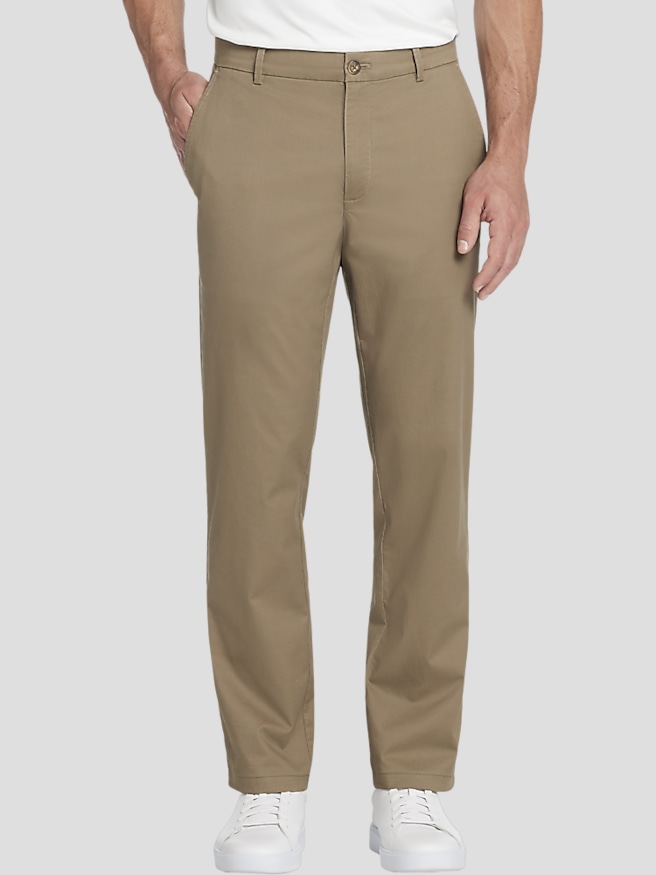
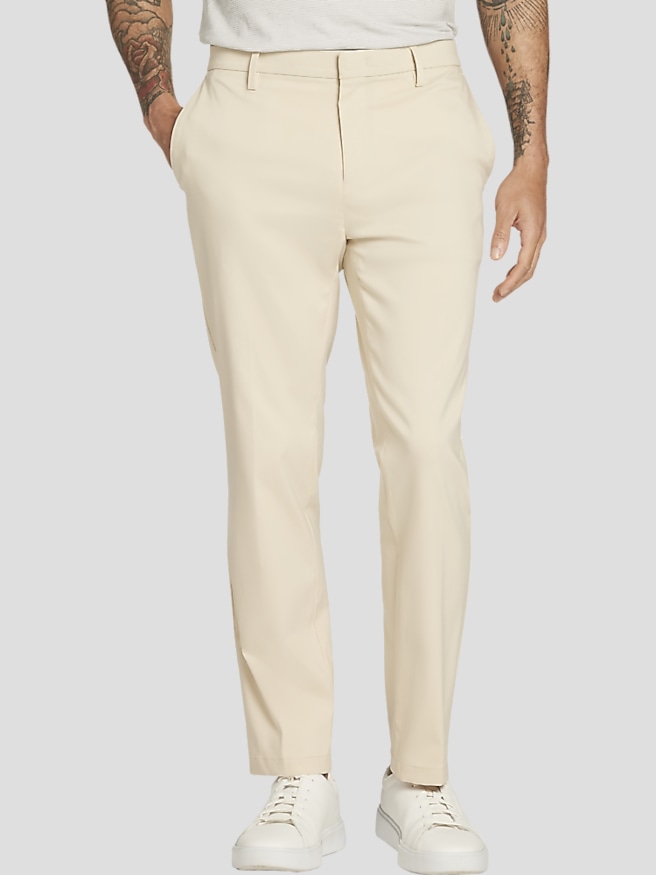
Black stretch chinos are casual trousers typically made from cotton twill blended with a small amount of spandex, also called elastane, for added flexibility. They combine the clean appearance of chinos with extra give for sitting, walking, bending, and moving through a full day. Their black color makes them easy to coordinate with shirts, knitwear, and jackets, while the subtle diagonal texture of twill gives the fabric more character than a flat, smooth finish. Compared with traditional denim, chinos generally have a cleaner pocket layout and a less rugged appearance; compared with suit trousers, they usually feel more casual and are intended to be worn on their own. Cotton contributes softness and breathability, while stretch fibers help the fabric move with the body. Some fabric blends also contain polyester or other fibers that can influence drying time, wrinkle resistance, and shape retention. The fiber label provides useful information, but stretch percentage alone does not determine comfort. Fabric weight, weave, and the cut of the trousers all affect how they feel after several hours of wear. A lighter twill may drape softly, while a more substantial fabric can create a firmer outline through the leg. Good stretch recovery helps the knees and seat return closer to their original shape after movement rather than staying stretched out. Neat seams, securely attached buttons, and well-finished pocket openings also contribute to everyday durability. Belt loops and discreet back pockets reinforce the familiar chino appearance without adding much visual bulk. Black stretch chinos suit men who want something more polished than jeans without the structure of tailored dress trousers, whether the day involves a desk, a commute, or several stops between appointments. The appeal comes from that balance: recognizable trouser styling, a versatile dark color, and enough flexibility to make ordinary movement feel natural.
Fit determines whether black stretch chinos look sharp and feel comfortable, regardless of how much give the fabric provides. The waistband should sit securely without digging in or depending on a tightly fastened belt to stay in place. Through the seat and thighs, the fabric needs enough room for sitting comfortably, with pockets that lie reasonably flat instead of pulling open. Stretch should support the fit, not compensate for a size that is too small. Slim cuts follow the leg closely and work well for a narrow silhouette, while straight cuts maintain a more consistent line from the thigh toward the hem. Athletic cuts generally provide additional space through the seat and thighs, often narrowing below the knee. The exact proportions vary, so familiar waist and inseam measurements are useful starting points rather than a complete description of fit. A man with fuller thighs may prefer extra room above the knee even when he likes a tapered ankle. Someone who spends long hours seated may value a little more ease through the waist and rise. Rise also changes where the waistband rests and how neatly a tucked shirt stays in place. At the hem, a slight break over the shoe creates a traditional finish, while little or no break gives the leg a cleaner, more streamlined appearance. Excess fabric pooling around the ankle can interrupt either look. Within the broader category of Black Stretch Pants, chinos offer a recognizable cotton-twill character that works especially well with business-casual and relaxed clothing. A white button-down shirt, black leather shoes, and a coordinated belt create a straightforward office outfit. A light blue polo and loafers feel less formal without looking careless. For dinner or an informal gathering, a fine-gauge knit and clean sneakers keep the outfit comfortable and considered. Black also provides a steady backdrop for textures such as an Oxford shirt, a knit polo, or a softly structured jacket. These combinations let the trousers move between settings without suggesting that chinos replace a suit when an invitation calls for formal attire.
Keeping black stretch chinos looking their best involves protecting both the dark color and the flexible fibers. The care label takes priority because fabric blends, finishes, and construction can call for different treatment. When machine washing is permitted, turning the trousers inside out and washing with similar dark colors can help limit visible abrasion and unwanted color transfer. Cold water and a gentle cycle are often suitable choices when allowed by the label. A detergent intended for dark clothing may help maintain the appearance of black fabric, while bleach can damage its color and should be avoided unless the care instructions specifically permit it. High heat can be hard on stretch fibers, so drying settings deserve as much attention as the wash cycle. Air drying away from direct sunlight or tumble drying on low heat may be appropriate, depending on the garment’s instructions. Removing the trousers promptly and smoothing the legs can reduce deep wrinkles before they set. If pressing is permitted, the recommended iron setting and a pressing cloth can help avoid an unwanted shiny finish. Everyday habits matter, too: overfilled pockets can distort the shape, and repeated friction from a rough bag or chair can wear the same area over time. Folding along a consistent line or hanging neatly helps preserve the silhouette between wears. For frequent commuters, office workers, students, and men who prefer a compact wardrobe, these trousers offer an adaptable foundation rather than a single-occasion outfit. They can also make a practical gift for someone whose waist, inseam, and preferred fit are known, particularly a graduate building a work wardrobe or someone refining an everyday routine. The most useful pair is one that suits the wearer’s actual habits, from sitting through meetings to walking across campus, with a comfortable waistband, an appropriate leg shape, and care requirements that fit naturally into daily life.