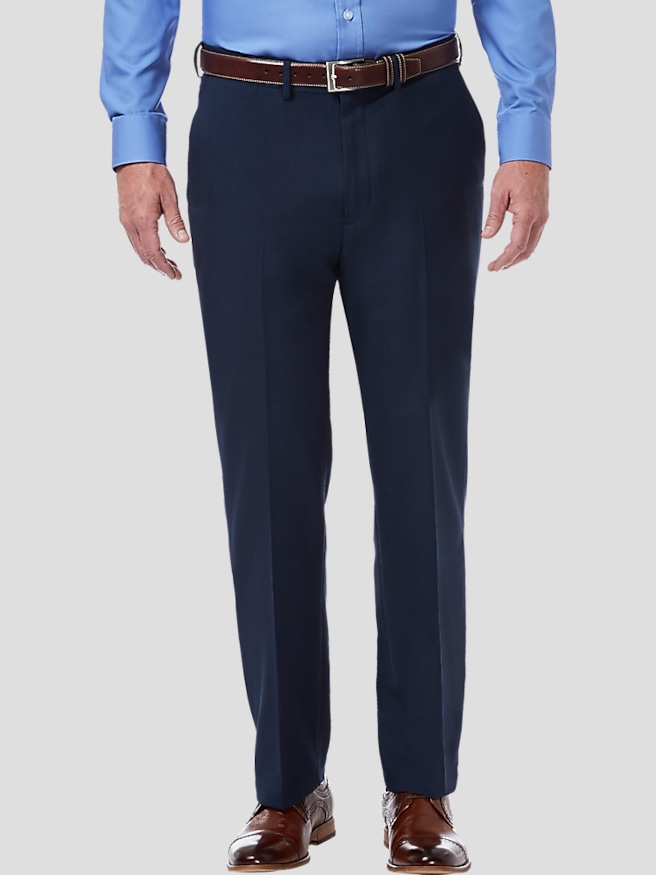
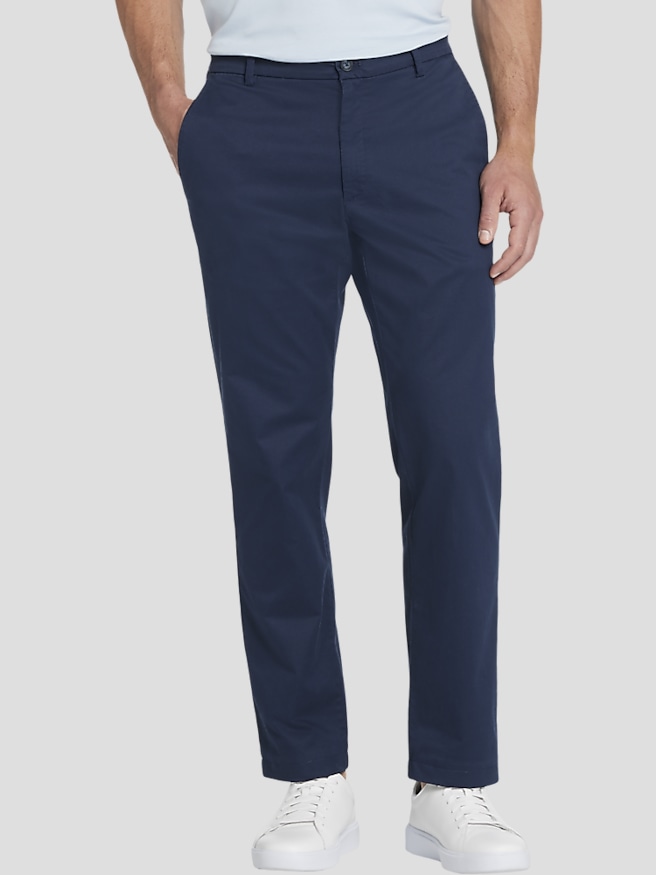
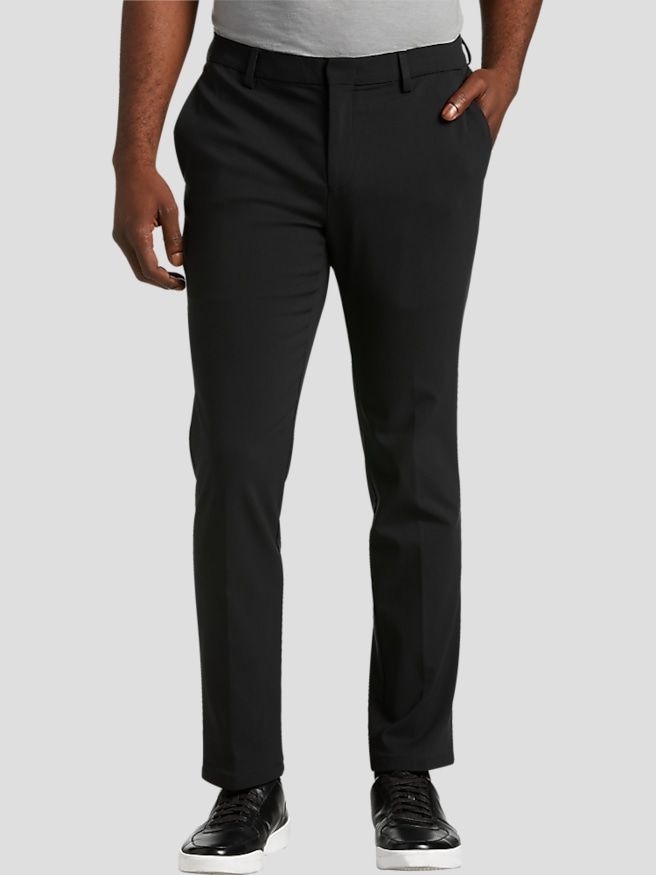
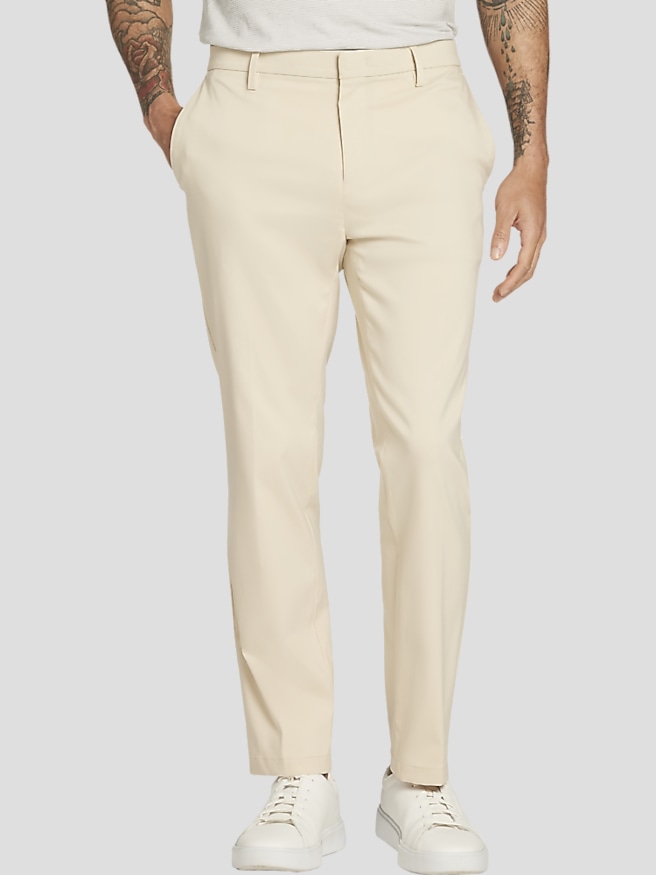
Men’s stretch chinos combine the clean appearance of casual tailored pants with fabric that gives during everyday movement. Their familiar shape bridges the space between jeans and dress pants: neat enough for many business-casual settings, relaxed enough for a neighborhood dinner, and comfortable for the hours spent sitting, walking, and getting from one place to another. Traditional chino fabric is typically a cotton twill, recognizable by its subtle diagonal weave. Stretch versions often blend cotton with a small amount of elastane or spandex, adding flexibility while keeping the surface smooth and structured. Cotton contributes a soft, familiar feel, while the stretch component allows the fabric to move more easily across the hips, thighs, and knees. Some blends also include polyester or other fibers that can affect drying time, wrinkle resistance, and shape retention. The full fabric composition matters more than the stretch percentage alone; weave, fabric weight, and construction all influence how a pair feels after several hours of wear. A small amount of stretch can provide noticeable give without making chinos look or feel like athletic pants. Recovery matters, too: fabric that returns toward its original shape helps limit the loose knees and sagging seat that can develop with repeated wear. Two-way stretch generally provides give along one axis, while four-way stretch provides give in both directions, although the amount and feel vary by fabric. Neither description alone establishes softness, breathability, or durability. Performance features such as moisture management or wrinkle resistance depend on the individual garment and should be confirmed in its details rather than assumed from the word “stretch.” For someone moving between a desk, a commute, and an evening out, the appeal is straightforward: a waistband and leg that accommodate movement, paired with the familiar pockets, belt loops, and finished appearance of everyday chinos. That balance makes stretch chino pants useful for men who want a polished outfit without the formality of dress trousers or the heavier feel of denim.
Fit determines whether that flexibility translates into lasting comfort. Men’s slim-fit stretch chinos generally follow the leg more closely, creating a narrower outline through the thigh and lower leg. Straight fits offer a more consistent line from the knee toward the hem, while athletic fits typically provide additional room through the seat and thighs before narrowing below the knee. Fit names vary, so the actual cut and measurements matter more than the label. Stretch should complement an appropriate fit, not compensate for a waistband that digs in or thighs that pull tightly when seated. A comfortable pair lies smoothly across the front, allows the pockets to stay relatively flat, and leaves enough room to bend without excessive tension at the seams. Rise also changes the feel: a lower rise sits farther down the hips, while a higher rise can provide more coverage when sitting and a steadier foundation for a tucked shirt. Inseam length and leg opening influence the finished appearance just as much as waist size. A hem with little or no break creates a clean line over loafers or low-profile sneakers; a slight break can look natural with lace-up shoes and a straighter leg. Color gives the same basic shape several distinct roles. Khaki and stone create an easy contrast with navy shirts, while olive works well with white, cream, and blue. Navy and charcoal offer darker alternatives that pair naturally with woven shirts, knit polos, and unstructured jackets. Black stretch chinos provide a particularly simple foundation for a crisp white shirt, a textured polo, or a fine-gauge sweater. A matte finish and restrained pocket details help the outfit stay understated. Chinos can look at home with a tucked button-down and leather belt at the office, then take on a more casual character with an untucked shirt and clean sneakers. They are not a substitute for formal trousers when an occasion calls for a suit, but they cover a broad range of settings where denim feels too casual.
Durability comes from the relationship between fabric, fit, construction, and care rather than stretch content by itself. Even stitching, secure pocket openings, and a waistband that sits comfortably all contribute to pants that hold up to regular use. Enough room through the seat and thighs also reduces unnecessary strain on seams, especially during long periods of sitting. Cotton-rich chinos may develop a softer hand with washing, while darker colors can gradually show wear at pocket edges and other high-contact areas. Care instructions should reflect the specific blend and finish. For machine-washable chinos, turning them inside out and washing with similar colors can help limit surface abrasion and color transfer. The care label remains the best reference for water temperature, drying method, and ironing limits. Excessive heat can affect elastic fibers, so a hotter wash or dryer setting is not automatically better for getting pants ready to wear again. Prompt removal after washing or drying, followed by smoothing and hanging, can reduce set-in creases; pressing, when permitted, can restore a neater finish around the waistband, pockets, and hems. A crease down the leg is a styling choice rather than a requirement, and many chinos look natural with a smooth, uncreased front. Rotating between pairs and addressing small repairs early can help distribute wear rather than concentrating it on one garment. These practical qualities also make stretch chinos a thoughtful clothing gift for a father, partner, or adult son whose wardrobe needs to work across several everyday settings. Waist size, inseam, preferred rise, and usual leg shape are more useful starting points than a general size alone, especially for someone who already has a favorite fit. A familiar neutral color is often easy to pair with existing shirts and shoes. Whether worn for office hours, a graduation gathering, a restaurant dinner, or an afternoon spent visiting family, well-fitting stretch chinos offer a consistent combination of movement, tidy lines, and straightforward care.