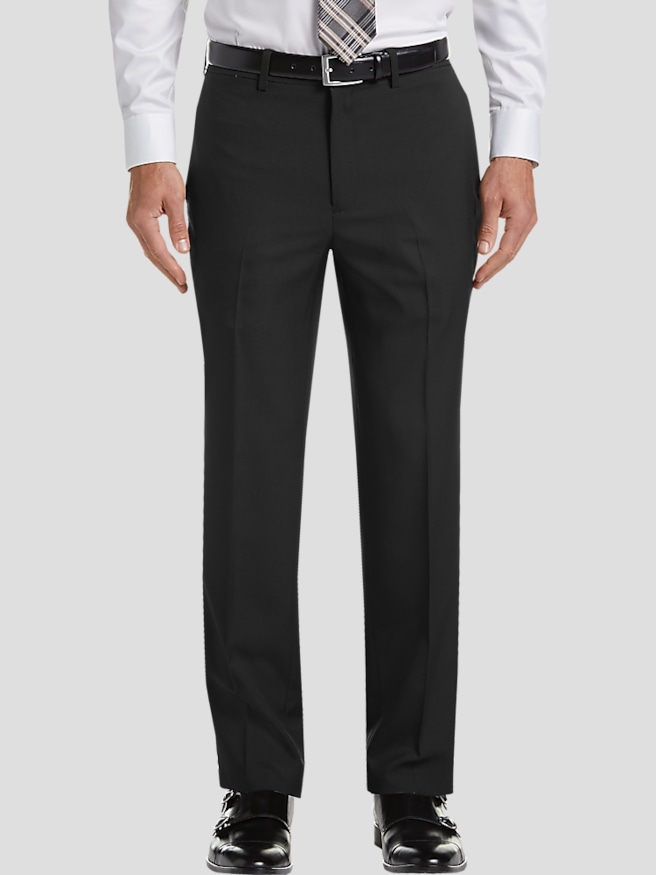
Black stretch pants bring together a clean, versatile color and the ease of fabric that moves with the body. That combination makes them a practical foundation for days that shift between a commute, a desk, an evening reservation, and a few hours on foot. Black provides a quiet backdrop for everything from a crisp white shirt to a textured sweater, while stretch can make sitting, bending, and climbing stairs feel less restrictive. The overall effect depends on the fabric and construction: a smooth, finely woven pair can look polished beneath a sport coat, while a cotton-rich style with visible texture feels more relaxed with an overshirt and leather sneakers. Cotton blends often have a familiar, breathable feel, and fabrics containing polyester or nylon may offer useful resilience for frequent wear. Elastane, also called spandex, adds flexibility, though the percentage alone does not tell the whole story. The weave, fabric weight, and ability to recover after movement all influence how pants feel through a full day. Some fabrics stretch mainly across the body, while others allow movement in multiple directions; the right balance depends on whether the priority is a tailored appearance, easy mobility, or a bit of both. During the cooler months, a more substantial fabric can sit comfortably alongside wool layers and boots without looking out of place indoors. Lighter constructions may suit heated offices or people who prefer less weight under a long coat. For a casual interpretation of the same color and comfort, Black Stretch Chinos offer a related direction, with the familiar character of chino styling. Across these variations, black stretch pants work best as everyday clothing with a clear purpose: looking composed without making ordinary movement feel like an afterthought. They suit office wardrobes, travel outfits, and evening plans where denim feels too casual but a full suit would be more than the occasion calls for.
Fit gives black stretch pants much of their character, and added flexibility should complement the cut rather than compensate for a size that feels too tight. A well-proportioned pair rests securely at the waist, lies smoothly across the seat, and leaves enough room through the thighs for a comfortable stride. Pockets that flare open, strong horizontal pulling across the front, or a waistband that digs in while seated can signal that more room is needed. Slim cuts create a close, streamlined outline, especially with fine-gauge knitwear and a trim jacket, while straight cuts allow a little more space through the leg and work well with substantial shoes. A tapered shape offers another balance, leaving room higher on the leg before narrowing toward the ankle. Rise matters just as much as leg shape: where the waistband sits changes both seated comfort and the way a tucked shirt looks throughout the day. Length also affects the finish. A slight break over loafers or lace-up shoes creates a familiar tailored look, while a cleaner hem with minimal break can keep narrower legs from bunching above the shoe. Stretch fabric still benefits from thoughtful tailoring, particularly when the waist fits well but the hem needs adjustment. Styling can stay simple without becoming repetitive. A pale blue button-down and brown leather shoes soften the contrast of black pants, while a charcoal sweater and black boots create a more understated combination. Cream, burgundy, olive, and muted earth tones bring warmth during cooler weather without competing with the dark base. For work dinners or gatherings with a smart-casual dress code, a textured jacket can add definition without suggesting a matching suit. Black shades and fabric finishes do not always match, so a contrasting jacket often looks more intentional than pairing two nearly identical blacks. The occasion still sets the standard: stretch pants can support a polished outfit, but they do not automatically replace suit trousers when formal attire is expected.
Long-term satisfaction comes from how black stretch pants hold their shape and color as much as how they feel on the first wear. Areas such as the seat, knees, pocket edges, and inner thighs handle repeated movement and friction, making sound construction and suitable fabric important for regular rotation. Neat stitching, securely attached closures, and pockets that lie flat contribute to a dependable everyday pair. Fabric recovery matters, too: pants that relax with movement should return reasonably close to their original shape rather than remain baggy at the knees. No stretch blend is immune to wear, and a close fit that keeps seams under constant tension can shorten its useful life. Care requirements vary, so the sewn-in label is the best starting point; some styles are washable, while others need professional cleaning. For machine-washable fabrics, turning pants inside out, washing with similar dark colors, and using the recommended water temperature can help protect the surface and limit visible fading. Excessive heat may affect elastic fibers, making careful drying especially important. Pressing instructions deserve the same attention, since high heat or direct contact with an iron can leave shine on some dark fabrics. A suitable pressing cloth and the correct temperature can help preserve a smooth finish when ironing is permitted. Between wears, hanging pants neatly gives wrinkles time to ease and keeps the hem from becoming crumpled at the bottom of a drawer. Black also tends to show pale lint and pet hair, so a quick pass with a clothing brush or lint roller can make a noticeable difference before leaving home. These practical details matter for anyone building a reliable work wardrobe, packing for a trip, or choosing clothing for a busy schedule. Black stretch pants can also make a useful gift for someone starting a new office role or refreshing everyday essentials, particularly when their preferred size, rise, and leg shape are known. With fabric, fit, and care working together, they provide a versatile base that can move comfortably from daytime responsibilities to evening plans.