Comfort stretch pants combine the familiar shape of everyday trousers with fabric that gives as the body moves. For men who spend part of the day at a desk and the rest walking between appointments, commuting, or heading out to dinner, that flexibility can make a noticeable difference without sacrificing a polished appearance. The category spans casual chinos, tailored dress pants, and softer knit styles, with comfort coming from both the material and the construction. Cotton blends often have the familiar texture of chinos, while polyester blends can offer easy-care qualities and help maintain a neat silhouette. Wool-blend trousers can bring a refined drape to dressier outfits, and fabrics containing viscose may feel smooth against the skin. Elastane, also called spandex, adds stretch to many of these blends; some fabrics instead gain flexibility through their yarn structure or weave. Two-way stretch typically allows give in one direction, while four-way stretch allows movement both across and along the fabric. Neither description tells the whole story on its own. Fabric weight, surface texture, stretch recovery, and the cut of the pants all influence how they feel after several hours of wear. A small amount of stretch in a well-balanced woven fabric can be comfortable without feeling loose or overly soft. Recovery matters just as much as flexibility: fabric that returns toward its original shape helps limit bagging at the knees and seat. Smooth weaves tend to look dressier, while twill textures give casual pants a little more visual depth. For a work wardrobe, a clean surface and enough structure to hold a crease may be useful; for relaxed everyday wear, a softer finish and an easy drape may feel more appropriate. The most useful balance is fabric that accommodates sitting, reaching, and walking while preserving the appearance expected from the outfit.
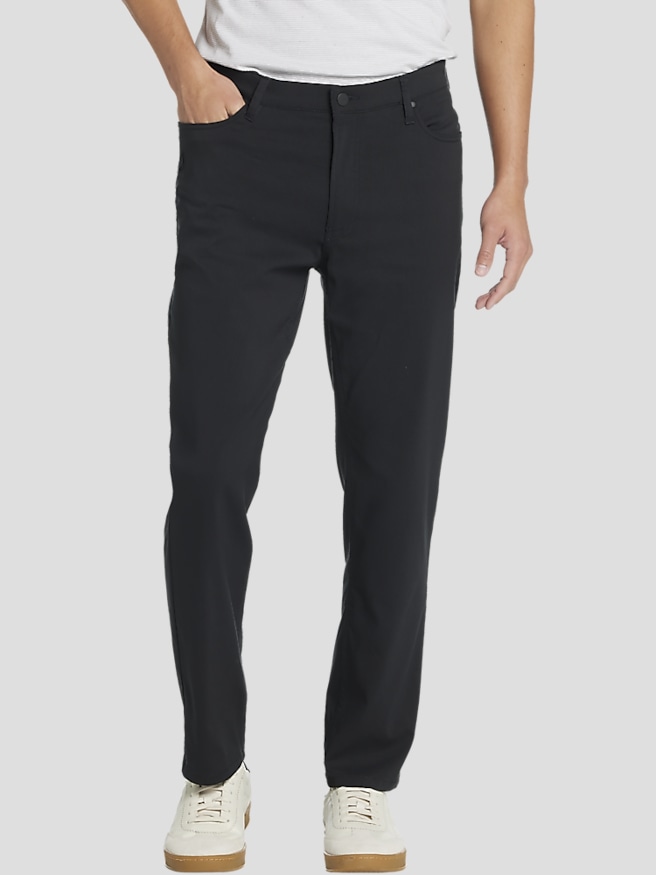
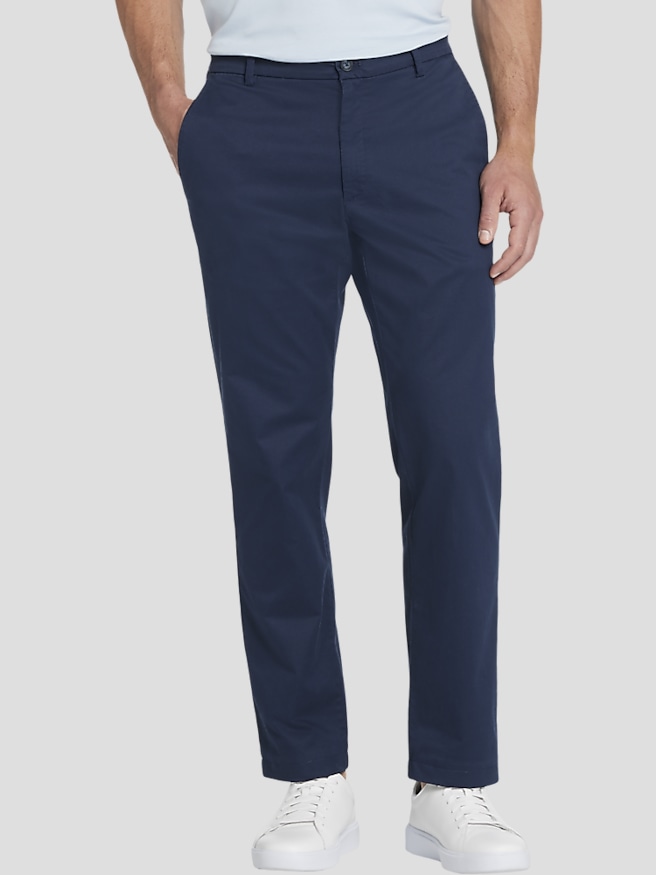
Fit gives comfort stretch pants their shape, and stretch works best as added flexibility rather than a substitute for the right size. A waistband should sit securely without digging in when seated, and the seat and thighs need enough room for a natural stride. Pulling across the front, pockets that flare outward, or fabric that gathers tightly behind the knees can signal that the proportions are too close. Slim-fit pants generally follow the leg more closely, straight-leg styles maintain a more consistent line, and roomier cuts offer additional space through the seat and thigh. Those descriptions can vary, so waist, inseam, rise, and leg opening provide useful context beyond the fit name. Rise is especially important for a long day: a waistband that sits comfortably while standing should also stay comfortable through a meeting, a drive, or a meal. Waistband construction adds another layer of choice. A traditional waistband gives a familiar tailored finish, while concealed elastic or a stretch waistband can add give without changing the overall look dramatically. Pocket placement and depth also affect daily wear, particularly when carrying a phone or keeping a wallet close at hand. Too much weight in the pockets can interrupt the drape even when the fit is otherwise right. At the hem, a slight break works with many dress shoes, while a cleaner, shorter line can suit loafers or streamlined sneakers. Color helps determine how easily a pair moves between settings. Navy, gray, and tan offer familiar starting points, while black stretch pants provide a versatile foundation for outfits built around light shirts, textured knits, or a coordinating jacket. A smooth trouser fabric pairs naturally with a tucked-in button-down and leather shoes; a more casual cotton blend feels at home with a polo or an untucked shirt. Keeping the shirt length, shoe shape, and pant opening in proportion makes the finished outfit feel considered rather than complicated.
For office days, business travel, casual gatherings, and dinners that call for something neater than athletic clothing, comfort stretch pants offer flexibility in both movement and styling. A long flight followed by a client meeting makes fabric recovery and resistance to visible creasing particularly useful, although stretch alone does not make pants wrinkle-resistant. Those qualities depend on the fiber blend, finish, and construction. Similarly, a soft knit can feel relaxed during hours of sitting, but a woven trouser may provide the sharper line needed for a more traditional workplace. Men building a smaller, practical wardrobe may get the most use from understated colors and simple details that work with several shirts and pairs of shoes. For someone who prefers a defined routine, a dependable fit can make getting dressed easier without making every outfit look identical. Comfort stretch pants can also be a thoughtful gift for a partner, father, or recent graduate preparing for a new job, especially when the recipient’s preferred measurements and fit are known. An existing pair that fits well provides a more useful reference than a waist size alone. Care helps preserve that comfortable fit over repeated wear. The garment’s care label takes priority, since washable cotton blends, technical fabrics, and wool blends may need different treatment. When machine washing is permitted, a gentle cycle and the recommended water setting can help protect the fabric; excessive dryer heat can damage stretch fibers and affect shape. Dry-clean-only trousers need the specified professional care rather than an assumed at-home substitute. Prompt attention to stains, sensible drying, and pressing only at an appropriate setting help maintain a clean finish. Well-finished seams, secure pocket openings, and neatly attached closures also contribute to durability where pants experience repeated movement and handling. With suitable fabric, a balanced fit, and care matched to the material, stretch trousers can remain a comfortable, polished part of a regular clothing rotation.