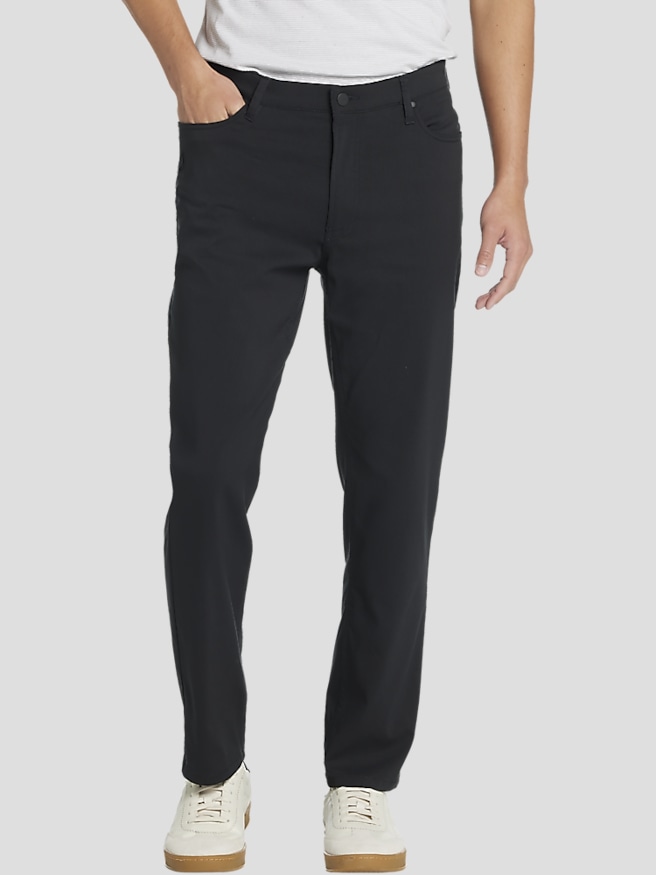
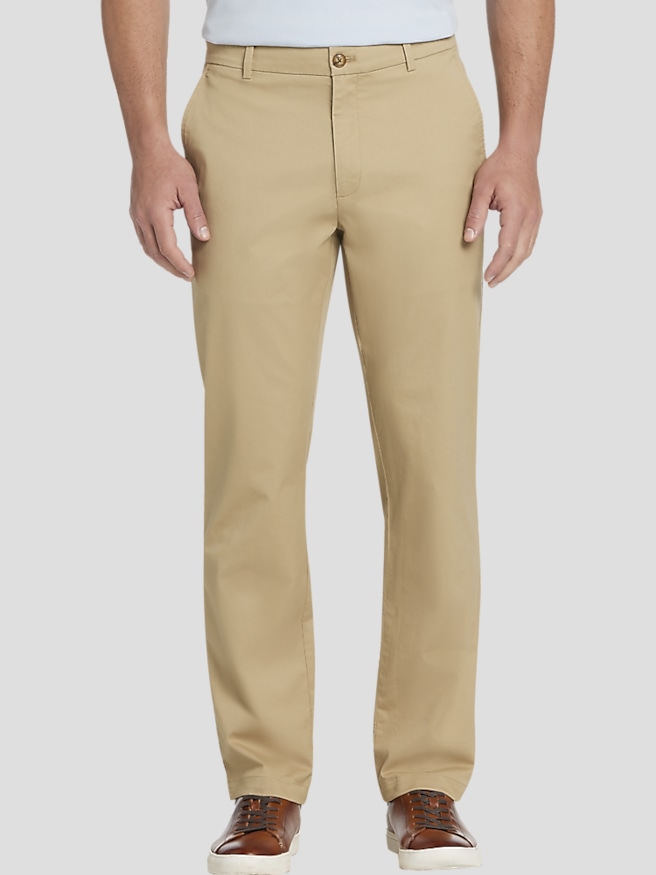
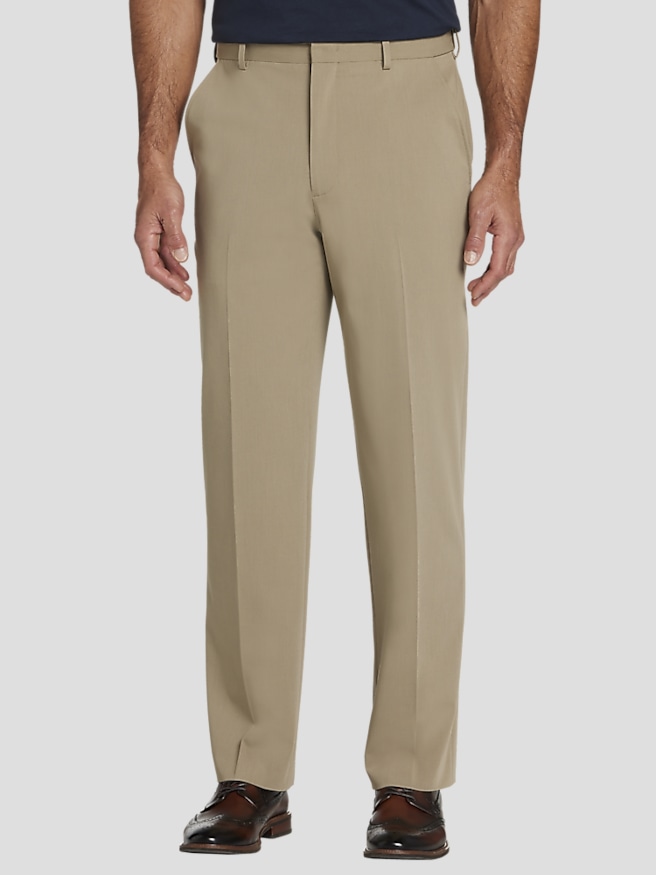
Stretch work pants combine the appearance of everyday workwear with fabric that gives as the body moves. For office and business-casual settings, that means trousers that look neat at a desk, feel comfortable on a commute, and allow room to bend, reach, or take the stairs without pulling across the waist or knees. Their defining feature is stretch, which may come from fibers such as elastane, also called spandex, or from the way the fabric is constructed. Two-way stretch generally allows movement along one axis, while four-way stretch allows movement both across and along the fabric. Neither description tells the whole story: the fabric’s weight, weave, softness, and ability to recover its shape also influence how the pants feel after hours of wear. Cotton-rich stretch twill often has a familiar, substantial hand that works well with casual office clothing. Polyester blends can contribute wrinkle resistance and shape retention, while wool blends can bring a more refined drape to dressier trousers. Nylon may add strength to certain performance-oriented fabrics, though durability depends on the complete construction rather than a single fiber. A small amount of stretch can be enough for comfortable movement; a higher stretch percentage does not automatically mean a better fit or a longer-lasting garment. Smooth fabrics with an even surface tend to read as dressier, while visible twill texture and heavier stitching create a more casual impression. These distinctions matter when the day includes both seated work and time on foot, such as moving between meeting rooms or welcoming clients. Stretch work pants span a broad category, but polished office styles serve a different purpose from protective workwear. Stretch alone does not establish abrasion resistance, flame resistance, or suitability for a job site. For professional settings without specialized safety requirements, the appeal is straightforward: a clean silhouette with enough flexibility to make ordinary movement feel less restricted.
Fit determines whether that flexibility feels useful throughout the day. Well-fitting men’s stretch work pants sit securely at the intended waist position, lie smoothly through the seat, and leave enough space through the thighs for sitting and walking. Stretch should support the fit rather than compensate for a cut that is too small. Horizontal pulling across the front, pocket openings that flare outward, or fabric that stays taut at the knees can indicate that more room is needed. A slim fit creates a closer line through the leg, a straight fit maintains a more consistent width, and an athletic cut typically provides additional room through the seat and thighs, often with a narrower lower leg. Those labels can vary, so waist, rise, inseam, and leg shape matter more than the name alone. The rise also affects comfort when seated: a waistband that feels fine while standing may press against the midsection during a long meeting or drive. A properly chosen inseam keeps excess fabric from gathering over the shoes and helps preserve the pants’ intended shape. A slight break at the shoe offers a traditional finish, while little or no break creates a cleaner, more contemporary line. Color and detailing further shape how the pants fit into a work wardrobe. Navy, charcoal, black, and medium gray pair easily with dress shirts and jackets, while khaki and other muted neutrals suit many business-casual offices. Flat fronts, discreet pockets, and restrained stitching generally look more polished than utility-focused details. Paired with a tucked-in shirt and loafers, stretch trousers can suit presentations and client lunches; with a knit polo and simple leather shoes, they can feel appropriate for a less formal workplace. For coordinated flexibility above and below the waist, Stretch Work Shirts complement pants designed for movement. The overall level of dress still depends on the workplace, and stretch trousers do not replace a matching suit when the occasion calls for one.
Long-term comfort also depends on how well stretch work pants retain their shape and finish. Recovery is especially important around the knees and seat, where fabric repeatedly extends during sitting, climbing stairs, and bending. Pants that return toward their original shape after movement tend to maintain a neater appearance than fabric that remains stretched out. Secure seams, firmly attached buttons, smoothly operating closures, and well-finished pocket openings are useful construction details to consider alongside fabric feel. Areas that experience friction, including the inner thighs and pocket edges, deserve particular attention over time. Care requirements vary by fiber blend, lining, and finishing treatment, so the care label is the most reliable starting point. Machine washing is appropriate only when specified, and cooler water and moderate handling may help protect the fabric’s appearance. Excessive dryer heat can damage elastic fibers and affect recovery; line drying or a lower-heat setting may be appropriate when the label permits. Some dressier constructions require dry cleaning, even when the outer fabric contains stretch. Ironing temperature matters as well, since a setting suitable for one fiber may be too hot for another component of a blend. Prompt attention to spills, emptied pockets before cleaning, and storage that avoids crowding can help reduce unnecessary wear and creasing. Wearing different pairs between cleaning cycles also gives each pair time to air out and makes it easier to follow its care requirements without rushing. For someone building a first professional wardrobe, returning to an office, or spending much of the workday moving between tasks, stretch work pants offer a practical balance of comfort and presentation. They can also make a useful gift when the recipient’s waist measurement, inseam, preferred rise, and usual fit are known. Familiar colors and an appropriate cut are more meaningful than stretch alone: the most useful pair is one that fits the person’s work, feels comfortable through a full day, and remains easy to coordinate with the clothing already in the closet.