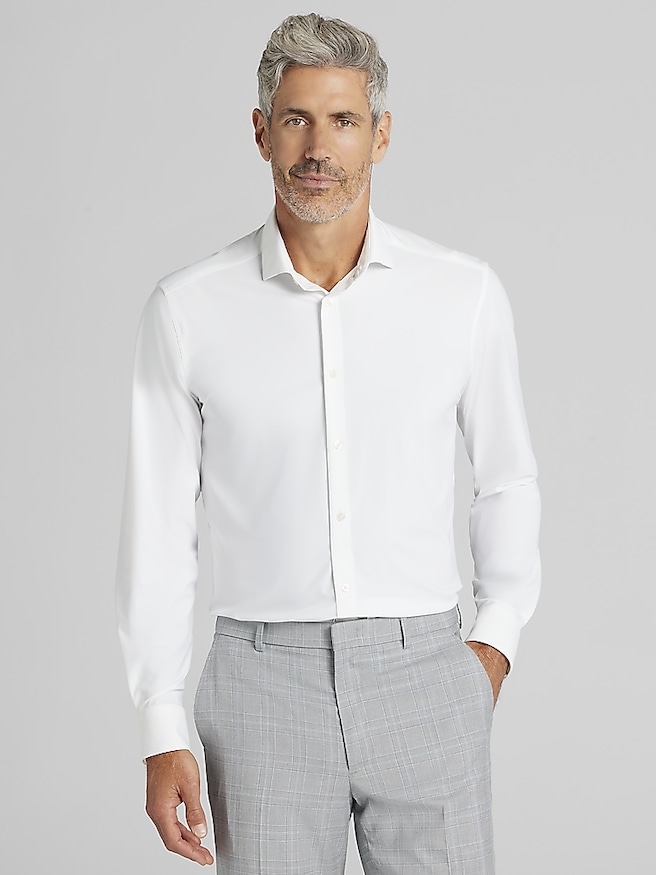
Stretch work shirts combine a workplace-ready appearance with fabric that gives as the body moves, helping reduce the pulling that can occur across the shoulders, elbows, and back in less flexible shirts. That extra movement is useful during ordinary parts of a workday: reaching for a file, driving between appointments, typing at a desk, or carrying a presentation bag through a lobby. The category includes polished button-front styles suited to office settings as well as more relaxed shirts for workplaces with a casual dress code. Stretch may come from elastic fibers such as elastane or spandex blended with cotton or polyester, or from a fabric construction that allows some natural give. Cotton-rich blends often have a familiar, soft hand, while synthetic blends can contribute shape retention and easier maintenance, depending on how the fabric is made and finished. A stretch label alone does not establish breathability, wrinkle resistance, or moisture management; those qualities depend on the full fiber blend, weave, and any added treatments. Fabric weight and texture also influence how a shirt looks and feels throughout the day. A smooth, finely woven surface generally reads as dressier beneath a jacket, while a more noticeable texture can feel appropriate with chinos in a relaxed office. Some fabrics stretch primarily across their width, while others give in multiple directions, so the placement and direction of flexibility matter as much as the amount. Useful stretch should support normal movement without leaving the shirt looking strained or loose after wear. For someone whose schedule moves from focused desk work to client conversations and a commute, the appeal is straightforward: a shirt that maintains a tidy outline while allowing the wearer to move comfortably. These shirts are intended for everyday professional dressing unless their specifications state otherwise; stretch fabric by itself does not provide the protective properties required for hazardous job sites or specialized industrial work.
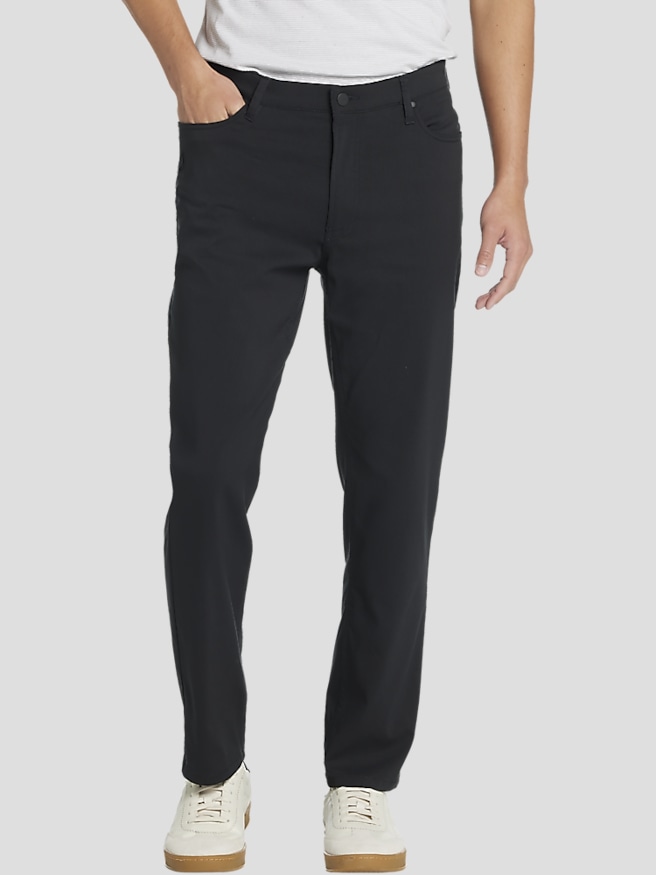
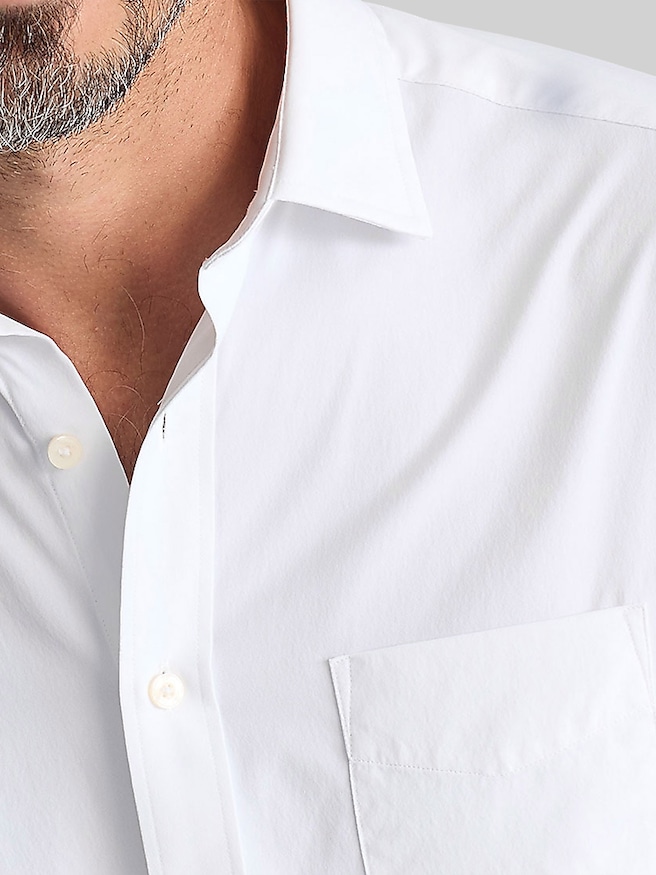
Fit determines how well that flexibility works in practice. A stretch work shirt should sit comfortably through the chest and waist before the fabric is asked to give; stretch is not a substitute for enough room. Shoulder seams should generally meet near the edge of the shoulders, and the front placket should lie flat rather than pull into gaps between the buttons. When seated, the fabric should allow a full breath without tugging across the midsection. Reaching forward as though holding a steering wheel is a useful way to assess space through the upper back, while bending the elbows reveals whether the sleeves feel restrictive. A close-cut silhouette can look clean beneath a suit jacket, but a roomier shape may better suit a broader build or a workday that involves frequent movement. Neither approach needs to look oversized or tight. Collar fit deserves equal attention, particularly when a tie is part of the dress code: the collar should close comfortably without pressing into the neck. Cuffs should permit natural wrist movement and accommodate a watch without hanging excessively over the hands. Length matters, too. A shirt intended to stay tucked should have enough fabric below the waistband to remain secure when reaching or sitting, while an untucked style needs a hem proportioned for that purpose. Coordinating a shirt with Stretch Work Pants can create an outfit with comfortable movement through both the upper and lower body, though each piece should fit properly on its own. Solid colors keep the overall effect understated and are easy to combine with patterned ties or textured jackets. Subtle stripes and small checks add visual interest without dominating an outfit, especially in meeting-heavy settings. For presentations or interviews, a crisp collar and smooth front help establish a more formal appearance. In a casual office, an open collar and neatly finished sleeves can look polished without feeling overly dressed up. The best match is the one that respects the workplace dress code and remains comfortable through the actual tasks of the day.
Care and construction play a substantial role in how a stretch work shirt performs over repeated wear. Always follow the garment’s care label, since shirts with similar appearances may require different washing, drying, and pressing methods. High heat can affect some elastic fibers and finishes, making the recommended water temperature and dryer setting especially important. If machine washing is permitted, avoiding an overfilled load gives the fabric room to move and rinse properly. Removing a shirt promptly after the cycle and smoothing the collar, placket, and seams can limit avoidable creasing before it dries. Some fabrics still benefit from ironing, even when they contain stretch, and any pressing should use the temperature specified for the blend. Wrinkle-resistant does not mean that a shirt will never crease, just as stretch does not mean that it can be pulled indefinitely without wear. Letting the garment dry fully before putting it away, treating spots according to the care instructions, and using a hanger that supports the shoulders can all help preserve its appearance. Durability also depends on details beyond the fabric: even stitching, secure buttons, cleanly finished seams, and well-constructed cuffs contribute to a shirt’s ability to handle routine use. Areas that bend or rub repeatedly, including elbows, collar edges, and cuffs, deserve attention when assessing long-term condition. Fabric recovery matters as well; a shirt that returns toward its original shape after movement is more likely to maintain a neat silhouette than one that bags at stress points. Rotating shirts rather than wearing the same one repeatedly between cleanings allows time for proper care and makes it easier to keep a dependable work wardrobe in order. Stretch work shirts can also make practical gifts for someone starting a new position, preparing for interviews, or refreshing an everyday professional wardrobe. Knowing the recipient’s collar and sleeve measurements, preferred fit, and usual dress code makes the choice more personal and useful. Across those situations, the lasting value of a well-chosen shirt comes from the balance of comfortable movement, appropriate styling, and care requirements that fit naturally into a regular routine.