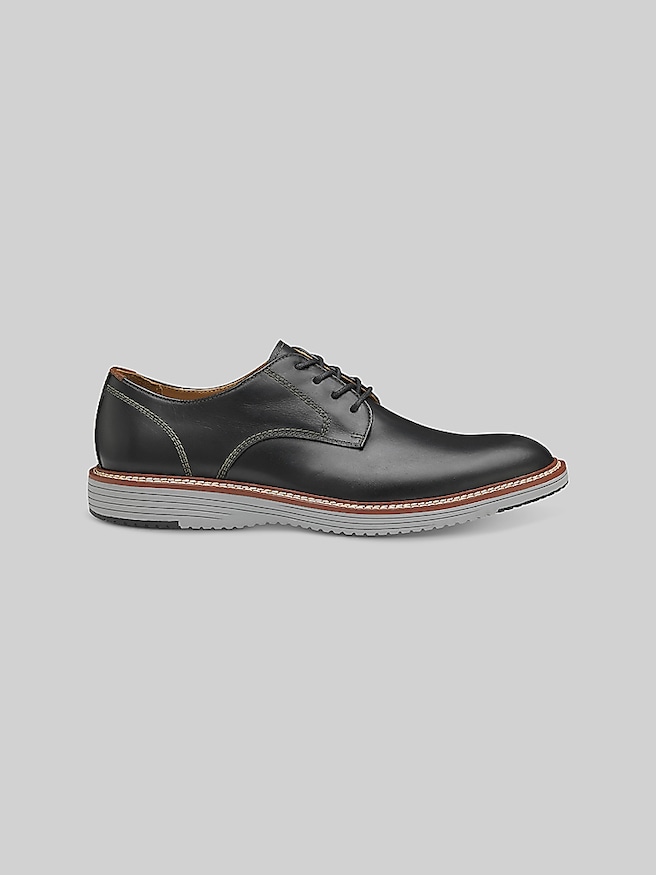
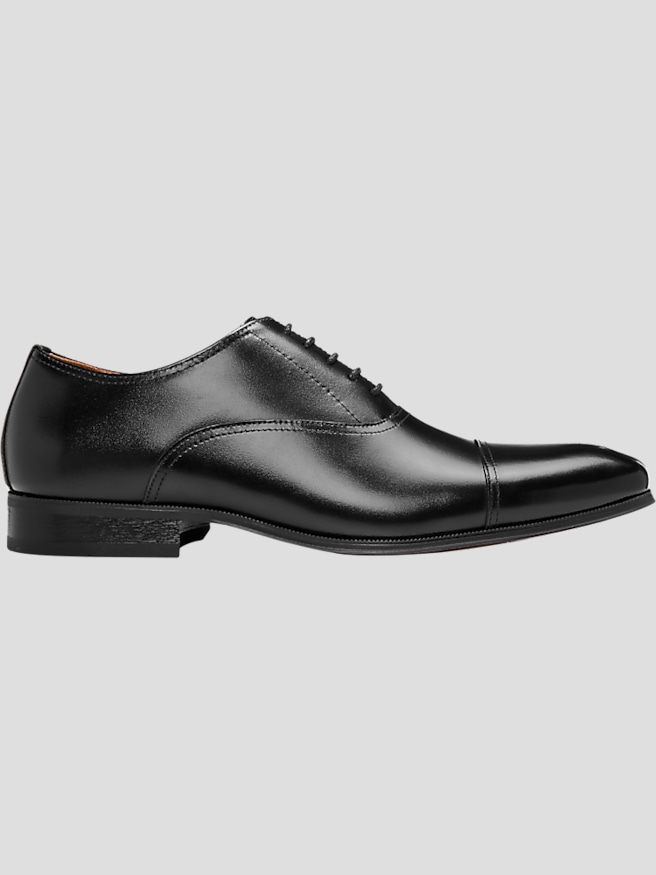
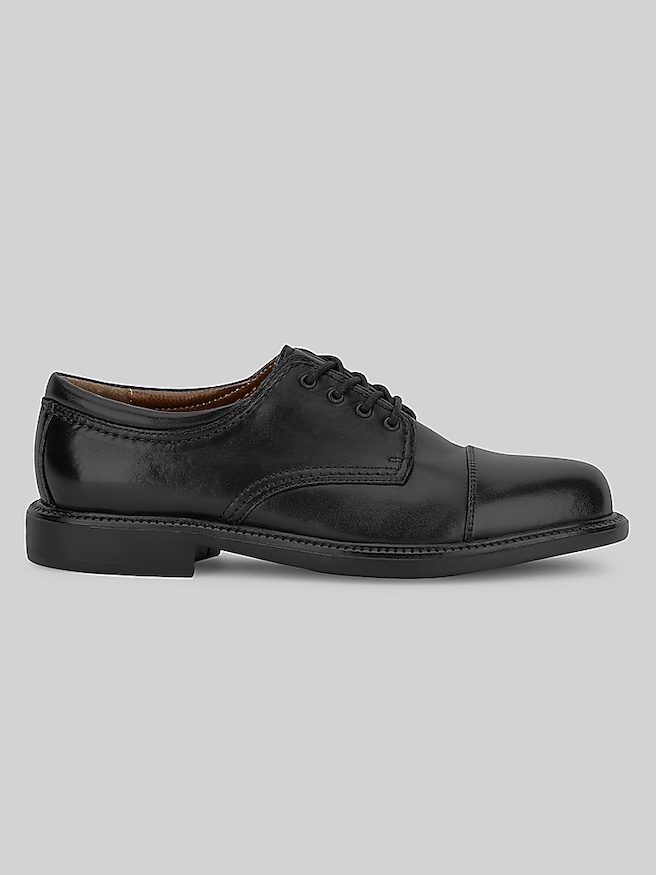
Black shoes for work are a versatile foundation for professional outfits, pairing a neutral color with styles that range from polished lace-ups to relaxed loafers and understated sneakers. Their suitability depends on the workplace dress code, the amount of walking or standing involved, and any job-specific footwear requirements. In an office where tailored clothing is standard, a smooth leather upper, restrained detailing, and a clean silhouette complement dress pants without drawing attention away from the rest of the outfit. Oxfords have closed lacing that creates a streamlined appearance, while derby shoes use open lacing and can offer more flexibility across the top of the foot. Both can look appropriate with a suit or a combination of trousers and a sport coat. Loafers bring a slightly more relaxed character to business casual clothing, particularly when paired with neatly hemmed chinos or wool trousers. Minimal black sneakers can work in casual offices when the dress code permits them, especially with straight-leg pants and a structured shirt or knit polo. Black footwear is particularly easy to coordinate with charcoal, gray, and navy, and it creates a consistent visual line when worn with dark socks and trousers. A black belt can reinforce that coordination without making every accessory look identical. The details matter: a modest toe shape, subtle stitching, and an upper kept free of scuffs usually read as more professional than oversized proportions or conspicuous hardware. For someone moving between a desk, conference rooms, and client appointments, that understated appearance makes one pair useful across several settings. Professionals who spend much of the day on their feet may place greater emphasis on cushioning and sole flexibility, while those attending presentations or formal meetings may prefer a dressier profile. In kitchens, healthcare settings, industrial facilities, and other workplaces with specific safety standards, black color alone does not establish suitability. Slip resistance, protective toe construction, and electrical hazard protection are specialized features that should be verified against the employer’s requirements and the footwear’s published specifications.
Materials and construction influence how black work shoes feel, how they age, and how much attention they need between wears. Smooth leather can soften and conform to the foot over time, although a comfortable initial fit remains essential; a shoe that pinches should not be expected to become suitable simply through wear. Full-grain leather retains its natural surface, while corrected-grain leather has been treated for a more uniform appearance. The finish and quality of either affect its texture, flexibility, and response to care. Synthetic uppers can provide a consistent black finish and straightforward surface cleaning, but their breathability and flexibility vary by construction. Suede offers a softer, more textured appearance that generally suits relaxed professional settings rather than highly formal offices. Inside the shoe, lining material, footbed shape, and cushioning all contribute to comfort. A soft footbed may feel inviting at first, but adequate room, heel stability, and support through the midfoot are equally important during a full workday. Toes should have space to rest naturally without pressing against the front or sides, and the widest part of the foot should align with the widest part of the shoe. Lace-up styles allow the fit to be adjusted across the instep, which can be helpful when foot volume changes during a day of walking. Loafers depend more heavily on a secure match through the heel and instep, since there are no laces to fine-tune that hold. Fit is best assessed with the socks normally worn to work and any prescribed inserts that will be used inside the shoe. Sole construction also shapes the experience. Leather soles create a traditional dress appearance, while rubber soles can offer more flexibility and a cushioned feel, depending on their design. Visible tread does not, by itself, confirm tested slip resistance. For someone walking between offices or standing through a lengthy presentation, a stable heel and a sole that bends comfortably near the ball of the foot may matter more than an unusually thick layer of padding. Weight matters, too: a substantial shoe can feel reassuring, but unnecessary bulk may become noticeable over repeated trips through hallways and stairwells.
A well-maintained pair of black shoes can carry a professional wardrobe through everyday responsibilities, interviews, conferences, and occasions that call for a more composed appearance. For tailored combinations, black shoes for suits offer a closely related direction, with sleek shapes that work naturally alongside pressed trousers and structured jackets. The trouser hem helps set the overall effect: excess fabric pooling over the shoe can obscure its shape, while a clean break keeps the combination looking intentional. Care should follow the material rather than a single routine applied to every pair. Smooth leather generally benefits from removing surface dust, conditioning as appropriate, and using a compatible polish to maintain the finish. Black polish can help restore an even appearance, but it does not repair deep cuts or structural damage. Suede needs a suitable brush and material-specific treatment rather than conventional leather polish. Synthetic uppers should be cleaned according to their care instructions, since products intended for natural leather may not suit the surface. Allowing shoes to rest between wears helps the interior dry, and properly fitted shoe trees can help leather footwear retain its shape. Taking a moment to loosen laces before removing a shoe, or using a shoehorn when putting it on, reduces unnecessary stress on the heel structure. Durability depends on more than a substantial upper; stitching, sole attachment, lining wear, and the condition of the heel all affect useful life. Some welted constructions can be resoled, while others are less practical to repair, so construction matters when long-term maintenance is a priority. Worn tread, loose heels, and collapsed cushioning are reasons to reassess a pair even when the upper still looks presentable. As a gift for someone beginning a new position, preparing for interviews, or refreshing a professional wardrobe, black work shoes can be a thoughtful choice when size, width, workplace expectations, and personal style are known. The most useful pair balances a polished appearance with a fit comfortable enough for the actual working day.