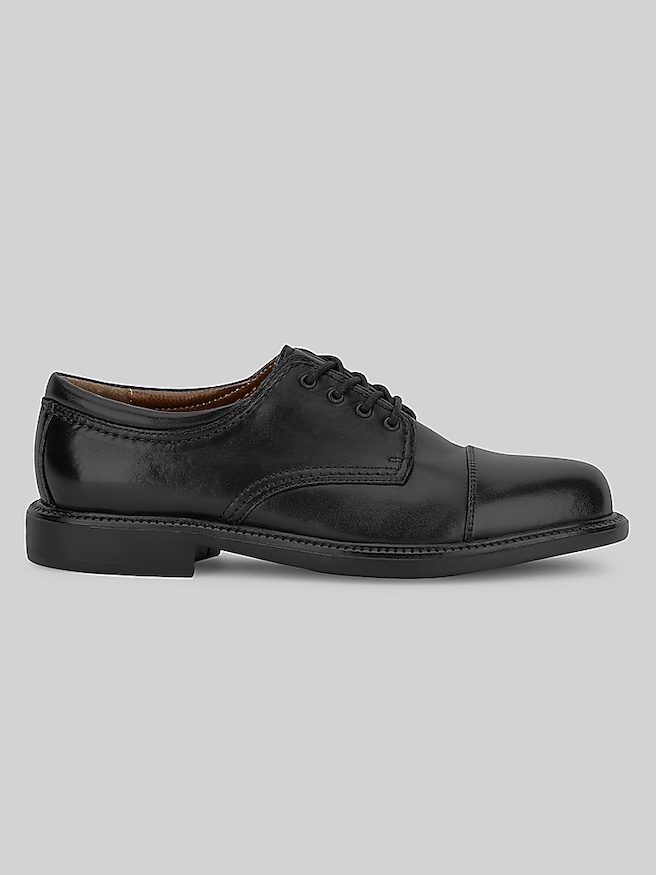
Black shoes for suits provide a clean, polished foundation for formal clothing, with a depth of color that pairs especially well with black, charcoal, and navy tailoring. For a black suit, black dress shoes are the most traditional and formal choice, creating a consistent line from the trousers to the floor. With charcoal, they reinforce the sharpness of the outfit; with navy, they offer a restrained alternative to the stronger contrast of brown footwear. The shape and finish of the shoes help establish the overall level of formality. Black Oxfords have closed lacing, with the eyelet sections attached beneath the front of the shoe, giving them a neat profile suited to business meetings, ceremonies, and formal weddings. A plain toe keeps the surface uninterrupted, while a cap toe adds a subtle seam without making the shoe look busy. Derby shoes have open lacing and a slightly less formal appearance, making them useful for office suits and occasions where polished clothing does not require the strictest dress code. Black loafers can complement relaxed tailoring, particularly when their shape is slim and their detailing understated, though lace-up shoes remain the more conventional choice for highly formal settings. For black-tie attire, patent leather offers the glossy finish traditionally associated with a tuxedo; highly polished smooth leather can also be appropriate depending on the event’s expectations. The rest of the outfit benefits from the same attention to proportion. A black leather belt, when the trousers call for one, looks cohesive with shoes of a similar finish. Dress socks that coordinate with the trousers help maintain a continuous line, and enough sock length prevents exposed skin when sitting. Trousers should fall neatly over the shoes without pooling around them or concealing most of the upper. For wedding-specific combinations, Shoes For Black Suit Wedding brings the focus to footwear for grooms, groomsmen, and guests.
Materials and construction make a meaningful difference in how black dress shoes feel, wear, and hold their shape. Smooth leather is a familiar choice for suit shoes because its surface can take a polish and its texture works naturally with tailored fabrics. Full-grain leather retains the hide’s natural surface and can develop character with wear, while corrected-grain leather has been treated to create a more uniform appearance. Neither description alone guarantees comfort or durability; the quality of the leather, the lining, the sole, and the construction all matter. Patent leather has a high-gloss coating that creates a distinctly formal look, while suede has a softer, matte texture better suited to less formal outfits than strict business or black-tie dress. Inside the shoe, a smooth lining, supportive footbed, and well-placed cushioning can make a noticeable difference during a day that moves from a desk to a conference room and then to an evening reception. Leather soles offer a traditional appearance, while rubber soles or discreet rubber inserts can provide additional traction and resistance to abrasion. The sole’s profile matters visually, too: a relatively slim edge generally complements dress trousers more naturally than a heavily lugged sole. Some welted constructions allow worn soles to be replaced, although repair options depend on the individual shoe and a repair specialist’s assessment. Fit remains just as important as any construction detail. Dress shoes should hold the heel securely, support the midfoot, and leave enough space for the toes without pressure at the sides. A broader forefoot may need a wider size rather than extra length, and an open-laced Derby can offer more adjustment across the instep. Trying shoes with the dress socks intended for the outfit gives a more useful sense of fit than trying them with thick athletic socks. Walking, turning, and standing for several minutes can reveal heel rubbing or tightness that is less obvious while seated. Leather may soften with wear, but a shoe that pinches should not depend on stretching to become comfortable.
Black suit shoes earn their place through repeated use, whether that means regular office dressing or a smaller number of important occasions each year. An attorney walking between meeting rooms, a graduate crossing a stage, and a wedding guest standing through photographs may all need a polished appearance, but their days place different demands on their footwear. Someone who spends hours on their feet may place greater value on cushioning, stable support, and a sole that grips smooth surfaces; someone dressing for an occasional formal dinner may be more concerned with a sleek shape and a finish that complements the suit. For a groom or member of the wedding party, shoes that feel comfortable before the ceremony are more practical than an unfamiliar pair first worn on the day itself. A few shorter periods of wear beforehand can help confirm the fit and identify any rubbing without assuming that discomfort is inevitable. Care helps preserve both appearance and useful life. A soft brush or cloth removes surface dust before it becomes worked into the leather. Smooth leather benefits from an appropriate conditioner used sparingly, followed by a compatible black cream or polish when needed; checking the care instructions first helps avoid using a treatment intended for another finish. Patent leather generally calls for a gentle wipe with a soft cloth and care products specifically suited to its coating, rather than ordinary leather conditioner. Shoes should dry naturally away from direct heat if they become damp, and shoe trees can help maintain their shape between wears. Rotating pairs gives linings time to dry, while a shoehorn reduces strain on the heel counter when putting shoes on. Scuffed edges, worn heels, and thinning soles deserve attention before they affect balance or damage the upper. As a gift for a graduate, a partner starting a new role, or someone building a formal wardrobe, black dress shoes can be a thoughtful choice when size, width, preferred style, and everyday needs are already known. The strongest pairing is not simply the darkest shoe with the darkest suit, but footwear whose shape, finish, comfort, and condition support the whole outfit.