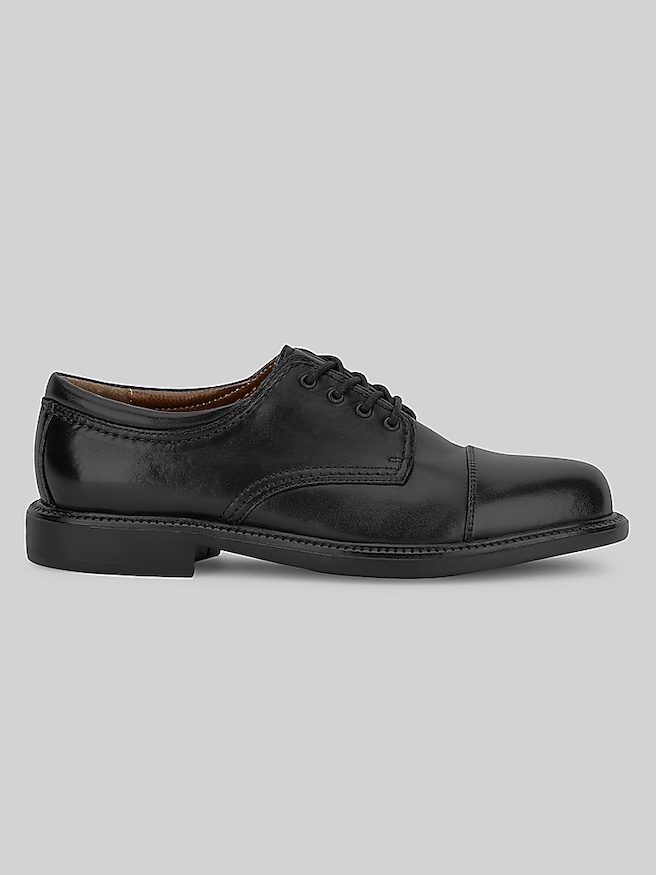
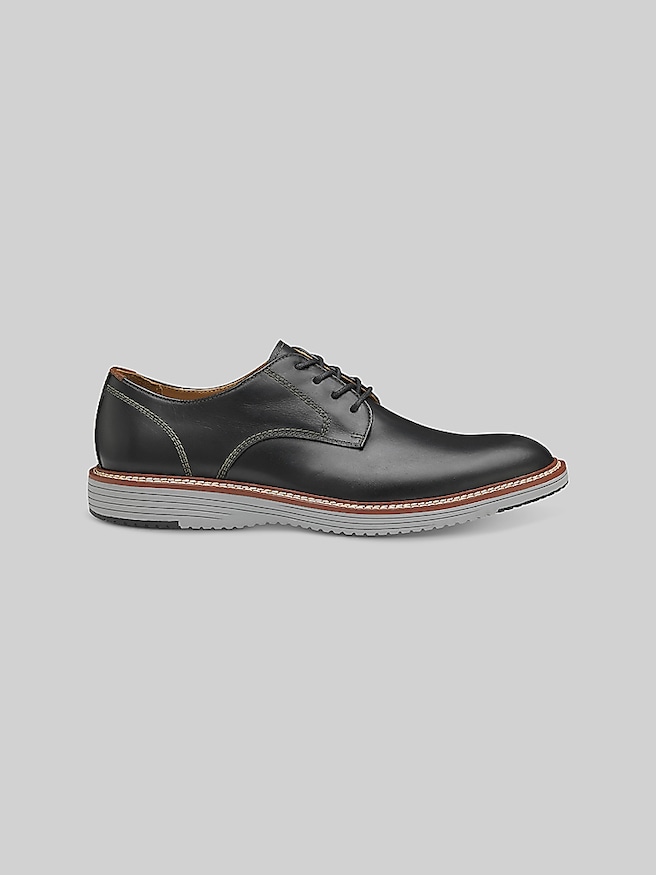
Black dress shoes are the best match for a black suit at a wedding, creating a clean, formal line from the trouser hem to the floor. The shared color keeps attention on the complete outfit rather than drawing the eye to a contrasting shoe, which is especially useful in ceremony photographs and coordinated wedding party portraits. Smooth black leather is a dependable starting point: it complements the suit’s tailoring, takes a handsome polish, and suits both the ceremony and the reception. A black Oxford is a particularly strong choice for a traditional wedding because its closed lacing gives the upper a neat, streamlined appearance. Plain-toe and cap-toe designs keep the effect restrained, with little to compete with a crisp shirt, tie, or boutonniere. A black Derby has open lacing and a slightly less formal character, but a slim, well-polished version can still complement a black suit at many weddings. Decorative perforations and prominent stitching make footwear more visually expressive; minimal detailing is generally the easier match when the invitation calls for a polished, formal appearance. Patent leather brings a mirrorlike shine and a more ceremonial feel, although it is most closely associated with tuxedos. For a conventional black suit, polished smooth leather usually provides enough refinement without making the shoes feel disconnected from the rest of the outfit. If the invitation specifies black tie, the entire outfit should meet that dress code; a shoe choice alone does not turn a black suit into black-tie attire. Black leather loafers can work for a less formal celebration when the invitation allows a more relaxed approach, especially when their shape is sleek and their ornamentation is subtle. For grooms, groomsmen, fathers of the couple, and guests seeking the most straightforward pairing, black lace-up dress shoes remain the clearest choice. The goal is a shoe that belongs with the suit, rather than one that becomes the outfit’s focal point.
Fit matters as much as the silhouette, particularly when the day includes standing through a ceremony, walking between photographs, and spending hours at a reception. Dress shoes should hold the heel securely without pinching the toes or pressing sharply across the top of the foot. A small amount of movement can occur with some constructions, but repeated heel slipping, numbness, or rubbing is not something to dismiss as a necessary break-in stage. Trying shoes with the dress socks intended for the wedding gives a more useful sense of fit than trying them with thick athletic socks. The widest part of the foot should sit comfortably within the widest part of the shoe, and the toes need room without sliding forward at each step. An almond-shaped or softly rounded toe generally complements tailored trousers without the exaggerated length of a sharply pointed design. Width deserves attention, too: moving up in length to solve a width problem can leave excess space at the heel and toe. Leather uppers can soften with wear, but they should not be expected to correct an unsuitable size. A leather lining can provide a smooth interior, while cushioning under the heel and forefoot may make long stretches on hard floors more comfortable. Outsole construction also affects the experience. Leather soles offer a traditional dress-shoe finish, while discreet rubber soles or rubber inserts can add flexibility and traction without necessarily changing the shoe’s formal appearance. No sole guarantees grip on every surface, so secure footing still matters on polished floors and stairs. For durability, look for even stitching, securely attached heels, and clean joins between the upper and sole. Supple leather should bend naturally across the forefoot rather than digging into it. Several short wears before the wedding can reveal pressure points early and help the shoes feel familiar, whether the wearer is walking down the aisle or joining the wedding party for photographs.
The finishing details help black wedding shoes look intentional rather than simply functional. Black dress socks maintain the continuous line of a black suit, and a length that stays above the trouser hem when seated prevents a strip of bare leg from interrupting the outfit. Trouser hems should fall cleanly over the shoe without pooling around the ankle or catching behind the heel. When a belt is part of the outfit, black leather keeps the accessories coordinated; matching the general finish matters more than finding an identical surface texture. A soft sheen across the shoes usually looks more natural with a suit than an uneven, heavy layer of polish. Care begins with removing dust and grit using a soft brush or cloth, then applying a suitable conditioner and black polish as the leather requires. Follow the material’s care instructions, since smooth leather, coated finishes, and patent leather do not all respond well to the same treatment. Let shoes dry naturally if they become damp, away from direct heat, and use properly sized shoe trees to help maintain their shape between wears. Giving leather shoes time to air out after an event can also support their condition over repeated use. For a wider view of occasion-ready footwear, explore the Men's Shoe For Wedding collection with the invitation’s dress code and the suit’s proportions in mind. A versatile pair of black dress shoes can continue into business occasions, formal dinners, and future celebrations, making understated design useful beyond a single wedding. They can also make a thoughtful gift for a groom or someone taking on a role in the ceremony, provided size, width, and personal fit preferences are known. For the wedding itself, comfort and presentation should work together: a secure fit, a well-kept leather upper, and a proportionate shape allow the wearer to move naturally while keeping a black suit looking complete.