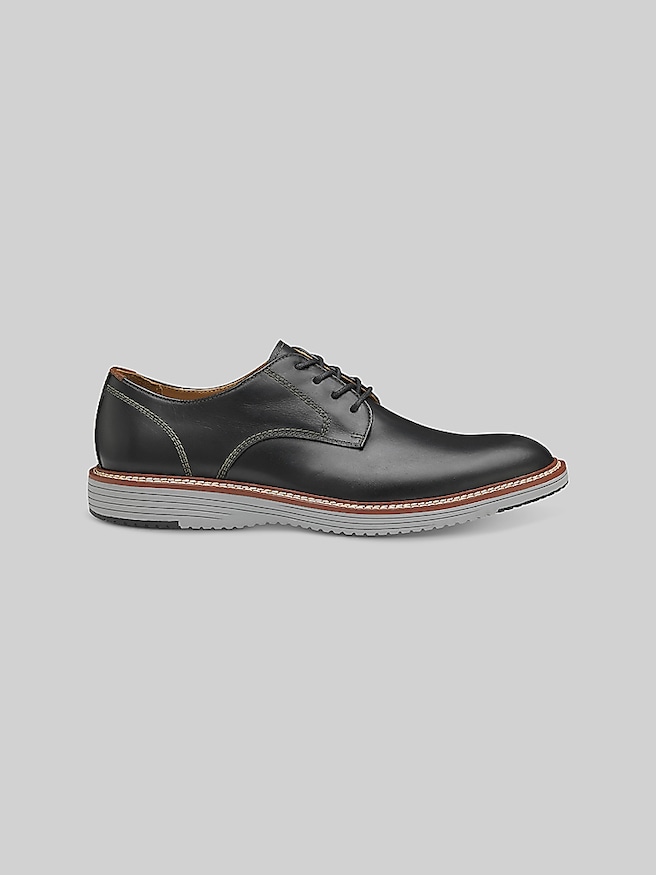
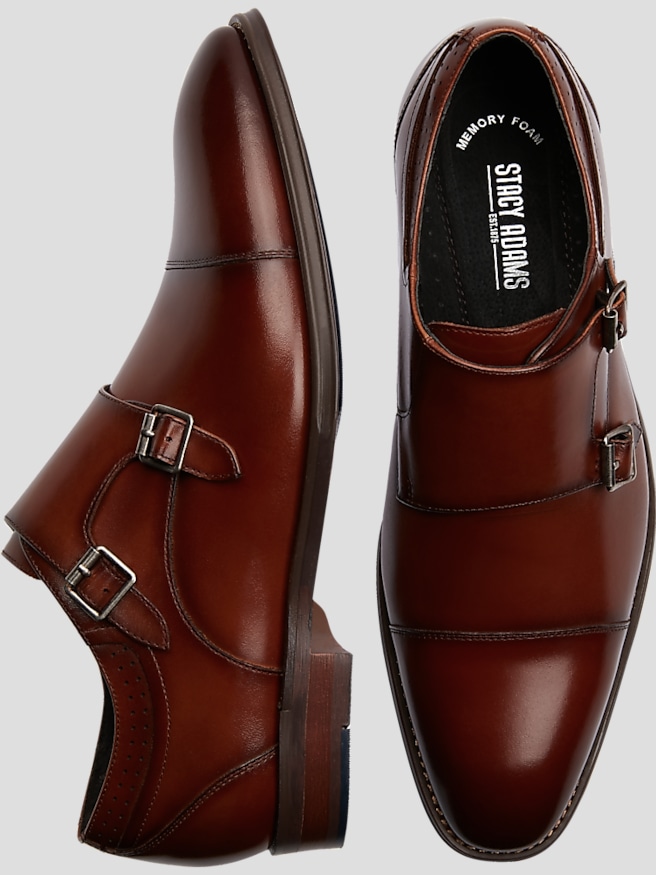
Men's black wedding shoes bring a clean, formal finish to an outfit, whether the occasion calls for a tuxedo or a tailored suit. For a black-tie wedding, black patent leather Oxfords are a traditional choice: their glossy surface complements the satin details of a tuxedo without adding another color or pattern. Highly polished smooth leather can also work with formal evening attire when the shape is sleek and the detailing is restrained. With a black, charcoal, or navy suit, black leather Oxfords offer a classic balance of polish and versatility. Their closed lacing creates a neat profile beneath the trouser hem, making them especially well suited to a groom's ceremony look or coordinated wedding party attire. A plain toe keeps the appearance minimal, while a simple cap toe adds definition without drawing attention away from the suit. Derby shoes, recognizable by their open lacing, offer another option for suited weddings, particularly when a slightly less formal finish fits the celebration. Black dress loafers can complement tailored wedding attire, too, although the shape and material matter: a slim leather loafer feels dressier than a substantial casual style. Velvet slippers have a distinctive place alongside eveningwear, but their softer texture makes a deliberate statement rather than serving as an interchangeable substitute for every dress shoe. Across these styles, an almond-shaped or gently rounded toe generally sits comfortably with classic tailoring. Broguing, thick soles, oversized hardware, and sharply exaggerated toes make the footwear more noticeable, which may not suit a restrained dress code. The most cohesive pairing gives the shoes enough presence to finish the outfit while allowing the tailoring to remain the focus. A groom in a tuxedo, a father of the couple in a charcoal suit, and a guest wearing navy may all choose black footwear, but each outfit benefits from a slightly different level of shine and detail. For celebrations centered on dark tailoring, the Shoes For Black Suit Wedding collection offers a closely related focus.
Fit matters as much as appearance when wedding plans include standing through a ceremony, gathering for photographs, and spending hours at a reception. A dress shoe should feel secure through the heel and midfoot without squeezing the toes or pressing across the widest part of the foot. Some space ahead of the toes is normal, especially in a tapered shape; sliding forward with every step is not. Trying on both shoes with the dress socks intended for the occasion gives a more useful impression than testing them with thick athletic socks. Feet can feel fuller later in the day, so an afternoon fitting can help reveal pressure that might otherwise become noticeable only after several hours of wear. The laces should hold the foot comfortably rather than needing to be pulled excessively tight. Oxford lacing has a more enclosed structure, while a Derby's open lacing can provide additional adjustment across the instep. Neither style guarantees a better fit, since width, toe shape, and the form used to shape the shoe all play a role. Cushioning can soften the feel underfoot, but a plush footbed cannot compensate for a shoe that is too short or narrow. A stable heel, a flexible forefoot, and an outsole with suitable traction are useful considerations for moving between a ceremony aisle, smooth floors, and a dance floor. Leather soles have a traditional appearance, while rubber or combination soles may offer a different balance of flexibility and grip; the actual tread and surface still matter. Wearing new shoes for short periods before the wedding helps reveal rubbing and lets the upper begin to flex naturally. Breaking them in should not mean enduring persistent pain. Dress socks that stay in place help prevent bunching, and a trouser hem that falls neatly over the shoe preserves the intended silhouette. For wedding parties, coordinating the general style and finish creates visual consistency without requiring every person to wear the same width or accept the same fit.
Materials and construction influence how black wedding shoes look on the day and how well they serve afterward. Smooth leather can develop a rich, even shine with appropriate care, making it useful for ceremonies as well as future formal dinners, business occasions, and other suited events. Full-grain leather retains the natural grain surface, though the quality of the hide, tanning, stitching, and finishing also affects performance. Patent leather has a glossy coating that gives it a distinctly formal character; it needs care suited to that finish rather than the same polishing routine used for uncoated leather. A soft cloth can remove fingerprints and surface dust, while a compatible patent-care product may help maintain its appearance. Smooth leather generally benefits from gentle cleaning, occasional conditioning when appropriate, and black polish applied according to the maker's directions. Velvet calls for a softer approach, such as careful brushing with a suitable brush rather than leather cream or wax. Inside the shoe, a smooth lining and neatly finished seams can make a meaningful difference during extended wear. Outside, even stitching, a firmly attached heel, and a well-finished sole edge are useful signs of careful assembly. Some stitched constructions allow resoling, although repair options depend on the design and condition of the shoe. After the celebration, letting footwear air out before storage helps the interior dry naturally. Properly sized shoe trees can support the shape of leather uppers, and separate shoe bags help protect polished surfaces from scuffs. Direct heat and soaking are best avoided, since both can damage materials or finishes. These details are especially worthwhile for someone choosing wedding shoes with repeated wear in mind. They can also make black dress shoes a thoughtful gift for a groom or wedding party member, provided the recipient's size, width, and preferred fit are known. The strongest choice combines the right degree of formality with comfort and straightforward care, so the shoes remain useful long after the final photographs.