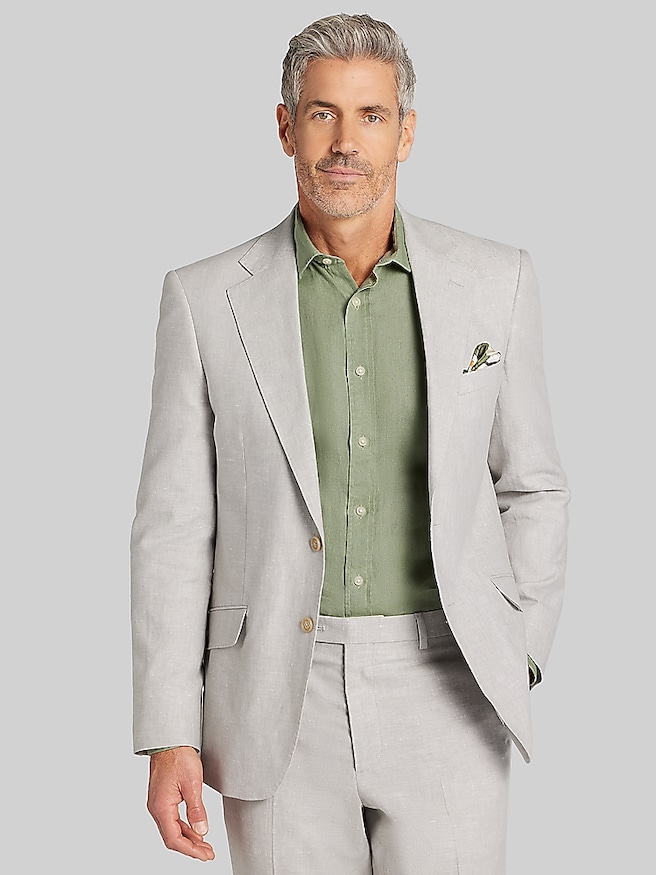
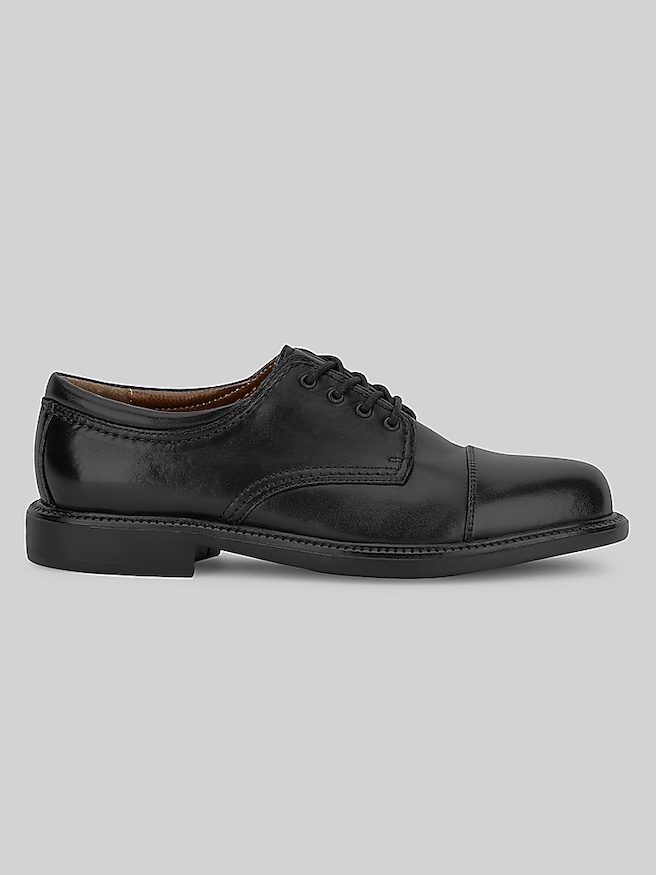
Men’s suit shoes bring the proportions, color, and formality of a tailored outfit together. Oxfords, derbies, monk straps, and loafers are the main dress shoe styles worn with suits, each with a distinct shape and level of formality. Oxfords have closed lacing, with the eyelet sections stitched beneath the front of the shoe, creating a neat profile that works especially well with business suits and formal tailoring. A plain-toe or cap-toe Oxford keeps the details restrained, making it a dependable choice for interviews, presentations, and wedding ceremonies. Derbies have open lacing, with the eyelet sections attached over the front of the shoe. That construction creates a slightly more relaxed appearance and often allows more adjustment across the instep. Monk straps replace laces with one or two buckles, adding a visible detail without the decorative perforations of broguing. Loafers offer a slip-on shape that suits less formal tailoring, particularly when the silhouette is slim and the leather has a smooth finish. Color matters as much as construction: black shoes for suits create a crisp pairing with charcoal, gray, or navy tailoring, while brown shoes bring a softer contrast to blue, tan, and earth-toned suits. Dark brown generally feels more understated than lighter shades, and burgundy adds depth without becoming the focal point of an outfit. For traditional black-tie attire, polished black patent leather Oxfords or formal evening shoes are more appropriate than everyday business footwear. Toe shape also affects the finished look. A gently rounded or softly tapered toe complements most suit silhouettes, while an exaggerated point or broad square toe makes a stronger visual statement. The best pairing looks balanced from the trouser hem down, with the shoe supporting the outfit rather than competing with it. A clean, minimally detailed design also makes it easier to wear the same shoes across several dress occasions.
Materials and construction influence how suit shoes feel through a full day and how their appearance develops with wear. Smooth leather is a classic choice because it can be brushed, conditioned, and polished to maintain an even finish. Full-grain leather retains the outer surface of the hide and may develop natural creasing and character over time; corrected-grain leather has a more uniform surface, often with an added finish. Neither description alone determines comfort, so lining, flexibility, and fit deserve equal attention. Suede has a soft, textured appearance that works well with relaxed suits, although it calls for different cleaning methods than smooth leather. Patent leather provides a glossy finish associated with formal eveningwear and needs gentle care suited to its coating. Inside the shoe, a smooth lining helps limit rubbing, while cushioning and supportive shaping can make long periods of standing more comfortable. Someone greeting guests at a wedding or moving between meeting rooms may appreciate those details more than someone wearing dress shoes for a short ceremony. Fit should feel secure at the heel and through the middle of the foot, with enough space for the toes to rest naturally. The widest part of the foot should align with the widest part of the shoe rather than being squeezed toward the toe. Trying shoes with the dress socks intended for the outfit gives a more useful sense of fit than trying them with thick athletic socks. Leather may soften with use, but persistent pinching, numbness, or excessive heel movement signals a fit problem rather than a necessary break-in period. Underfoot, leather soles offer a traditional profile, while rubber soles can provide additional grip and cushioning, depending on their design. Welted construction may allow resoling when the upper remains in good condition, though repair options depend on the shoe’s construction. Well-finished seams, secure sole attachment, and a heel that sits evenly all contribute to durability without drawing attention away from the tailoring.
The relationship between suit shoes and the rest of an outfit is often clearest in the small details. A trouser hem with a slight break rests lightly on the shoe, while a shorter, no-break hem reveals more of the upper and makes the socks more noticeable. Dress socks close to the trouser color help maintain a continuous line, particularly when seated; a restrained pattern can add personality without distracting from a formal suit. A leather belt in a similar color and level of shine creates cohesion, although it does not need to be an exact match. Highly polished shoes feel at home with crisp, structured tailoring, while a softer finish can complement a suit with more visible texture. For frequent office wear, a straightforward lace-up design can move comfortably between client appointments and an evening dinner. For a wedding guest or member of a wedding party, the dress code and suit color set the direction, with comfort especially important when the occasion includes standing, photographs, and dancing. Dress shoes can also make a useful gift for a graduate beginning a professional role or someone preparing for an important celebration, provided the recipient’s size, width, and preferred fit are known. Consistent care helps preserve both appearance and structure. Brushing away dust after wear prevents buildup around seams and creases, and a soft cloth removes surface marks before they settle into the finish. Smooth leather benefits from suitable conditioner used sparingly and polish matched to the leather’s color; suede needs a dedicated brush, while patent leather should be cleaned according to its care instructions. Cedar shoe trees help maintain shape and absorb residual moisture after wear. Allowing shoes to dry naturally between outings, away from direct heat, supports the leather and lining. A shoehorn also helps protect the heel counter from being crushed, preserving the secure fit and clean profile that make dress shoes a lasting part of a tailored wardrobe.