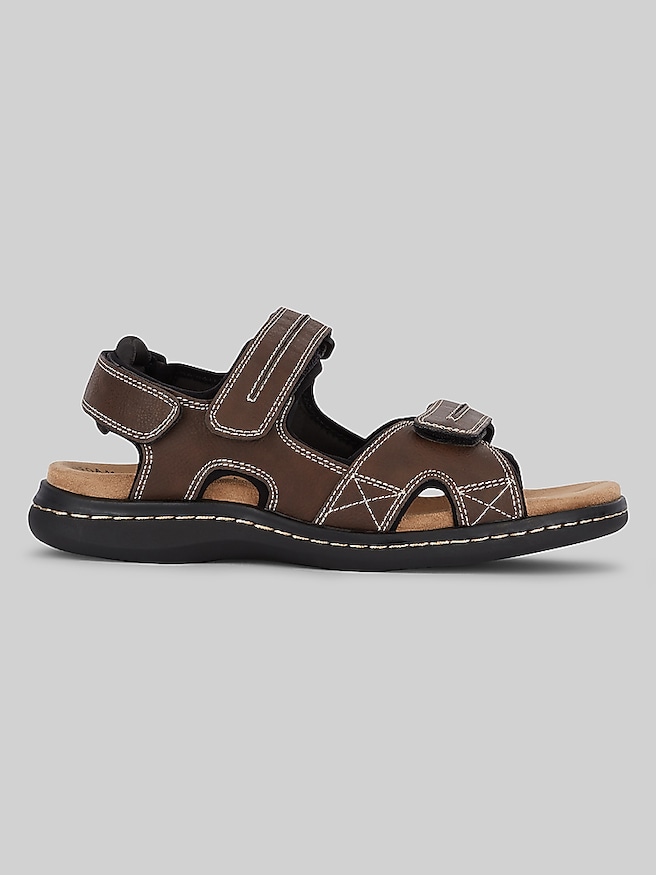
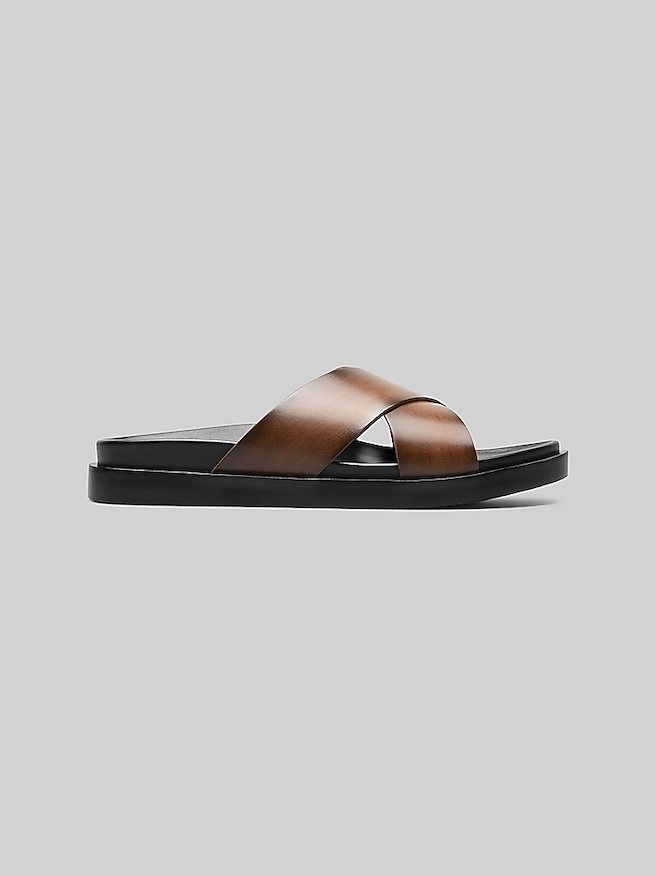
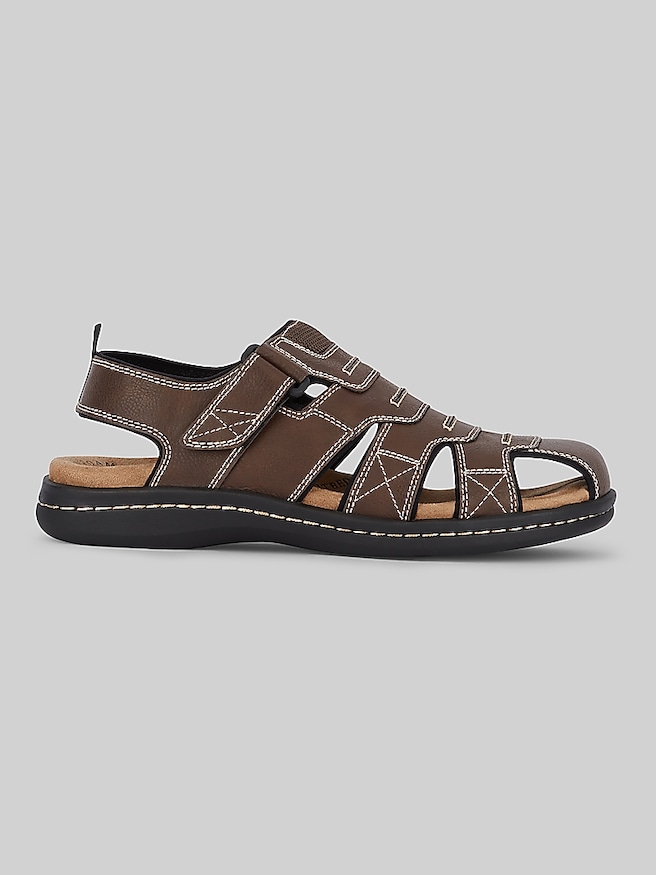
Black sandals bring a clean, understated finish to casual clothing, with a dark neutral color that works easily alongside denim, chinos, shorts, and relaxed trousers. Their appeal comes from the balance of an open silhouette and a visually grounded base: a simple black strap can echo a belt or watchband, while a broader upper gives lightweight clothing a little more structure. For men who prefer a straightforward wardrobe, black sandals offer an easy alternative to sneakers when the setting calls for open footwear rather than a closed shoe. The category includes slides, toe-post sandals, and strapped designs, each with a distinct feel on the foot. Slides leave the heel open and are convenient for short outings or time at home. Toe-post designs keep the upper minimal, while sandals with adjustable straps can offer a more secure fit for longer stretches of walking. Smooth leather tends to create a refined casual appearance, textured leather adds depth, and molded materials give the silhouette a more athletic or utilitarian character. Black pairs also complement the relaxed clothing often worn with Summer Sandals, without requiring a wardrobe built around bright colors or bold patterns. A low-profile pair can sit neatly beneath the hem of straight-leg linen trousers, while a substantial sole balances wider shorts and a textured knit polo. For an informal meal, a casual gathering, or a trip with plenty of downtime, the strongest combination usually feels intentional without looking overly coordinated. A black upper does not automatically make a sandal dressy; strap shape, sole thickness, surface texture, and overall condition matter just as much as color. Open footwear remains a casual choice, so dress codes still take priority at workplaces, ceremonies, and more formal venues. Within relaxed settings, however, the simplicity of black makes sandals easy to repeat across outfits, whether the rest of the look leans crisp and minimal or soft and laid-back.
Materials and construction shape how black sandals feel, how they age, and where they work best. Leather uppers may soften and develop creasing with wear, although the lining, edge finishing, and strap placement often matter more to immediate comfort than the material name alone. Smooth edges and neatly finished seams help reduce friction where the upper touches bare skin. Suede and nubuck have a softer, matte appearance, but their textured surfaces need care suited to the finish and are generally less practical around splashes. Synthetic straps can be lightweight and easy to wipe clean, while woven textiles offer flexibility; drying time and resistance to moisture depend on the construction rather than the category alone. Molded foam can provide cushioning without much weight, and rubber outsoles often contribute grip and resistance to abrasion. Neither softness nor a thick sole guarantees lasting comfort. An overly soft footbed may feel pleasant at first but offer less stability than a firmer, shaped platform, especially during extended standing. A contoured footbed may help distribute pressure, provided its raised sections align comfortably with the foot. The heel should sit within the intended heel area, and toes should have room without hanging over the front edge. Straps should hold the sandal in place without pressing sharply across the instep or rubbing the sides of the foot. Adjustable closures can accommodate some variation in foot volume, but they cannot correct an unsuitable length or width. In toe-post designs, the placement and softness of the post deserve particular attention because that small contact point affects every step. In slides, excessive looseness can lead to gripping with the toes to keep the sandal on. A comfortable walking motion should feel secure and natural, without shuffling or clenching. For sightseeing, errands, or a long stretch on hard floors, secure attachment, sensible cushioning, and an appropriate outsole are more useful considerations than appearance alone. Anyone with ongoing foot pain or specific support needs may benefit from individualized advice from a qualified healthcare professional rather than assuming any sandal style will provide relief.
Everyday durability depends on matching black sandals to their intended use and giving the materials suitable care. A pair worn mainly for relaxed meals and short walks faces demands unlike those of footwear used around a pool or across uneven paths. Water-friendly materials, secure straps, and tread designed for the surface become especially important where splashes or loose ground are part of the outing. Ordinary leather sandals should not be assumed suitable for immersion, and no outsole can promise slip-free footing on every surface. For routine upkeep, loose grit is best removed before it can work into seams or abrade the footbed. A soft brush or cloth is often enough for surface dust, while a lightly damp cloth may suit some smooth uppers and molded components when the care instructions allow it. Leather cleaners and conditioners should match the finish, and any treatment is best tested on a discreet area first. Suede requires its own tools rather than the same products used on smooth leather. Thorough air drying away from direct heat helps protect the shape and bonded components after cleaning or accidental moisture exposure. Even dark footwear benefits from regular attention: black can make pale dust, dried residue, and scuffed edges noticeable, particularly on a smooth finish. Letting sandals dry fully between wears also helps maintain the footbed, while storage without heavy objects pressing on the straps preserves their shape. Over time, flattened cushioning, loose fastenings, separating layers, or heavily worn tread can signal that a pair no longer performs as intended. These practical details matter when choosing sandals as a gift, too. A familiar footwear size is a useful starting point, but the recipient’s usual width, preference for an open or secured heel, and tolerance for a toe post are just as relevant. Someone who values quick slip-on convenience may appreciate a simple slide, while a frequent traveler may prefer a lightweight strapped silhouette that stays put while walking. The most useful black sandals combine that personal preference with a comfortable fit, thoughtful construction, and a shape that belongs naturally in an existing casual wardrobe.