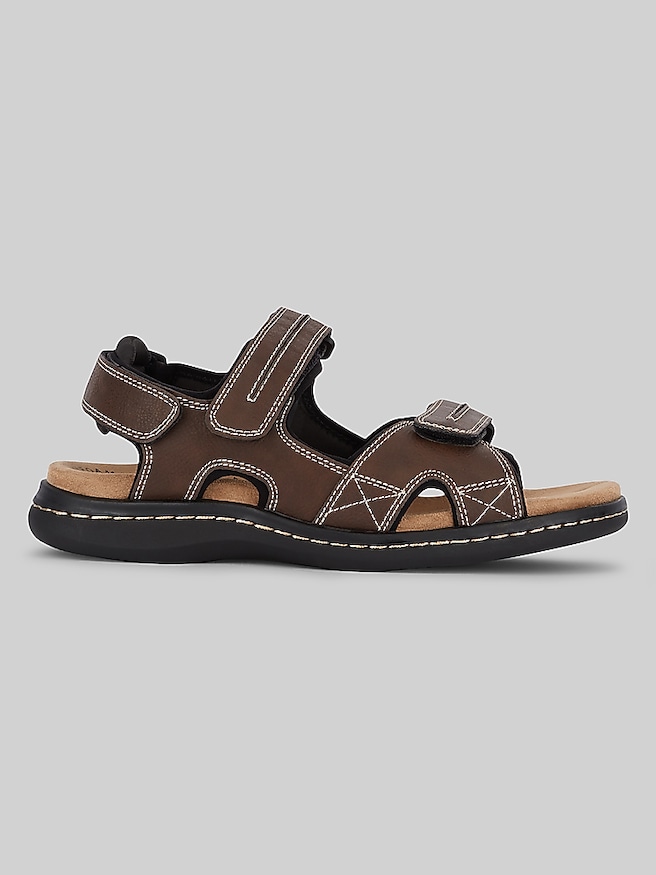
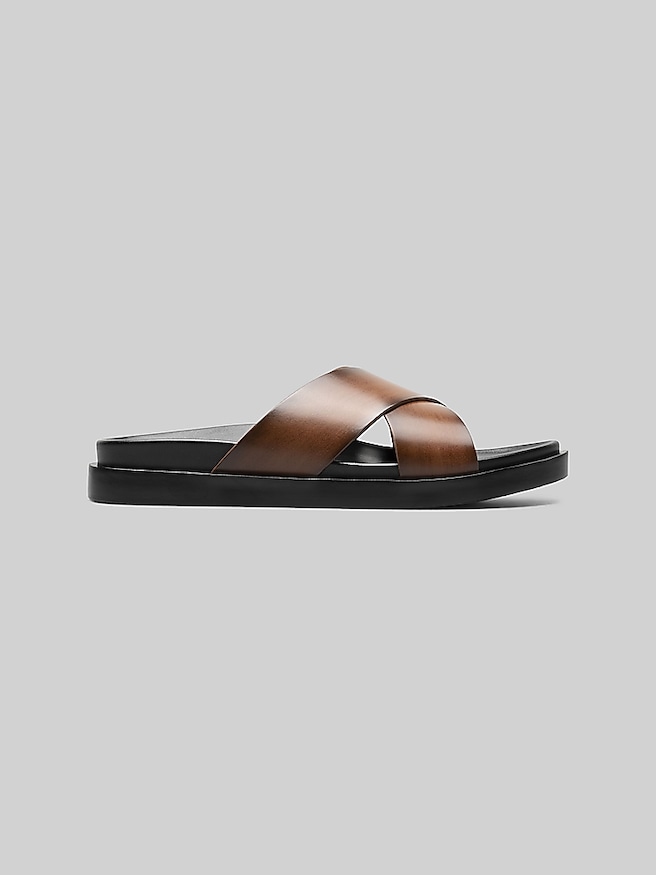
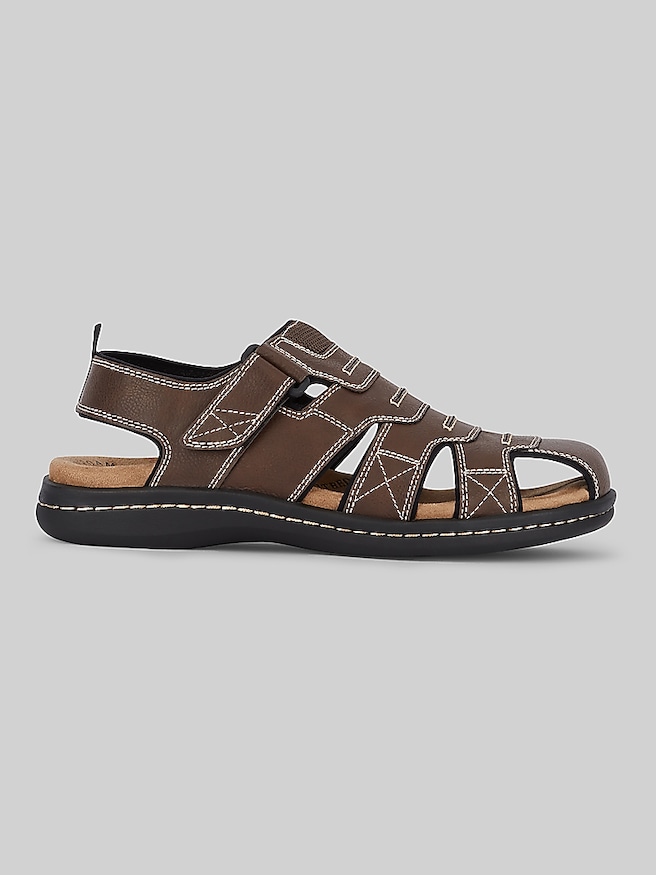
Modern sandals bring open, breathable construction to contemporary footwear, combining clean strap arrangements, sculpted footbeds, and distinctive sole shapes. Their character comes from proportion and texture as much as decoration: a broad leather band creates a streamlined look, woven straps add depth, and a substantial sole gives a simple silhouette more presence. Men’s sandals span easy slip-on slides, adjustable strapped designs, and shapes with heel straps for a more secure feel. Square or softly squared toes can lend an architectural edge, while rounded profiles keep the appearance understated and familiar. A thicker sole may make a visual statement without feeling especially heavy, although weight depends on the materials and construction rather than thickness alone. Smooth leather, brushed suede, textured fabric, and molded synthetics each give these styles a distinct personality. Black and deep brown work naturally with a restrained wardrobe; tan, stone, and muted earth tones bring a softer contrast to dark shorts or pants. For a relaxed lunch outdoors, leather sandals with straight-leg chinos and an untucked knit polo create a considered outfit without looking formal. On a warm-weather getaway, woven textures pair comfortably with linen pants, lightweight cotton shirts, and unstructured layers. The balance matters: a substantial sandal can hold its own beneath a wider trouser leg, while a slimmer profile keeps tapered hems from looking overwhelmed. Pants that end near the ankle allow the shape of the footwear to remain visible without excess fabric gathering around the straps. Sandals suit relaxed settings rather than every dress code, so closed-toe footwear remains the more appropriate choice for many workplaces, formal celebrations, and occasions requiring protective shoes. During cooler months, their place may shift toward indoor downtime, mild-climate weekends, or travel somewhere warm. The appeal stays consistent across those settings: an easygoing shoe can still have precise lines, pleasing texture, and enough visual structure to finish an outfit.
Materials and fit shape the wearing experience more than any single trend. Leather straps often become more supple with wear and can develop a rich surface character, but they should not need a painful break-in period to feel usable. Suede offers a softer, matte appearance that works well with casual fabrics, though moisture and stains need particular attention. Woven textiles can feel flexible and light, while synthetic straps and molded footbeds may be practical for low-maintenance use when their care instructions support it. A leather upper does not make a sandal suitable for water, and a sporty appearance does not establish trail performance. Intended use should match the stated features, especially for slippery surfaces, extended walks, or time around a pool. Fit starts with a footbed that accommodates the whole foot: heels and toes should sit within its edges rather than extending over them, and the width should prevent the foot from spilling across the sides. Straps should hold comfortably without digging into the top of the foot or rubbing beside the toes. Adjustable closures can help accommodate foot volume, but tightening a strap cannot correct a footbed that is too short or narrow. A contoured shape may feel supportive when its curves align with the foot; a pronounced arch in the wrong position can be distracting instead. Cushioning and support are also distinct qualities. A very soft sole may feel pleasant at first contact, while a stable base and secure upper become more noticeable during a longer walk. For an afternoon that includes several blocks between a hotel, lunch, and a waterfront stroll, heel retention and dependable footing deserve more attention than they would for a few steps onto a patio. Trying sandals on later in the day can help account for ordinary swelling, and a short walk on a clean indoor surface can reveal slipping, pressure points, or the need to grip with the toes. Anyone using prescribed orthotics or managing an ongoing foot concern should confirm that the footwear suits those needs rather than relying on appearance or general comfort claims.
Durability depends on how a sandal is made, how closely its use matches its purpose, and how it is maintained afterward. Even stitching, neatly finished strap edges, and secure attachment points are useful details to examine. The places where straps meet the sole take repeated stress, particularly when footwear fits loosely and shifts with each step. Outsole material and tread pattern influence wear and traction, but no tread should be assumed to prevent slipping on every surface. Pavement, sand, wet tile, and uneven ground place distinct demands on footwear, so an everyday casual sandal is not automatically a substitute for purpose-built outdoor equipment. Care works best when it follows the material rather than a universal cleaning routine. Loose dirt can often be removed with a soft brush or cloth before it works into seams and textured surfaces. Smooth leather may benefit from a compatible cleaner and conditioner used according to the maker’s directions, while suede generally calls for a dedicated brush and suitable spot treatment. Fabric and molded materials should be cleaned only by methods approved for their construction; machine washing or prolonged soaking can damage adhesives, finishes, or layered footbeds. After exposure to moisture, air-drying away from direct heat helps protect shape and surface quality. Leaving sandals beside a heater or in a hot vehicle can be hard on both uppers and soles. Allowing pairs to dry fully between wears and storing them clean in a ventilated space also helps keep them comfortable to use. For a travel wardrobe, choosing a versatile color and a shape that works with both shorts and casual pants can simplify packing without asking one pair to handle every activity. Related warm-weather styling inspiration can also be found through Spring Sandals, particularly for lightweight fabrics and relaxed combinations. As a gift, sandals make the most sense when the recipient’s size, preferred fit, and everyday habits are familiar. Someone who favors easy patio mornings may appreciate a simple slip-on shape, while a frequent traveler may place greater value on adjustability and secure straps. Thoughtful selection connects modern design with the places, clothing, and routines that make the footwear useful.