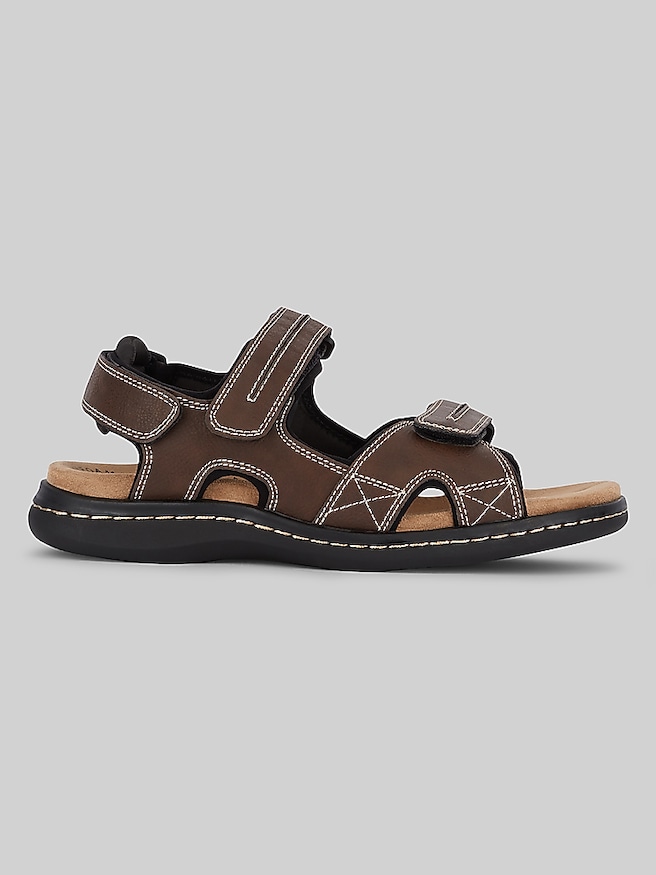
Tan sandals are casual, open footwear in a neutral shade that pairs easily with denim, chinos, shorts, and relaxed linen pants. Their appeal comes from the balance between a light, easygoing look and a color that feels more grounded than bright white without the visual weight of black. Tan can range from pale sand and warm beige to honey and light brown, so the exact shade influences how a sandal works with an outfit. A sandy tone blends into cream pants and light-wash denim, while a richer brown stands out against navy shorts or olive chinos. For men who prefer a small, coordinated wardrobe, that flexibility makes tan sandals a useful option for casual outings, vacation packing, and time spent at home. Simple slide designs have a clean appearance and are convenient to slip on, while adjustable straps can provide a more secure feel for outings that involve walking. A back strap adds another point of contact, which may help keep the sandal in place when moving between a hotel room, a courtyard, and a neighborhood café. Tan is also a versatile color within the broader category of Summer Sandals, particularly with lightweight fabrics and uncomplicated silhouettes. With tailored shorts, a polo, and a woven belt, tan sandals can look considered without becoming dressy. With an untucked casual shirt and straight-leg pants, they create a relaxed outfit suited to an informal lunch or a gathering on the patio. Pants should fall cleanly rather than bunch over the straps, and shorts with a neat hem help balance a substantial footbed. Sandals remain casual footwear, even when made from polished leather, so closed-toe shoes are generally the better choice for business settings, formal celebrations, or venues with a more structured dress code. The most useful pair is one that suits both the wearer's routine and the level of formality expected at the destination.
Materials and construction make a noticeable difference in how tan sandals feel, age, and perform. Leather uppers often have a richer surface and can soften with wear, though they still need to fit comfortably from the start. Smooth leather may be easier to wipe clean than suede, while suede offers a softer, matte texture that works well with similarly relaxed fabrics. Both can show water marks or absorb moisture, and neither should be assumed suitable for a pool deck or shower unless the construction is expressly intended for that use. Synthetic straps vary widely: some have a leather-like finish, while others are designed to dry more readily or tolerate frequent cleaning. Textile straps can feel flexible against the foot, but seams, edges, and adjustment hardware deserve attention because those contact points can cause rubbing. Underfoot, a cushioned footbed can soften the feel of each step, while a firmer, contoured base may provide a more structured platform. Arch shape, heel depth, and toe contours should match the wearer's foot rather than press into it; a pronounced arch is not automatically more comfortable for everyone. When checking fit, the heel and toes should rest fully within the footbed without hanging over an edge. Straps should hold the foot securely without pinching, and the foot should not slide forward with every step. Adjustable closures are useful for accommodating foot volume, especially when the same length fits differently across designs. Trying sandals while standing and walking gives a better sense of fit than judging them while seated. A few steps can reveal whether a strap rubs the top of the foot, the toes grip to keep a slide in place, or the heel shifts sideways. For longer walks, secure straps, a stable base, and outsole traction matter more than softness alone. Tread can improve grip, but no sandal should be treated as slip-proof, particularly on wet tile, smooth stone, or uneven ground.
Care helps preserve both the appearance of tan sandals and the condition of their straps, footbeds, and soles. Because light brown surfaces can make scuffs and stains noticeable, cleaning small marks promptly is often easier than removing dirt that has settled into the material. Start with the manufacturer's care directions, then use a soft brush or cloth to lift loose dust. Smooth leather may respond well to a suitable leather cleaner and conditioner, applied sparingly and tested on a discreet area first. Suede generally calls for a suede brush and material-specific treatment rather than a wet cloth or ordinary leather conditioner. Synthetic uppers and footbeds may allow gentle wiping, but soaking, machine washing, or strong cleaners can damage adhesives, finishes, and internal layers unless explicitly permitted. After cleaning or exposure to moisture, allow sandals to air-dry away from direct heat. A radiator, hair dryer, or extended exposure to strong sunlight can dry leather excessively or affect other materials. Footbeds also benefit from regular attention, since skin oils and dust can accumulate where the foot rests. Letting footwear dry fully between uses helps keep the interior fresher, and storing it in a ventilated space prevents dampness from being trapped inside a travel bag. Durability depends on more than the thickness of a sole: secure stitching, sound strap attachments, intact closures, and an outsole appropriate to the intended surface all contribute to dependable wear. Inspect high-contact areas occasionally, especially where straps meet the base and where the heel strikes the ground. A worn tread, lifting sole, or loose strap can affect stability even if the upper still looks good. Tan sandals can also make a thoughtful gift for a father, partner, brother, or friend who enjoys casual dressing, provided the giver knows the recipient's size and preferred fit. Someone who likes easy slip-ons may value simplicity, while a frequent walker may prefer adjustable straps and a more secure heel. For travel, consider both the planned activities and the materials: a pair intended for restaurant patios and sightseeing has different demands from footwear intended for water-adjacent use. Matching the sandal to those everyday needs is what turns an appealing neutral color into footwear that earns regular use.