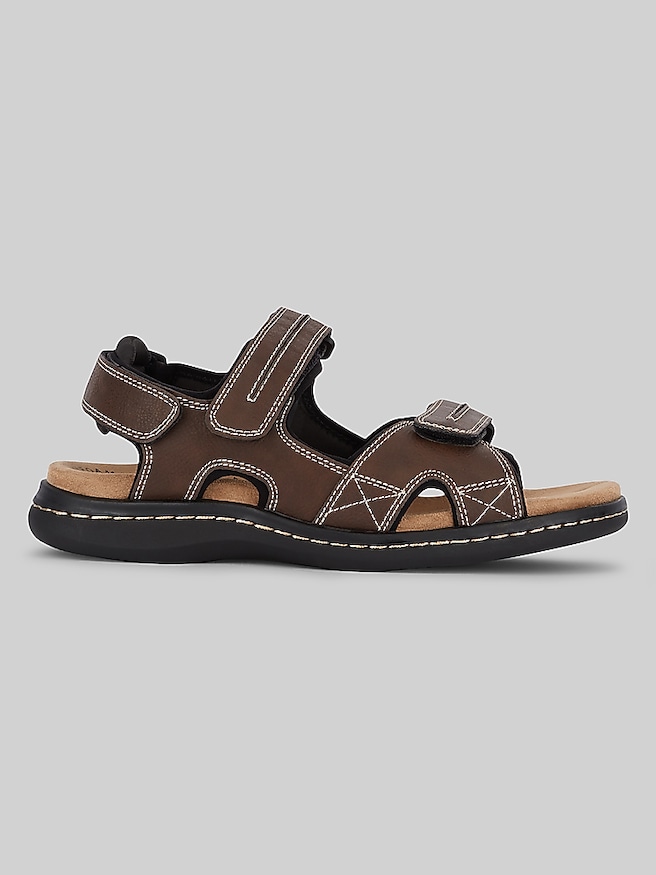
Spring sandals bring open construction, lighter coverage, and relaxed styling to everyday footwear, with shapes that range from simple flip-flops and broad-strap slides to adjustable sandals with a secure heel strap. The distinction is more than visual: a slide slips on easily for a short trip onto the patio, while a backstrap helps hold the foot in place through a longer afternoon of walking. Minimal straps create a clean profile; wider, layered straps offer more coverage and distribute contact across a larger area of the foot. For men building a spring casual wardrobe, sandals can complement chino shorts, linen-blend pants, lightweight denim, and easy knit shirts without making the outfit feel overly coordinated. Smooth leather in brown, tan, or black brings a more finished appearance to an open-toe silhouette, while woven straps, matte synthetics, and textured footbeds emphasize its casual character. A low-profile shape pairs neatly with tapered pants that finish near the ankle, whereas a more substantial sole balances the proportions of relaxed shorts or straight-leg trousers. Spring sandals suit backyard gatherings, casual lunches, vacation downtime, and unhurried weekends, though open footwear may not fit every restaurant, workplace, or event dress code. A simple leather design can look at home with an untucked button-down at a casual outdoor dinner; a washable slide makes more sense for the walk between a poolside chair and a changing area. The appeal lies in matching that easygoing look to the actual setting, rather than expecting one construction to handle every activity. Closely related Modern Sandals offer another perspective on streamlined shapes and understated detailing, qualities that also work naturally within a spring wardrobe. Restrained hardware, tidy stitching, and balanced strap proportions keep attention on the overall outfit. More sculpted soles and pronounced textures make footwear a stronger visual element, especially when the rest of the clothing stays simple. Both approaches leave room for personal style without relying on elaborate decoration.
Materials influence how spring sandals feel against bare skin, how they respond to moisture, and how much attention they need between wears. Leather straps can gradually soften and conform with use, although a comfortable fit should not depend on enduring pinching or abrasion first. Smooth leather generally allows surface dust to be wiped away, while suede and nubuck have a soft, brushed texture that needs material-appropriate cleaning and greater protection from moisture. Textile webbing is often lightweight and flexible, with drying time determined by its weave, padding, and lining. Synthetic straps vary considerably: some have a supple, fabric-backed feel, while others have a firmer molded structure. Water resistance is a feature to verify in the footwear’s care information, not something to assume from an open design or a rubberlike appearance. Underfoot, foam cushioning can soften contact with hard ground, and a contoured footbed can help cradle the heel and support the arch when its shape suits the wearer. Cushioning and support are not interchangeable; a very soft sole may feel pleasant for a few minutes without providing the stability someone prefers for extended walking. A firmer base with a defined heel cup may feel more planted, particularly when paired with straps that keep the foot centered. Cork blends, molded foams, and rubber components each contribute distinct combinations of structure, flexibility, and weight, but the full construction matters more than a single material name. An outsole with useful tread can provide better purchase than a smooth bottom, yet no tread pattern makes every wet surface safe. Spring showers, damp paving, and slick pool surrounds call for footwear suited to those conditions. For a day that includes several blocks of sightseeing or standing at an outdoor gathering, a secure fit and stable platform matter more than an especially thin silhouette. For brief, low-effort wear around a vacation property, easy entry and a comfortable strap lining may carry more weight. Sandals intended for casual use should not be treated as substitutes for protective work footwear or purpose-built hiking shoes.
Fit is especially visible in an open shoe, and small details make a noticeable difference over the course of a day. Toes and heels should remain within the footbed rather than extending over its edges, with enough room to avoid crowding but not so much extra length that the sandal catches underfoot. The widest part of the foot should sit comfortably on the platform, not spill beyond it or press hard into the side straps. Adjustable closures can accommodate differences in instep height and allow modest refinements as feet change in volume throughout the day. They cannot fully compensate for a footbed that is too narrow or an arch contour positioned in the wrong place. With flip-flops, the toe post should feel smooth and sit comfortably without forcing the toes to grip constantly; with slides, the upper should hold the foot without digging across the instep. A heel strap should help prevent excessive movement without rubbing the Achilles area. These considerations also matter when sandals are a gift for a father, partner, brother, or friend: familiar footwear habits, usual width, and preferred closure style are more useful clues than color alone. Someone who spends weekends near the water may appreciate easy-care construction, while someone who favors linen pants and casual button-downs may prefer a quieter leather silhouette. Lasting appearance depends on routine care as well as construction. Dust and grit can collect around stitching, beneath straps, and along textured footbeds, so gentle cleaning according to the material instructions helps keep those areas fresh. Damp sandals should air-dry away from direct heat, which can affect leather, adhesives, and some molded components. Leather treatments should be appropriate to the finish, and suede generally needs its own brush and cleaning method. Checking strap attachments, closure function, outsole wear, and any separation between sole layers helps reveal when a pair needs attention or replacement. Stored clean and dry without heavy objects pressing on the uppers, spring sandals are better able to retain their shape and remain comfortable companions for the casual settings they were designed to suit.