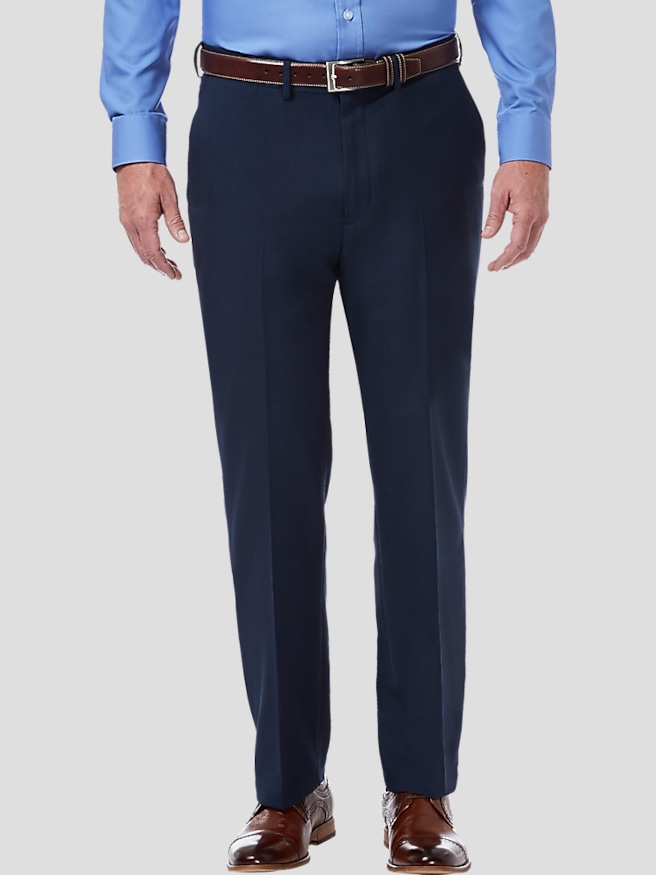
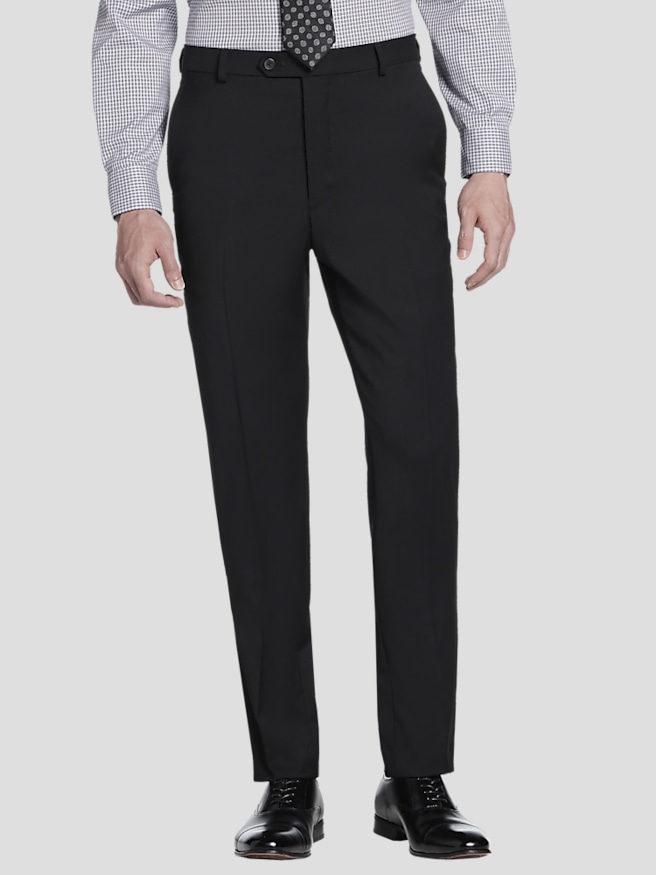
Black full length pants extend below the ankle toward the top of the shoe, creating a continuous line from the waist to the hem. That length distinguishes them from cropped trousers, while the dark color provides a versatile foundation for tailored, business casual, and relaxed outfits. The category can encompass sharply creased dress pants, cotton chinos, softly structured knit trousers, and other silhouettes, with the fabric and construction determining how formal each pair looks. A smooth surface, discreet pockets, and a defined crease tend to read as dressier; visible stitching, a washed finish, or a drawstring waistband generally suggest a more casual purpose. For a day that starts with a client presentation and ends with dinner, black trousers with a clean front can work with a tucked-in shirt and leather shoes without requiring a complete outfit change. For a less formal setting, a textured polo or an untucked shirt with a neatly finished hem offers a more relaxed balance. Black also pairs easily with white, gray, cream, light blue, and deeper accent colors, making it useful for building outfits around shirts and jackets already in a closet. An all-black combination can look especially cohesive when the textures have a deliberate contrast, such as matte trousers against a finely knitted top. When pairing separate black pants and a black jacket, check them together in natural light: undertones, sheen, and fabric texture may differ enough that they do not resemble a matching suit. Formal occasions require attention to the stated dress code, since ordinary black dress pants are not interchangeable with tuxedo trousers. Beyond office wear and evenings out, full length black pants can suit presentations, graduation ceremonies, and celebrations where a polished appearance matters. Their usefulness comes from the combination of color, proportion, and finish rather than color alone. The same dark shade can feel understated and casual in cotton twill or crisp and refined in a smooth woven fabric.
Fit determines whether black full length pants look intentional and remain comfortable through a full day. Slim fits typically sit closer through the seat, thigh, and leg, while straight fits maintain a more consistent width toward the hem. More relaxed cuts provide additional room, and a tapered leg narrows toward the ankle without necessarily fitting tightly through the thigh. These descriptions are useful starting points, but measurements and the way the fabric hangs matter more than the fit name alone. A waistband should stay in place without digging in, and front pockets should lie reasonably flat rather than pulling open. Sitting, walking, and bending reveal restrictions that may not be obvious while standing in front of a mirror. Horizontal pulling across the front or seat can indicate insufficient room, while excess folds may suggest that the cut or rise is not well suited to the wearer. Rise, the distance from the crotch seam to the waistband, affects where pants sit and how comfortably they accommodate a tucked-in shirt. Inseam and hem width work together to establish the finished length. A narrow opening often needs a cleaner, shorter finish to avoid bunching, while a wider leg can fall farther over the shoe. A slight break creates a small fold where the front hem meets the footwear; a no-break finish leaves a straighter line with little or no fold. Neither should require fabric to drag on the ground. Try pants with the shoes intended for regular wear before deciding on alterations, because loafers, lace-up dress shoes, and boots can change how the hem rests. For shoppers who need additional length, Black Tall Pants offer a related category to consider alongside waist, rise, and inseam measurements. Tall sizing and full length describe separate considerations: one addresses body proportions, while the other describes the intended coverage of the leg. Accurate measurements help distinguish between needing a longer inseam and needing a cut with more room elsewhere.
Materials influence drape, movement, care, and how well black pants hold their appearance with repeated wear. Wool and wool blends are common choices for tailored trousers because they can provide a smooth drape and a defined crease, though performance varies with the weave and blend. Cotton twill usually has a more matte, substantial look that works naturally with casual shirts and unstructured jackets. Fabrics blended with polyester or nylon may add resilience or resistance to wrinkling, depending on their construction. A small amount of elastane or spandex can provide stretch for sitting at a desk, climbing stairs, or spending extended periods on the move. Stretch does not replace proper fit, and a fabric should recover after movement rather than remain stretched at the knees or seat. Knit constructions can offer softness and flexibility, while woven fabrics often produce a more structured outline. Details also deserve attention: secure pocket stitching, a smoothly operating closure, and an even hem all contribute to everyday function. Pocket placement matters when carrying essentials, although overfilled pockets can interrupt the line of the trousers and place stress on the fabric. Black surfaces can make lint, dust, and pale fibers noticeable, so a clothing brush or suitable lint roller can help maintain a neat finish. Care should always follow the garment label. For washable pants, turning them inside out, using the recommended water temperature, and avoiding unnecessary heat may help protect the surface and color. Garments labeled for dry cleaning need the specified treatment, and pressing instructions should be checked before applying an iron. A pressing cloth can help reduce the risk of shiny marks on suitable fabrics. Hanging trousers neatly after wear helps limit creasing; allowing them to air between wears and rotating pairs can reduce repeated strain on the same areas. For a gift marking a new job or graduation, familiar waist and inseam measurements are a useful starting point, along with the recipient’s preferred fit and care routine. The most practical pair is one that suits both the occasion and the habits of the person wearing it.