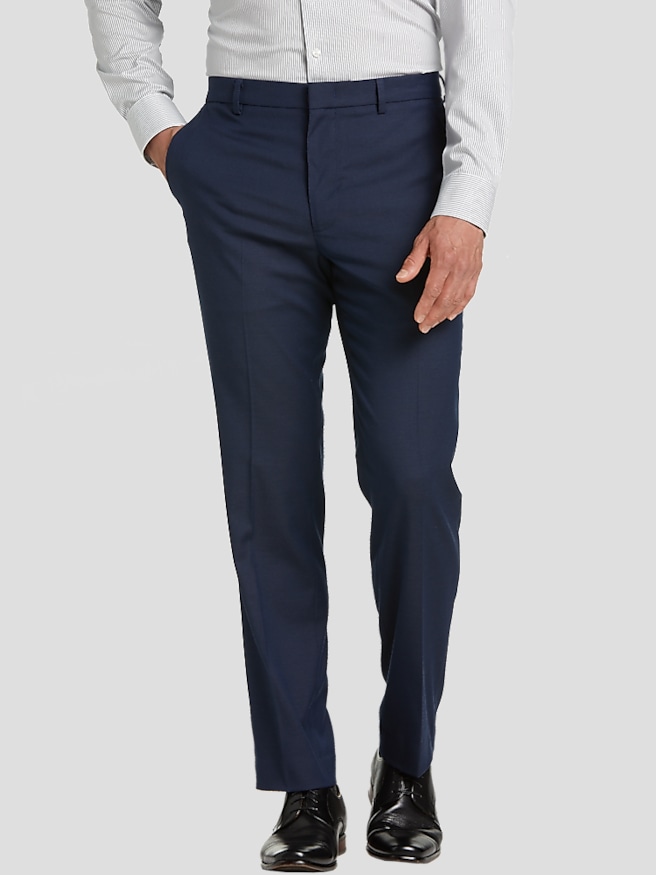
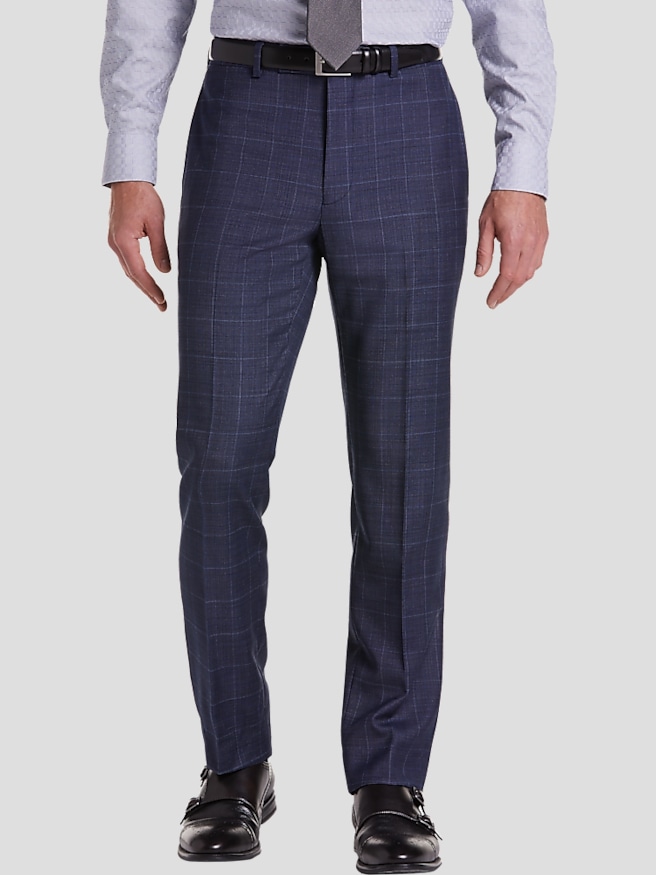
Mid-rise black pants sit below the natural waist and above the hips, offering a balanced position between low-rise and high-rise cuts. The exact placement varies with the cut and the wearer’s proportions, but the goal is a waistband that feels secure without sitting unusually high or low. Their black color creates a clean foundation for office outfits, dinner plans, and everyday combinations, while the mid-rise shape works with both tucked and untucked shirts. Rise describes the distance from the crotch seam to the top of the waistband; it does not determine how closely the legs fit. A mid-rise pair can have a slim, straight, relaxed, or more generous leg, making the relationship between the waist, seat, and thigh especially important. For men who spend much of the day seated, a comfortable fit should leave room across the lap without pulling at the fly or pressing into the stomach. Standing, sitting, and walking should not cause the waistband to slide down or the pockets to flare outward. Men with fuller thighs may prefer extra room through the upper leg, even when they want a tapered outline below the knee. Those who favor a straighter silhouette may appreciate a leg that falls cleanly from the thigh rather than narrowing sharply toward the ankle. The hem also changes the overall impression. A slight break over dress shoes feels traditional, while little or no break gives the trouser line a crisper finish. Excess fabric pooling above the shoes can make an otherwise well-fitting pair look oversized. Belt loops, pocket construction, and the shape of the waistband add practical distinctions, but a belt should finish the outfit rather than compensate for a loose waist. Small alterations can refine length or modest waist differences; they cannot reliably correct a rise that is fundamentally uncomfortable. When the proportions are right, mid-rise black pants create a smooth line from shirt to shoe without requiring constant adjustment throughout the day.
Fabric gives black pants much of their character, determining whether they feel structured, soft, casual, or distinctly dressy. Wool trousers often have a fluid drape and a refined surface that complements a pressed shirt and tailored jacket. Fabric weight and weave matter as much as fiber content: a tightly woven cloth can feel quite different from a softer, more open construction. Cotton twill typically has a more substantial, everyday character, with a diagonal weave that adds subtle texture to the black finish. Blended fabrics may combine the feel of natural fibers with qualities such as shape retention or reduced wrinkling, although performance depends on the full composition and construction. A small amount of elastane can provide give when sitting or climbing stairs, but stretch should support a good fit rather than make an overly tight cut workable. Knit constructions tend to have a softer outline, while woven trousers often hold a crease more clearly. Surface texture deserves attention, too. Matte black fabric has a restrained appearance, whereas a slight sheen can make pants feel more formal and may reveal pressure marks more readily. For business settings, mid-rise dress pants offer a tailored direction, particularly when paired with a well-fitted button-down shirt and polished leather shoes. Black trousers with a light blue shirt create clear contrast for a presentation or interview; a charcoal knit polo produces a quieter combination for a workplace with a less formal dress code. With a separate jacket, an intentional difference in color or texture usually looks more cohesive than two almost-matching black fabrics. For weddings and other dressier occasions, the invitation’s dress code remains the deciding factor, since black pants alone do not replace a required suit or tuxedo. For everyday wear, cotton-based styles can work with a simple T-shirt, an overshirt, and clean sneakers. The same black color can support many settings, but the cloth, tailoring, and accompanying pieces establish how polished the outfit feels.
Care and construction help determine how well mid-rise black pants hold their appearance through repeated wear. Smooth seams, secure buttons, neatly finished pocket openings, and a zipper that moves freely are useful details to examine. Stress often concentrates around the seat, inner thighs, pockets, and hems, so enough room for normal movement matters for durability as well as comfort. Even a sturdy fabric can wear prematurely when it is stretched tightly across the same points each day. Black cloth also makes lint, dust, and pale pet hair noticeable; a gentle clothes brush or suitable lint remover can refresh the surface without unnecessary laundering. Care instructions should always take priority over assumptions based on fabric type. Some trousers require professional dry cleaning, while washable pairs may call for a gentle cycle, cool water, or a particular drying method. When permitted by the label, washing dark colors together and turning pants inside out can help limit surface abrasion. Excessive heat may affect color, fibers, and stretch recovery, so drying and pressing temperatures deserve attention. Wool and other tailored fabrics can develop shine under a hot iron; an appropriate pressing cloth and the recommended setting help protect the finish. Hanging trousers neatly after wear gives creases a chance to settle and helps avoid a crushed waistband or rumpled knees. Pants should be fully dry before storage, with enough space around them to prevent persistent folds. For frequent commuters, desk-based professionals, and men who move between appointments and evening plans, easy movement and manageable care can be just as valuable as a sharp silhouette. Mid-rise black pants can also make a practical gift when the recipient’s preferred measurements, leg shape, and fabric feel are already known. A frequently worn pair provides a more useful reference than the waist size alone, since rise, inseam, and room through the seat all influence comfort. Thoughtful attention to those details supports a pair that feels familiar in use and looks appropriate across a broad range of everyday occasions.