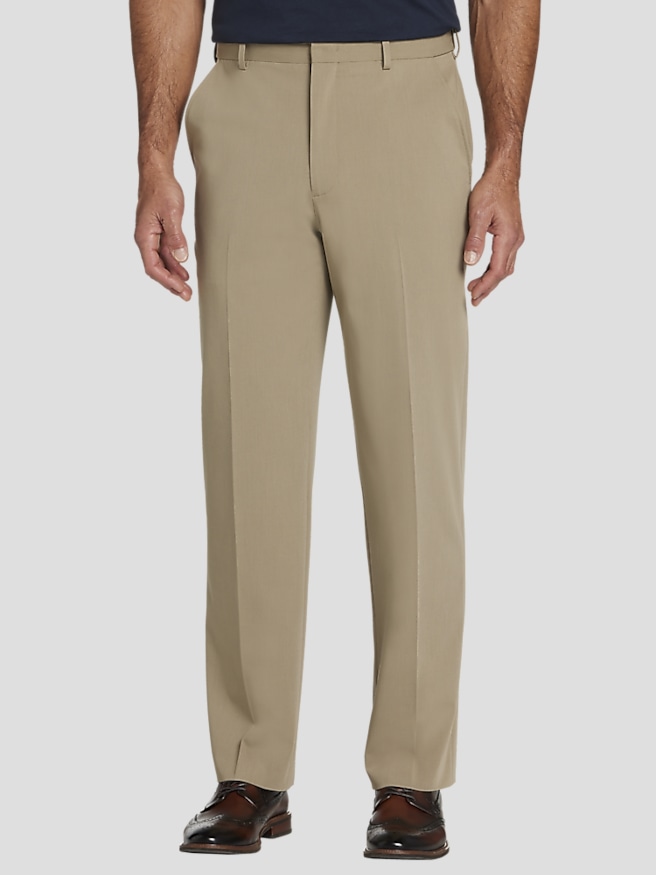
Mid-rise dress pants sit between the hips and the natural waist, creating a balanced silhouette that works with tucked-in shirts, tailored jackets, and polished everyday outfits. The waistband typically rests below the navel, though its exact position depends on body proportions and the way the trousers are cut. Rise describes the distance from the crotch seam to the top of the waistband; it does not determine whether the leg is slim, straight, or generously cut. That distinction matters when finding dress pants that look sharp without feeling restrictive through a full workday. Within the broader category of mid-rise men's pants, dress trousers emphasize a clean drape, refined fabric, and details suited to offices, business dinners, and celebrations. A well-proportioned pair rests securely at the waist without relying on a tightly cinched belt. The front lies relatively smooth, side pockets stay flat, and the seat has enough room to sit comfortably without excess fabric gathering beneath it. For someone moving between a desk, a conference room, and an evening reservation, that balance can be more useful than an especially narrow silhouette. Flat-front styles create an understated look, while pleated fronts can provide additional room through the upper leg and introduce a more traditional tailored appearance. Neither detail changes the rise itself. Leg shape and length complete the effect: a tapered leg gives a closer line toward the ankle, while a straight leg maintains more consistent room below the knee. A slight break allows the hem to rest lightly on the shoe; little or no break creates a cleaner ankle line. The most convincing fit looks comfortable in motion, not just while standing in front of a mirror, with a waistband that stays level and fabric that falls neatly after sitting down.
Fabric gives mid-rise dress trousers much of their character, influencing how they hang, feel, and recover after wear. Wool is valued in tailoring for its drape, breathability, and natural resilience, making it a familiar choice for polished business clothing. A finely woven wool fabric can look smooth and refined, while a more textured weave adds depth without requiring a bold pattern. Polyester blends can contribute durability and wrinkle resistance, although performance depends on the full fabric composition, weave, and construction. Rayon or viscose may lend softness and fluidity, and a small amount of elastane or spandex can add give for sitting, walking, and bending. Stretch supports comfort, but it does not replace adequate room through the waist, seat, and thighs. A fabric stretched taut across the front will rarely drape as cleanly as one allowed to fall naturally. Cotton dress trousers generally have a more relaxed character, with the finished appearance depending on the weave, surface, and pressing. Fabric weight also affects the silhouette: a substantial cloth may hold a defined crease, while a lighter, more fluid cloth can create a softer line. Construction deserves equal attention. Neatly finished seams, securely attached closures, and smoothly sewn pocket openings help trousers maintain their appearance through repeated wear. A hook-and-bar closure can keep the waistband front discreet, while belt loops offer a familiar finishing option. Lining, when included, can improve the way fabric moves against the body, though lining coverage varies by design. For long stretches seated at a desk or traveling between appointments, the combination of smooth interior finishing, sufficient thigh room, and a comfortable waistband matters more than any single fiber claim. Solid navy, charcoal, and gray provide versatile foundations, while subtle checks or restrained texture add visual interest without dominating the rest of an outfit. The overall impression comes from how those elements work together: fabric, proportion, finishing, and an appropriate level of formality.
Mid-rise dress pants fit naturally into a wardrobe built around pieces that can serve more than one occasion. With a tucked-in dress shirt, leather belt, and oxfords, they create a straightforward business outfit that looks intentional without needing elaborate accessories. A fine-gauge knit or an open-collar shirt softens the effect for a less formal office or dinner, while a sport coat adds structure for a presentation, graduation, or anniversary celebration. For wedding guests, the invitation’s dress code remains the best measure of whether separate dress trousers are appropriate; occasions calling for a suit or black tie require more than a polished pair of pants. The waistband position also influences the relationship between shirt and trousers. Enough room through the rise helps a tucked shirt settle neatly, rather than pulling sharply when the wearer sits, and a properly fitted jacket can skim over the waistband without fabric bunching underneath. Shoes affect the final proportions, so hem length should complement the footwear most likely to be worn with the trousers. Care is equally important to maintaining that finished appearance. The garment’s care label determines whether washing, professional cleaning, ironing, or steaming is suitable, since similar-looking fabrics can have distinct requirements. Machine-washable construction should never be assumed from fiber content alone. Prompt attention to spots, using a method appropriate to the fabric, can help prevent a small mark from becoming a lasting distraction. Between cleanings, airing trousers and hanging them neatly can reduce unnecessary handling and help preserve their shape. A suitable trouser hanger supports orderly storage, and careful pressing at the recommended setting helps maintain a crease without creating unwanted shine. Rotating pairs also gives fabric time to recover between wears. With thoughtful care and a fit that accommodates everyday movement, mid-rise dress pants can remain a dependable foundation for professional commitments, important gatherings, and the many occasions that call for looking composed.