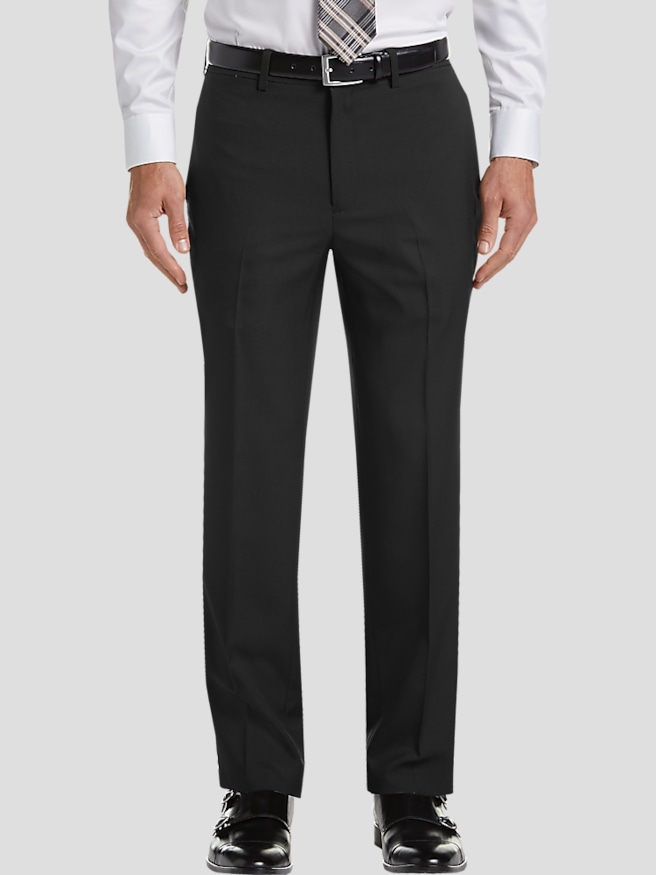
Black mid-rise pants sit between low-rise and high-rise silhouettes, with a waistband that typically rests below the natural waist and above the hips. The exact position depends on the cut and the wearer’s proportions, but the appeal is straightforward: a balanced fit that works with tucked shirts, untucked knits, and tailored jackets. Black adds versatility, creating a clean foundation for office outfits, evening plans, and everyday dressing without requiring a complicated color palette. A white button-down and black leather shoes give the look a crisp finish, while a textured polo and understated sneakers make it more relaxed. The same color can look distinctly dressy or casual depending on the fabric, pocket construction, and finishing details. Smooth cloth, discreet back pockets, and a pressed crease suggest tailored trousers; visible stitching, denim texture, and utility-inspired pockets give pants a more informal character. Mid-rise describes the waistband position rather than the leg shape, so it can accompany slim, straight, or fuller cuts. That distinction matters for men who like a close fit through the leg but need comfortable room at the waist, or who prefer a straight silhouette without a higher waistband. For workdays that involve sitting at a desk, standing through presentations, and walking between appointments, the waist should feel secure without digging in or pulling downward at the back. A shirt should tuck in comfortably, and the front should lie relatively flat rather than bunching beneath the belt. Black mid-rise pants also make sense for milestone occasions where a polished appearance matters but a full suit is not required, such as a graduation dinner, an anniversary celebration, or a business reception. Their understated appearance leaves room for personality elsewhere in the outfit, whether that comes from a patterned shirt, a suede loafer, or a jacket with visible texture.
Fabric has a substantial effect on how black mid-rise pants feel, drape, and hold their appearance through repeated wear. Wool and wool-blend trousers often have a fluid drape suited to tailored outfits, while cotton twill usually gives a more substantial, casual impression. Black denim brings a familiar structure that works well with polos, casual button-downs, and knitwear. Blends containing synthetic fibers may help with shape retention or wrinkle resistance, though performance depends on the complete fabric composition and construction. A small amount of stretch can make bending, sitting, and climbing stairs more comfortable, but stretch is not a substitute for adequate room through the seat and thighs. Pants that pull across the front pockets or form pronounced horizontal lines through the upper leg may be too close-fitting, even if the waistband closes easily. A comfortable mid-rise fit should allow natural movement while keeping the waistband in place without an overtightened belt. Slim legs create a narrower outline, straight legs fall more evenly from the thigh, and fuller cuts provide additional space and a softer line. None of these shapes is inherently more polished; the strongest result comes from proportions that suit the wearer and the intended outfit. Length also changes the impression. A hem that just meets the shoe creates a crisp finish, while a slight break adds a traditional touch. Excess fabric pooling around the ankle can obscure the leg shape and make otherwise well-fitting pants look untidy. Shoe shape deserves consideration, too: a narrow hem needs enough clearance to fall neatly over the footwear. For outfits centered on tailoring, Mid Rise Dress Pants offer a related direction, with the emphasis on a balanced waist position and a dressier overall appearance. Details such as pleats, pocket placement, belt loops, and waistband construction further influence comfort and character, particularly when a shirt is tucked in and the top of the pants remains visible.
The lasting usefulness of black mid-rise pants comes from both thoughtful construction and care suited to the fabric. Even stitching, secure pocket edges, a smooth-operating closure, and neatly finished hems are practical details that matter when pants become part of a regular rotation. Areas around the pockets, seat, and inner thighs experience frequent friction, so enough room for movement helps avoid unnecessary strain on seams. Black fabric can reveal lint, surface dust, and fading, making a lint brush and careful laundering useful parts of routine upkeep. The care label should determine whether pants are machine washable, hand washable, or professionally cleaned. For washable fabrics, turning the pants inside out, washing with similar dark colors, and using the recommended water temperature can help preserve their appearance. Excessive heat may affect color, fit, or stretch fibers, so drying and pressing instructions deserve the same attention as washing instructions. Tailored trousers generally benefit from being hung neatly after wear rather than left folded over a chair, and pockets should be emptied to prevent bulges from distorting the fabric. When pressing is appropriate, the correct heat setting and a pressing cloth can help reduce unwanted shine on dark material. In daily use, black pants pair easily with shades such as white, gray, navy, olive, and burgundy, but texture keeps those combinations from feeling flat. A matte trouser beside a softly textured jacket offers subtle contrast, while a fine-gauge knit creates a quieter, streamlined outfit. When combining black pants with a black jacket, differences in undertone and fabric can be noticeable; pieces intended as a matching suit provide a more consistent result when that is the goal. These pants can also be a practical gift for someone building an office wardrobe, starting a new role, or replacing a well-worn favorite. Knowing the recipient’s waist measurement, inseam, preferred leg shape, and usual dress requirements makes the choice more personal. Whether worn for a long workday or dinner out, a comfortable rise, suitable fabric, and clean hem give black pants their dependable place in a wardrobe.