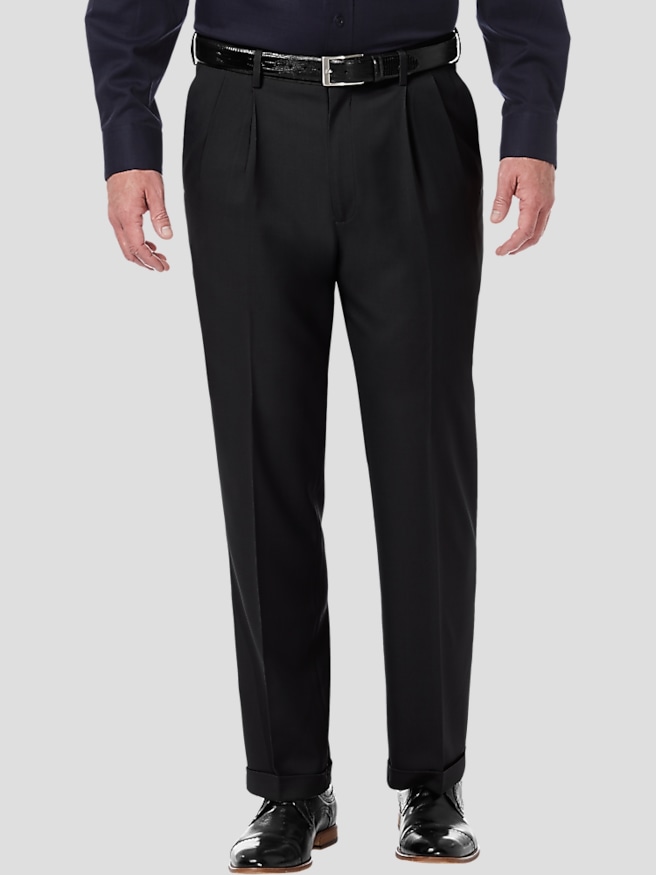
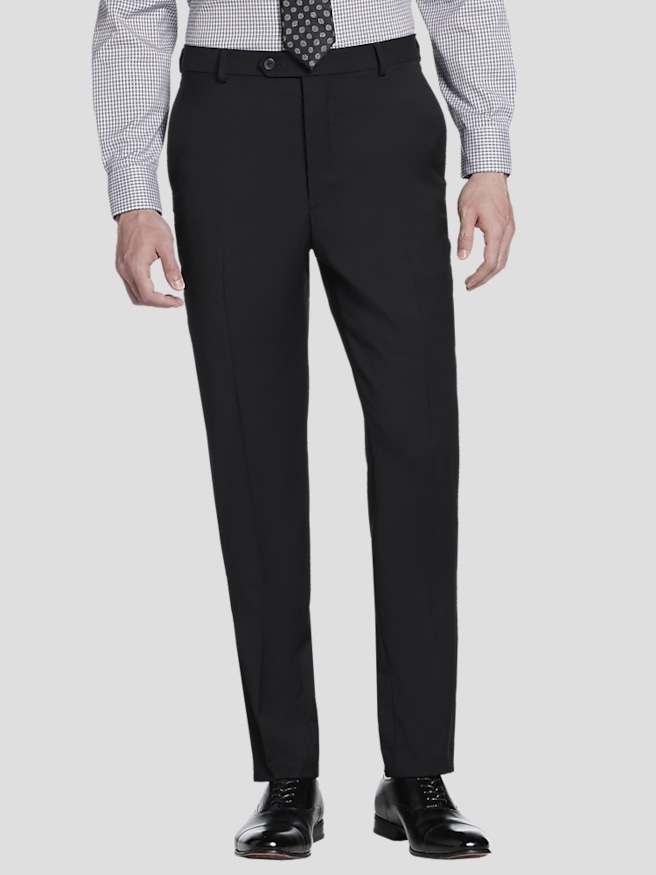
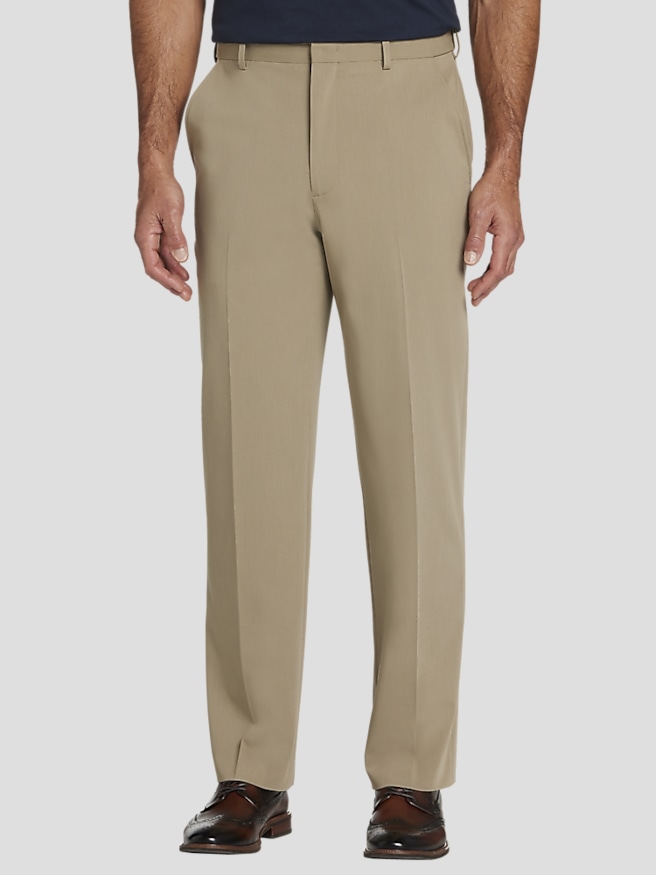
Black tall pants are trousers with longer inseams and, depending on the cut, adjusted proportions that help accommodate a taller frame. For men whose standard-length pants stop short at the ankle, the right tall fit provides enough length while keeping the waist, seat, and leg shape in balance. Black adds versatility: a clean, dark trouser can look polished with a dress shirt and blazer, understated with a fine-gauge sweater, or relaxed with a tucked-in polo. The distinction between tall sizing and big and tall sizing matters here. Extra height does not necessarily call for extra room through the waist or thigh, so inseam and waist measurements are separate considerations. A taller man with a narrow build may prefer a slim leg, while someone with fuller thighs may be more comfortable in a straight or roomier cut. Neither should have to compensate for insufficient length by choosing a waist that is too large. Rise—the distance from the crotch seam to the top of the waistband—also affects where pants sit and how comfortably they move when seated. For a waistband position between lower and higher rises, Mid Rise Black Pants offers a related starting point, with inseam and overall proportions still worth checking separately. Tall sizing is not standardized across all cuts, and the size label alone cannot describe how a pair will feel. A useful comparison is a well-fitting pair measured along the inside leg from the crotch seam to the hem. Finished length then depends partly on footwear and the intended silhouette. A slight break, where the hem rests against the shoe, gives dress trousers a familiar tailored finish; little or no break creates a cleaner ankle line. Excess fabric gathering over the shoe can interrupt that line, even when the waist fits correctly. The goal is length that looks deliberate rather than merely longer.
Fabric gives black tall pants much of their character, influencing the way they drape, move, and hold their shape through repeated wear. Wool and wool-blend dress trousers can provide a fluid fall through the leg and a defined crease, making them well suited to offices, presentations, ceremonies, and dinners that call for a more finished appearance. Cotton twill generally has a more casual surface and a substantial hand, working naturally with button-down shirts, knitwear, and leather sneakers. Blends containing polyester can contribute to wrinkle resistance and shape retention, though performance depends on the fabric construction and finishing as well as the fiber content. A small amount of elastane may add useful give through the seat and knees, especially during a commute or a long stretch at a desk. Stretch is a comfort feature, not a substitute for adequate room: pockets that pull open, horizontal strain lines across the thighs, or a waistband that digs in while sitting can signal that the proportions need adjustment. Conversely, loose fabric beneath the seat or deep folds down the legs may suggest more volume than the intended silhouette needs. Flat-front pants offer an uncluttered appearance, while pleats can provide additional room through the upper leg when properly fitted. Pocket construction, waistband stability, and secure stitching at stress points also influence everyday comfort and durability. On black fabric, texture can be as noticeable as color. A matte twill reads differently from a smooth dress weave, and a subtle surface pattern can add depth without making an outfit busy. Fabric weight affects how a longer leg hangs, too; a cloth with some body may maintain a straighter line, while a lighter, softer weave can move more freely. For frequent travel or days that move from a desk to an evening engagement, a balance of drape, recovery, and comfortable movement often matters more than any single fabric claim.
The appeal of men's black tall pants is how readily they support a repeatable wardrobe without making every outfit look the same. With a pale blue shirt, black leather belt, and polished lace-ups, tailored trousers create a straightforward office combination. With a textured knit polo and loafers, the same general silhouette feels less formal while retaining a clean line. Black pants can also anchor a dark, tonal outfit, where differences in texture help distinguish the shirt, jacket, and trousers. When pairing separate black pieces, checking them together in natural light can reveal differences in undertone or sheen that are less obvious indoors. A contrasting jacket often looks more intentional than two nearly matching blacks. For interviews, client meetings, restaurant evenings, or celebrations, the appropriate choice depends on the dress code and the construction of the pants; black color alone does not make casual trousers formal or turn separate pieces into a matching suit. Longer inseams also make thoughtful finishing important. Any hemming is best assessed with the shoes likely to be worn, and substantial shortening can affect the leg opening on a tapered cut. Care helps preserve both the dark color and the silhouette. The garment's care label should take priority, since washable cotton blends and tailored wool trousers may need very different treatment. For machine-washable fabrics, washing inside out with similar dark colors and following the recommended water temperature can help limit visible fading and abrasion. Excessive dryer heat may affect stretch fibers or cause shrinkage, making the specified drying method particularly important when length is a key concern. Prompt attention to stains, gentle lint removal, and suitable hanging or folding keep black surfaces looking cleaner between wears. Pressing should follow the fabric's heat requirements to avoid shiny marks. As a practical gift for a taller recipient, black pants are easiest to choose when waist, inseam, preferred rise, and usual leg shape are already known. Those details help turn a versatile wardrobe basic into something comfortable enough for regular use.