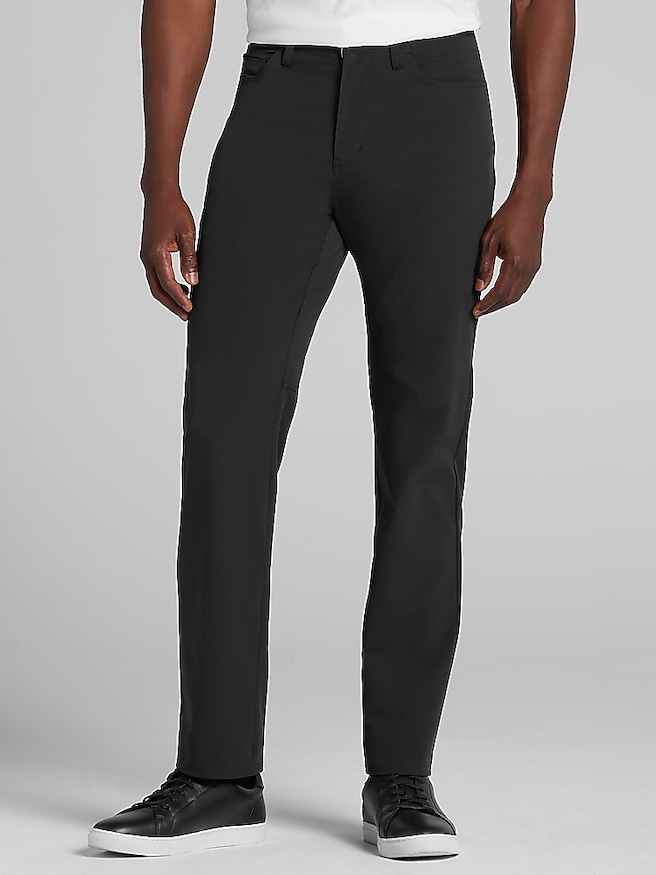
Black pants are a versatile foundation for men’s outfits, spanning tailored dress trousers, cotton chinos, casual five-pocket styles, and softer stretch designs. Their defining color makes them easy to coordinate, but fabric, cut, and finishing determine whether a pair feels suited to an office presentation, a dinner reservation, or an afternoon away from work. Black dress pants typically have a cleaner surface and more structured shape, with details such as pressed creases, discreet pockets, and a tailored waistband. Chinos offer a less formal alternative, often using cotton twill for a matte finish that works with polos, button-down shirts, and understated sneakers. Black denim brings a more casual texture, while knit constructions can provide flexibility with a trouser-like appearance. The distinction matters when an outfit needs to move comfortably between settings: a smooth black trouser worn with a tucked-in shirt and leather shoes creates a sharper impression than a visibly textured five-pocket pant, even when both share the same color. Material also influences drape and feel. Wool and wool blends can offer a refined surface and a fluid line through the leg, while cotton provides familiar softness and a more structured, casual hand. Polyester and other synthetic fibers may contribute shape retention or wrinkle resistance, depending on the weave and finish. A small amount of elastane can add give for sitting, walking, and bending, although stretch content alone does not determine comfort. Fabric weight, waistband construction, and room through the seat are just as important. Black also offers a useful backdrop for color and texture elsewhere in an outfit. A white shirt creates crisp contrast, a charcoal knit keeps the palette understated, and a burgundy or olive shirt adds depth without competing with the trousers. For coordinated tailoring, closely matched fabric and finish matter; two black garments can have noticeably distinct undertones or levels of sheen. A separate black trouser works particularly well when the jacket is intentionally contrasting rather than almost, but not quite, a match.
Fit gives black pants much of their character, and the most useful distinctions go beyond the size printed on the label. Slim fits generally sit closer through the seat and thigh, creating a narrower outline without necessarily being tight. Straight fits maintain a more consistent line through the leg, while tapered cuts narrow toward the ankle and can balance extra room higher up. A fuller cut offers more space and a relaxed drape, especially in fabrics with enough body to hold their shape. None of these silhouettes should depend on pulling across the pockets or straining at the closure to look neat. A comfortable waistband rests securely without digging in, and the rise should allow the trousers to sit where intended rather than requiring constant adjustment. For someone who spends much of the day at a desk, room through the seat and upper thigh can matter more than an especially narrow ankle opening. For someone moving between appointments, a secure waist and an unrestricted stride help the outfit remain comfortable beyond the first few minutes of wear. The hem changes the overall impression as well. A slight break creates a small fold where the fabric meets the shoe, while little or no break gives a cleaner, more abbreviated finish. Excess fabric pooling over the footwear can interrupt an otherwise polished line. Shoe shape deserves consideration, since a narrow opening may catch on a substantial shoe while a wider hem can overwhelm a sleeker loafer. Construction details contribute to both appearance and durability: secure seams, neatly finished hems, stable pocket openings, and a well-supported waistband help trousers handle repeated wear. Pleats can provide extra room and visual depth, while flat-front designs offer a simpler surface. Pocket placement also affects how smoothly a pair sits, particularly when carrying a phone or wallet. Even well-fitted black trousers can lose their clean shape when pockets are overfilled, so a lighter everyday carry helps preserve the intended silhouette.
Black pants also earn their place through repeated use, making care an important part of their long-term appearance. Dark fabrics can show lint, dust, and pale fibers more readily than lighter colors, so a lint roller or clothing brush is useful before an interview, client meeting, or evening event. Care requirements vary by fiber, lining, construction, and finish; the garment’s care label is the most reliable reference. Machine-washable styles often benefit from being turned inside out and washed with similar dark colors, using the recommended cycle and detergent amount. Excessive heat and unnecessary washing can contribute to fading or wear, while spot treatment, airing between wears, and careful storage may reduce the need for frequent cleaning. Tailored trousers that require professional cleaning need a care routine suited to their construction rather than the same treatment as casual cotton pants. Creases and surface wrinkles also call for attention to the fabric’s heat tolerance, since an overly hot iron can leave shine on dark material. A pressing cloth can help protect the surface when ironing is permitted. Hanging trousers neatly or folding them along their intended lines helps limit avoidable wrinkles, and addressing a loose hem or button early can prevent a small repair from becoming a larger problem. For celebrations, Black Party Pants can anchor a dressed-up outfit with a patterned shirt, textured jacket, or polished loafers, while the invitation’s dress code should determine the level of formality. Ordinary black dress trousers are not automatically a substitute for tuxedo trousers at a black-tie event. Beyond special occasions, black pants can be a practical gift for a graduate beginning office work, a partner refining an everyday wardrobe, or a family member who prefers versatile clothing. A known waist size, inseam, preferred rise, and familiar leg shape make that choice more personal. The strongest everyday pair is one that feels comfortable through a full day, suits the wearer’s routine, and maintains a neat appearance with realistic care.