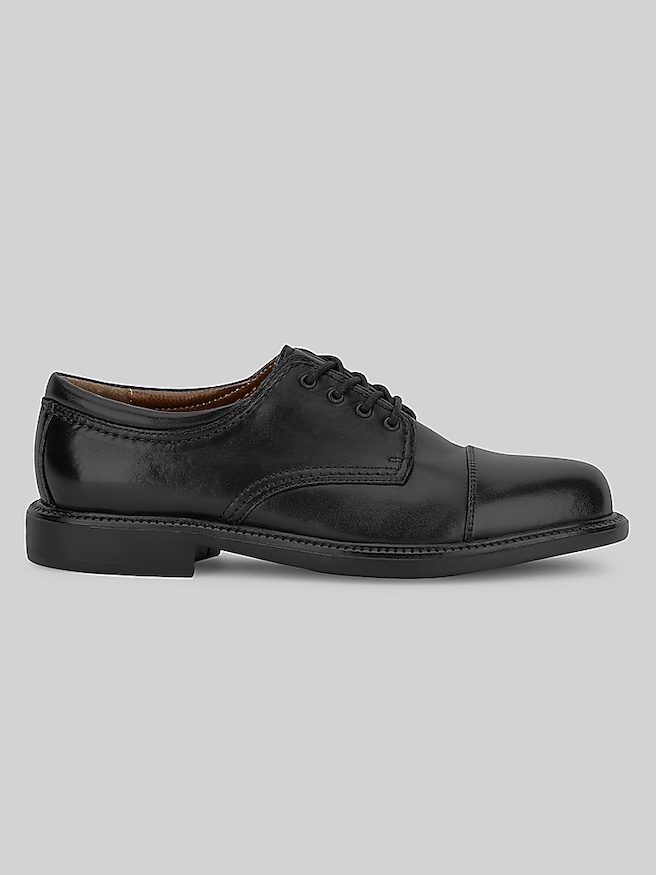
Black classic shoes are defined by familiar silhouettes, restrained detailing, and a color that works across tailored and casual wardrobes. The category spans polished leather oxfords, versatile derbies, streamlined loafers, and understated sneakers, with each shape bringing a distinct level of formality. An oxford has closed lacing, with the eyelet sections stitched beneath the front of the upper, creating a close, neat profile that complements a business suit. A derby uses open lacing, which gives the upper a slightly more relaxed appearance and often allows greater adjustment over the instep. Loafers dispense with laces altogether, offering a clean slip-on shape that can look sharp with dress trousers or easygoing with chinos. Simple black canvas low-tops and low-profile suede sneakers belong on the casual side of the collection, particularly when their branding and trim are minimal. What makes these designs classic is not a single toe shape or sole thickness, but a balance of proportions that does not compete with the rest of an outfit. A gently rounded or almond-shaped toe tends to transition comfortably between settings, while a slim sole reads as dressier than a heavily textured one. For an interview, black cap-toe oxfords with charcoal trousers keep the focus on a crisp, professional appearance. For a dinner reservation, black loafers with a navy jacket and neatly hemmed pants feel composed without looking overly formal. At a wedding, smooth black leather shoes can complement a dark suit; a tuxedo generally calls for a more formal option, such as patent leather or highly polished plain-toe oxfords. Casual black sneakers work well with dark denim and an unstructured jacket when the setting allows a relaxed approach. Across these uses, the appeal is straightforward: black footwear creates a clean foundation, repeats easily throughout a wardrobe, and leaves room for texture or color elsewhere in the outfit.
Materials and construction influence how black classic shoes look, feel, and hold up to repeated use. Smooth leather has a defined surface that can usually be cleaned, conditioned, and polished according to its finish, making it a practical choice for footwear worn with tailoring. Full-grain leather retains the hide’s natural surface and may develop visible character with wear, while corrected-grain leather is treated for a more uniform appearance. Neither description alone tells the whole story; leather quality, lining, stitching, and construction all contribute to performance. Suede offers a soft, matte texture that makes a black loafer or sneaker feel less formal, although its nap needs care that differs from smooth leather. Canvas brings a lightweight, relaxed appearance to low-top designs, while synthetic uppers vary considerably in flexibility, breathability, and maintenance requirements. Underfoot, leather soles have a traditional dress-shoe appearance, but grip depends on their finish and the walking surface. Rubber soles often provide more traction and cushioning, with slimmer versions preserving a tailored profile. A welted construction may allow a skilled cobbler to replace worn soles, depending on the design and condition of the upper; other constructions may be less straightforward to repair. Fit matters just as much as these details. Toes should have space to rest naturally without pressing against the front or sides, and the widest part of the foot should sit comfortably within the widest part of the shoe. A secure heel and supportive midfoot help prevent excessive movement, but neither should require painful pressure. Leather can soften with wear, yet a shoe that pinches sharply should not be expected to become the right size through use. Trying shoes with the socks intended for them gives a more useful sense of fit, especially when comparing thin dress socks with thicker casual pairs. For long ceremonies, office days, or events with extended standing, cushioning, flexibility at the forefoot, and room for any needed insert deserve particular attention.
The most useful pair of black classic shoes is one that fits both the foot and the routine. Someone who spends the day moving between a desk, conference rooms, and client visits may favor a restrained lace-up with a comfortable lining and a discreet rubber sole. Someone dressing mainly for occasional celebrations may put greater emphasis on a polished finish that pairs naturally with a suit. For a graduate starting a professional wardrobe, classic black dress shoes can make a thoughtful gift, provided the recipient’s size, width, and preferred style are known; footwear fit is too individual to judge from appearance alone. Small styling choices help the same shoes feel purposeful across multiple outfits. Black leather shoes generally pair easily with a black leather belt, although matching the exact surface texture is less important than keeping the overall level of formality consistent. Dark socks create continuity with trousers, while a subtle pattern adds interest without interrupting a tailored line. Trouser hems also affect the result: excessive fabric pooling over the shoe can hide its shape, whereas a tidy hem lets the toe and vamp remain visible. For casual outfits that call for stronger contrast, Black and White Shoes offer a distinct alternative to an all-black finish. Regular care helps preserve whichever silhouette suits the wardrobe. Removing surface dust after wear keeps grit from collecting along seams, and allowing shoes to air out before putting them away helps manage internal moisture. Unfinished cedar shoe trees can help leather footwear retain its shape and absorb some moisture between wears. Smooth leather benefits from compatible conditioner and polish used sparingly, while suede typically needs a dedicated brush and products labeled for its finish. Patent leather and coated materials require their own care methods, so the manufacturer’s instructions should take priority. Checking heel edges, sole wear, and loose stitching before damage spreads can extend useful life. With sound fit, appropriate materials, and consistent upkeep, classic black footwear can remain a dependable part of everyday dressing and milestone occasions alike.