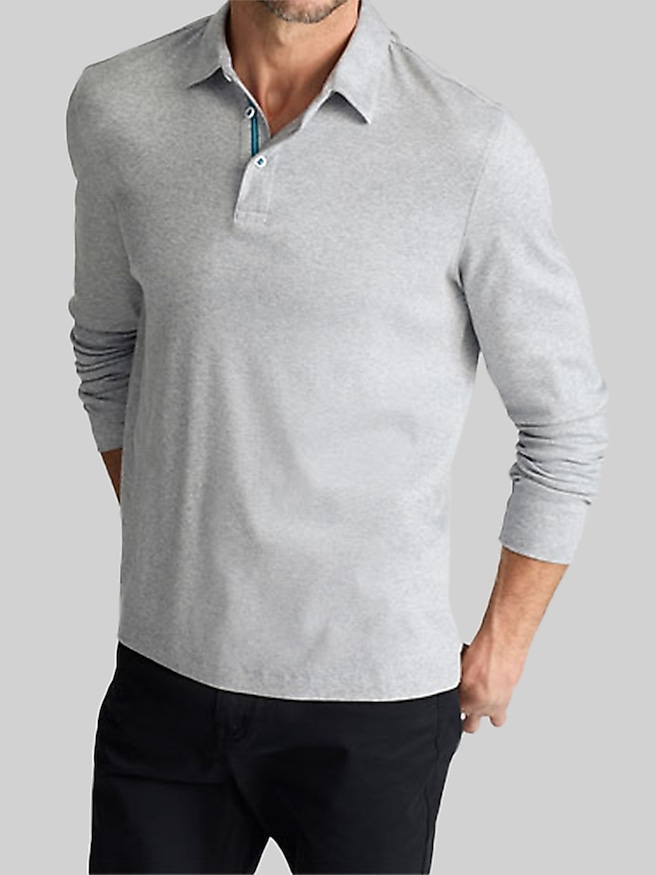
XLT polo shirts combine extra-large sizing with proportions designed for a taller frame, offering added body length and, depending on the cut, added sleeve length. XLT generally means extra large tall: a size intended for someone who needs the chest room of an XL with more coverage through the torso. That distinction matters when a standard-length polo fits across the shoulders but pulls above the waistband while reaching for an overhead shelf or sitting down at a desk. A tall cut gives the shirt more room to move vertically without requiring a wider body simply to gain length. Exact measurements vary by maker and style, so chest circumference, shoulder width, and finished shirt length provide a clearer picture than the size label alone. A comfortable fit lets the shoulder seams sit near the edges of the shoulders, the button placket lie flat, and the fabric skim the chest without pulling or forming deep folds. Short sleeves should leave enough room for easy arm movement without flaring excessively, while long sleeves should reach the wrists without bunching heavily at the cuffs. Worn untucked, the hem should provide comfortable coverage without looking like an oversized tunic; tucked in, it should leave enough fabric below the waistband to stay secure through ordinary movement. Side vents can help the hem sit smoothly over the hips, and a slightly longer back hem can provide useful coverage when seated. XLT and 3XL describe distinct sizing needs rather than interchangeable steps on one scale. XLT emphasizes tall proportions in an extra-large size, while 3XL generally provides more room around the chest and body and does not automatically indicate a tall cut. For a broader fit comparison, 3XL Polo Shirts represent another size category, with actual dimensions still worth checking. The appeal of an XLT polo is balance: enough length for a taller build, with a collar and silhouette that look intentional rather than simply oversized.
Fabric gives an XLT polo much of its character, from the textured feel of cotton piqué to the smoother surface of jersey knit. Piqué has a small, raised pattern that adds visual depth to solid colors and gives the shirt a familiar sporty appearance. Cotton versions tend to feel soft and breathable, making them comfortable for desk work, relaxed meals, and everyday errands, though cotton can hold moisture and take longer to dry after heavy perspiration. Jersey typically feels smoother against the skin and often has a more fluid drape, which can work well beneath a sweater or casual jacket. Interlock knits often have a more substantial, even surface, but weight and construction matter more than the knit name alone when judging warmth or opacity. Cotton blended with polyester can balance a familiar handfeel with easier drying and improved shape retention. Performance fabrics are often designed to move moisture away from the skin and dry efficiently, useful for a round of golf, a busy commute, or an afternoon spent walking between appointments. Those benefits depend on the fabric and finish, however; a synthetic fiber label alone does not establish moisture-wicking performance, odor control, or sun protection. A small amount of elastane can add stretch for bending, driving, and swinging a club, while recovery helps the shirt return to shape afterward. Fabric weight also influences how a tall polo wears. A lighter knit can feel comfortable indoors or beneath layers, while a midweight knit may offer more coverage and a steadier drape across a long torso. During the cooler months, a polo can sit neatly under a quarter-zip or cardigan without the bulk of a heavier shirt. The collar should rest comfortably at the neckline rather than bunch beneath the outer layer. Solid colors create a clean foundation for chinos or dark denim, while restrained stripes and subtle textures add interest without making an everyday outfit feel overly dressed up.
The usefulness of extra-large tall polo shirts extends across the ordinary transitions of a day: an informal office setting, lunch with friends, a drive out of town, or a family gathering where a T-shirt feels too casual. A collar and short button placket bring structure, while the knit body allows the ease expected from casual clothing. In workplaces that accept polos, a smooth, well-fitting style tucked into chinos creates a composed look without requiring a dress shirt. For downtime, an untucked polo with straight-leg jeans keeps the proportions relaxed, provided the hem does not overwhelm the rest of the outfit. Taller men who spend much of the day seated may especially appreciate the coverage of a tall cut, and those who move frequently can benefit from stretch and side vents that reduce restriction. Lasting wear depends on both construction and care. Even stitching, secure buttons, tidy buttonholes, and a placket that lies straight are useful signs of careful finishing. Reinforcement at side vents can help support areas that experience repeated tension, while a collar that retains its shape keeps the shirt looking neat after washing. Following the garment’s care label is especially important for tall sizing because shrinkage can reduce the very length that makes the fit useful. When the label permits, washing in cool water with similar colors and avoiding excessive dryer heat can help limit shrinkage and fading. Turning the shirt inside out may reduce surface abrasion, and keeping it away from exposed zippers or hook-and-loop fasteners in the wash can help prevent snags. Performance fabrics may need care that avoids fabric softener, so their label instructions deserve attention. Reshaping the collar and removing the shirt promptly after drying can also help maintain a tidy appearance. As a gift, an XLT polo suits someone whose usual XL shirts run short, particularly when the preferred fit, fabric, and measurements are known. A familiar color and an easy-care knit make it a practical addition to a regularly worn wardrobe.