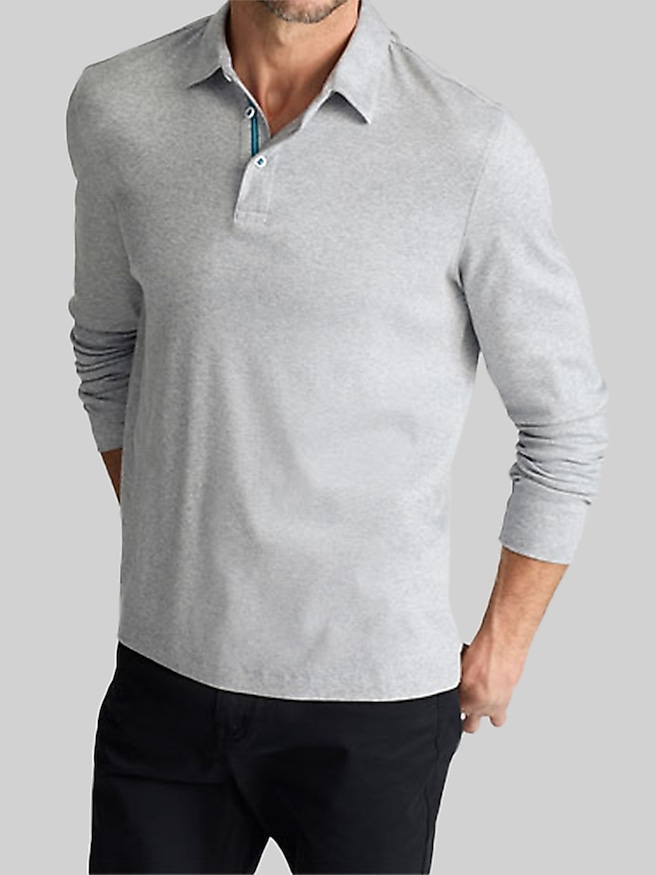
3XLT polo shirts combine the familiar collared look of a polo with proportions designed for a bigger frame and a longer torso. The size generally means 3XL tall: generous room through the body paired with additional length compared with a corresponding standard-length shirt. Exact measurements vary by maker and cut, so the size label is a starting point rather than a guarantee of the same fit across every style. For someone whose shirts fit across the chest but lift above the waistband when reaching for a shelf, tall sizing can make a noticeable difference. A well-proportioned polo provides coverage while sitting, bending, and moving without needing excessive width to gain length. Shoulder seams should sit near the natural shoulder, the chest should lie smoothly without pulling at the button placket, and the sleeves should allow easy movement through the upper arms. The body can skim the midsection without clinging or hanging in deep folds. An untucked hem looks balanced when it covers the waistband without extending so far that it overwhelms the outfit; a tucked polo needs enough length to stay secure through ordinary movement. Some designs have side vents or a slightly longer back hem, details that can help the shirt sit comfortably over the hips. Comparing chest measurements and shirt length with a polo that already fits well is often more useful than relying on size alone. Men who need additional body room can also compare 4XLT Polo Shirts, keeping in mind that a larger size changes more than the hem length. The right balance of shoulder width, chest room, and torso coverage gives a 3XLT polo its everyday usefulness, whether worn at a desk, out to lunch, or through an afternoon of errands.
Fabric shapes how a 3XLT polo shirt feels, drapes, and holds up to repeated wear. Cotton piqué has a subtly raised, textured surface that gives the classic polo its recognizable character. It can provide a little more visual structure than a smooth jersey knit, making it a natural companion to chinos or clean, dark denim. Cotton jersey feels more like a familiar T-shirt, with a softer-looking surface and an easy drape that suits casual outfits. Neither construction guarantees a particular weight or level of softness; yarn, knit density, and finishing all contribute to the result. Cotton blends can balance a soft hand with shape retention, while a small amount of elastane can add stretch for reaching, driving, or sitting comfortably. Polyester-based performance fabrics may offer moisture management or quick-drying properties when those features are specified. Those details can be useful for golf, active workdays, or travel, but fiber content alone does not establish how a shirt will perform. For a tall fit, recovery matters alongside stretch: fabric that returns to shape helps the elbows, hem, and midsection avoid a stretched-out appearance. Construction deserves equal attention. Even stitching, neatly finished seams, securely attached buttons, and a placket that lies flat contribute to a tidy look over time. A collar with enough substance to hold its shape frames the face without requiring the formality of a dress shirt. Ribbed sleeve cuffs create a more defined outline, while open sleeves can feel less restrictive around fuller upper arms. Fabric weight also affects how clearly the shirt follows the body; a lightweight knit may reveal more contours, while a more substantial knit can create a smoother line. These differences make two polos in the same labeled size feel quite distinct, which is why both measurements and fabric descriptions matter when choosing a comfortable everyday shirt.
The appeal of 3XL tall polo shirts is their ability to fit into several parts of a wardrobe without requiring a complicated outfit. A solid polo with flat-front chinos and leather shoes can look appropriate in an office with a relaxed dress code, while the same shirt with jeans and understated sneakers feels at home at a casual dinner. Subtle stripes or a textured knit add interest without needing extra layers or accessories. For golf or other activities with clothing requirements, a collared polo may suit the setting, though the venue’s dress code still applies. Under a casual jacket, a polo works best when the collar sits neatly and the body does not bunch around the waist or upper arms. Tucking creates a more defined outline and shows the belt; leaving the shirt untucked offers an easier look when the hem length is proportionate. Practical care helps preserve both options. Following the garment’s care label is especially important with tall sizes because a change in body length can alter an otherwise comfortable fit. Cotton may shrink under unsuitable washing or drying conditions, while excessive heat can affect stretch fibers and certain finishes. Separating colors, addressing spills promptly with a fabric-appropriate treatment, and avoiding an overloaded washer can help clothing maintain its appearance. Where the label permits, a gentle wash and lower-heat drying can reduce unnecessary wear; removing the shirt promptly and smoothing the collar and placket can also limit creasing. Performance fabrics may have additional care requirements, including restrictions on fabric softener, so their instructions deserve attention. Folding neatly or using a supportive hanger helps avoid storage marks and stretched shoulders. A 3XLT polo can also make a thoughtful birthday or Father’s Day gift for someone who already wears tall sizes, especially when the recipient’s preferred fit and fabric are known. Checking the label and measurements of a favorite shirt is more reliable than guessing from height alone. Whether chosen for work, social plans, or everyday routines, a polo earns repeat wear through the details that matter most: comfortable movement, dependable coverage, a collar that sits well, and fabric that feels good throughout the day.