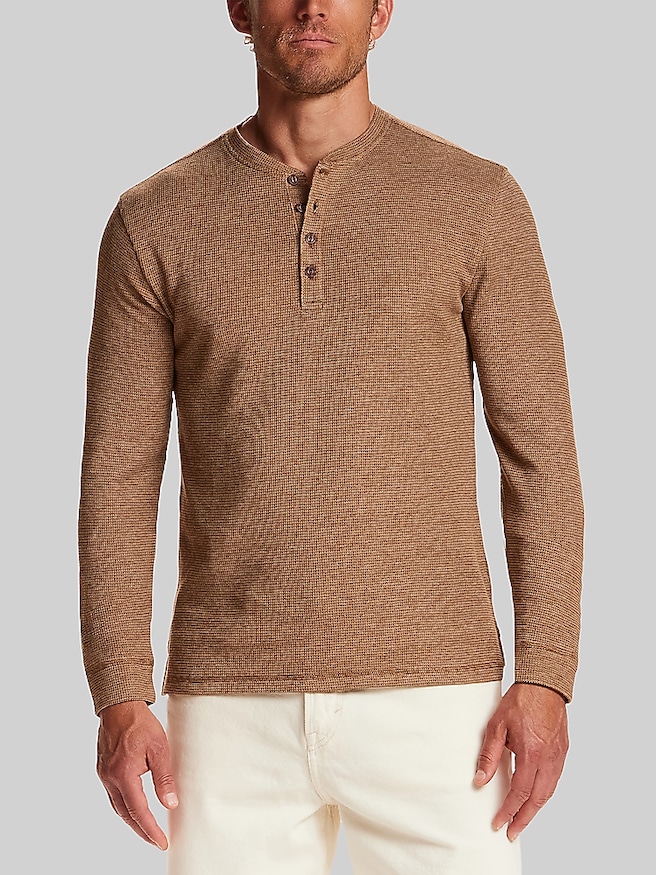
Work tops are shirts and other upper-body apparel designed to look polished and feel comfortable throughout the workday. For men, the category includes dress shirts, button-down shirts, polos, and refined knit styles that suit a range of professional settings. The right choice depends on the workplace: a crisp collared shirt fits naturally beneath a suit for a client presentation, while a neatly fitted polo can feel at home in a business-casual office, showroom, or customer service setting. These pieces help establish the overall tone of an outfit, whether the rest of the look includes tailored trousers, chinos, or workplace-appropriate jeans. A smooth solid shirt offers a quiet backdrop for a patterned tie, while a fine stripe or small check adds interest without dominating the outfit. White and light blue are familiar choices for more traditional offices; navy, gray, and muted earth tones offer variety for less formal settings. Collar construction also affects the impression. A structured collar holds its shape beneath a jacket, while a button-down collar keeps its points secured for a neat appearance without a tie. At a desk, across a conference table, or standing at a reception counter, small details such as an even placket, tidy cuffs, and a smooth shoulder line contribute to a composed look. Work tops do not need elaborate details to feel considered. A clean silhouette and fabric suited to the setting often make a stronger impression than decorative accents. For someone whose schedule moves from an internal meeting to a client lunch, a versatile shirt can bridge both settings without requiring a complete outfit change. The aim is clothing that supports the day’s responsibilities while remaining consistent with the office dress code. In workplaces with uniforms or appearance guidelines, permitted colors, collar styles, and visible logos may narrow the choices, making fit and fabric especially important.
Material plays a large part in how a work top feels after several hours of wear. Cotton is valued for its softness, breathability, and familiar hand, though the weave and finish influence its texture and upkeep. Poplin generally has a smooth, relatively flat surface that works well with tailored clothing. Oxford cloth has a more noticeable basket-weave texture and often lends itself to a relaxed professional look. Twill’s diagonal weave can provide a soft drape and subtle visual depth. Knit fabrics bring another option: a fine-gauge knit can look clean beneath a jacket, while a textured polo offers a more casual alternative to a woven shirt. Cotton blends may combine a natural feel with easier maintenance, and fabrics containing elastane can provide added flexibility. Stretch is particularly useful when reaching for a file, working at a keyboard, or spending part of the day on the move. Performance features such as moisture management or wrinkle resistance depend on the individual fabric and finish rather than the shirt category alone. Fit matters just as much as fiber content. Shoulder seams should generally sit near the shoulder edge, with enough room through the chest and upper back to move comfortably. A shirt that pulls between the buttons or forms tight horizontal lines may feel restrictive, while excess fabric can bunch beneath a jacket or collect around the waistband. Slim, tailored, and more relaxed cuts offer distinct silhouettes, but the best match follows the wearer’s proportions rather than a label alone. Sleeve length, neck size, and body length also deserve attention. A tucked shirt needs enough length to stay secure when sitting or reaching; an untucked style benefits from a hem that looks intentional alongside the rise of the pants. For layered outfits, a smooth-fitting undershirt can add coverage without creating visible ridges or crowding the sleeves.
Everyday durability comes from a combination of construction, fabric, and appropriate care. Secure buttons, consistent stitching, neatly finished seams, and stable collars help a work top maintain its appearance through repeated wear. High-contact areas such as cuffs, collars, and elbows are worth considering for jobs that involve frequent movement or extended desk time. A substantial fabric may offer useful coverage and structure, but heavier does not automatically mean longer lasting; the quality of the weave and the demands placed on the garment matter too. Care requirements should fit the wearer’s routine. Some shirts are suitable for machine washing, while others need gentler handling or professional cleaning, so the sewn-in care label remains the best reference. Wrinkle-resistant fabric can simplify upkeep, although it may still benefit from prompt removal from the dryer and careful hanging. Knits often retain their shape better when handled according to their drying instructions, and excessive heat can affect fibers, finishes, and stretch recovery. A top that is easy to maintain consistently is often more useful for a full workweek than one requiring attention the wearer cannot realistically give it. Color and pattern can also help build a practical rotation. Several compatible shirts make it easier to pair the same trousers and jackets in fresh combinations, while a balance of tucked and untucked styles accommodates varying levels of formality. A dress shirt can anchor an interview outfit, a refined polo can suit a team gathering, and a simple knit can provide a polished option for video meetings. For a broader range of silhouettes beyond workplace dressing, Men's Tops offers a related category to explore. Work tops can also make thoughtful gifts for a graduate starting a first office role or someone moving into a position with a new dress code, especially when the recipient’s measurements and care preferences are known. Across these uses, the most dependable choices combine an appropriate appearance, comfortable movement, and manageable upkeep.