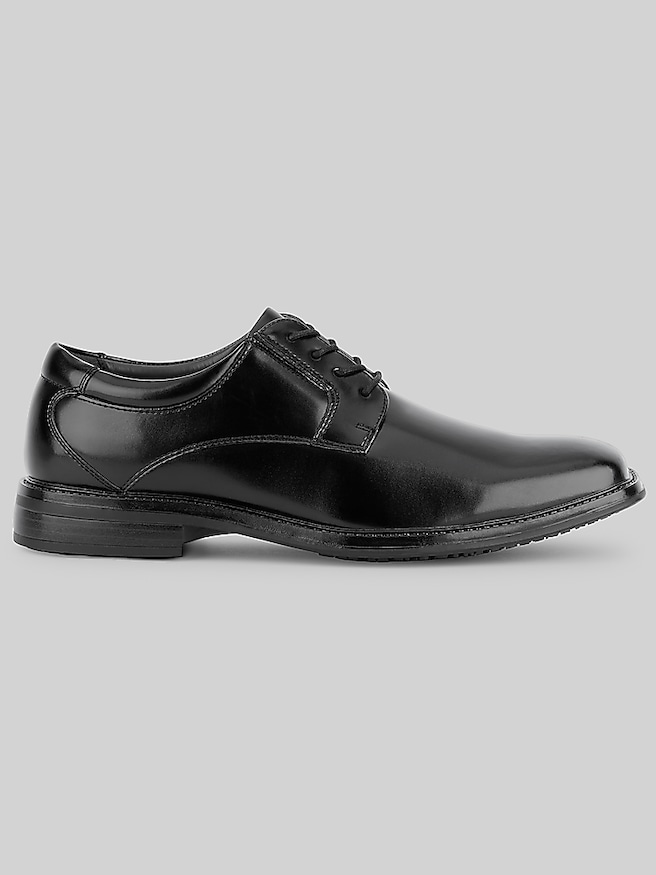
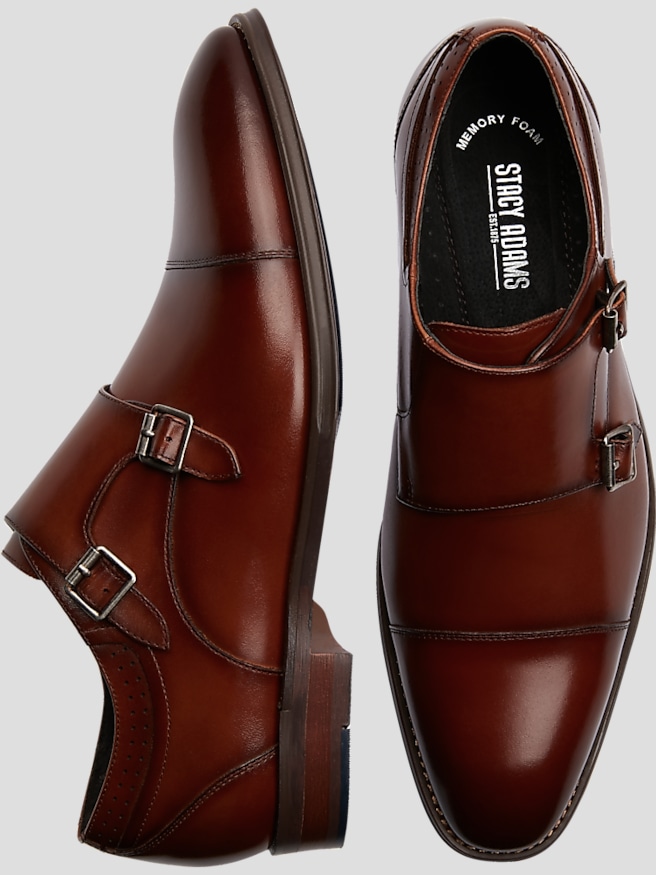
Work shoes for men with flat feet should combine comfortable arch support, a stable heel, and cushioning that remains supportive through hours on hard floors. Flat feet have low or minimal arches when bearing weight, but the right shoe is not necessarily the one with the highest or hardest arch. A contoured footbed should make comfortable contact with the foot rather than create a sharp pressure point underneath it. For feet that roll excessively inward, a movement known as overpronation, a stable sole and secure heel fit may help limit that motion. Not every man with flat feet overpronates or experiences discomfort, so individual fit matters more than a single feature or label. The goal is a work shoe that feels balanced from heel strike through toe-off, whether the day involves walking between conference rooms, greeting guests at a reception desk, or spending several hours on a showroom floor. Cushioning helps soften contact with hard surfaces, while the structure beneath it keeps the shoe from feeling overly soft or unsteady. A firm heel counter, the reinforced area surrounding the back of the foot, adds structure without requiring the entire shoe to feel rigid. A reasonably broad base also offers a steadier foundation than a narrow sole that leaves the foot spilling over its edges. Professional appearance remains part of the equation: smooth leather uppers, understated stitching, and clean profiles complement tailored trousers, chinos, and business-casual clothing. Lace-up oxfords and derbies bring a traditional finish to office outfits, while a well-fitting loafer offers a streamlined alternative in less formal settings. The most useful balance depends on the job. Someone seated for much of the day may prioritize a polished silhouette and moderate cushioning, while someone regularly moving across large buildings may place greater emphasis on underfoot support, secure fastening, and outsole traction. A supportive work shoe needs to suit both the shape of the foot and the demands of the workplace.
Fit becomes especially important when low arches allow the feet to spread under body weight. Enough width through the forefoot gives the toes room to rest naturally without squeezing against the upper, but extra width should not leave the heel sliding with every step. The ball of the foot should sit near the widest part of the shoe, with space ahead of the longest toe and no concentrated pressure across the instep. Length alone cannot resolve a width problem; sizing up too far may create excess movement instead of a better fit. Adjustable laces offer useful control over the instep, particularly when one foot is slightly larger or an orthotic changes the space inside the shoe. Derby-style open lacing generally allows more adjustment than the closed lacing of an oxford, although the shape and depth of each shoe still matter. Removable footbeds are worth considering for anyone who uses prescribed or over-the-counter orthotics. Taking out the original insert, when the shoe is designed for it, can provide room for the orthotic without crowding the toes or lifting the heel too high. Trying shoes with the socks and inserts intended for work gives a more realistic sense of fit than judging them on appearance alone. Materials influence that experience, too. Leather uppers can gradually soften and conform around the foot, but they should not be expected to stretch enough to correct pinching or an unsuitable shape. Breathable linings and moisture-managing socks help maintain a more comfortable interior during extended wear. Underfoot, resilient cushioning should feel protective without collapsing into a deep, unstable platform. The sole should bend where the toes naturally flex while offering enough structure through the middle of the foot to avoid an excessively floppy feel. A few steps on a firm surface can reveal heel slippage, pressure beneath the arch, or rubbing around the ankle opening. Comfort should be evident from the start; a reasonable break-in period is for the materials to soften, not for the foot to endure persistent pain.
Durability is about how well work shoes retain their fit and support, not simply how long the uppers look presentable. Repeated walking and standing gradually compress cushioning and wear down outsoles, sometimes unevenly. A shoe that begins leaning to one side, feels noticeably flatter underfoot, or allows the heel to shift may no longer provide the same steady foundation. Rubber outsoles can offer useful grip and cushioning for everyday workplace use, but traction depends on the tread, sole compound, surface, and conditions. Dress shoes should never be assumed to meet occupational slip-resistance, protective-toe, or electrical-hazard requirements unless they are specifically identified as meeting the necessary workplace standards. For office and customer-facing roles, practical care helps preserve both appearance and comfort. Brushing away grit keeps abrasive debris from collecting along seams, while wiping smooth leather with a lightly damp cloth removes surface dirt. Leather conditioner used according to the material’s care directions can help prevent excessive drying, and an appropriate polish refreshes the finish. Suede needs a suede brush and care products suited to its nap rather than ordinary leather polish. Allowing shoes to dry naturally away from direct heat helps protect the materials; alternating pairs gives the interiors time to air out between wears. Shoe trees can help leather footwear hold its shape when not in use. For jobs centered on extended time upright, Shoes For Standing All Day offers another relevant way to consider footwear alongside arch support and overall fit. A manager moving between departments, an event professional crossing a venue, and an office employee walking to appointments may have distinct dress requirements, yet each benefits from shoes that remain secure and comfortable in motion. Persistent foot pain, new discomfort, or uncertainty about orthotics warrants advice from a qualified foot-care professional. Well-chosen work shoes support everyday comfort and a professional appearance, but they do not need to promise to change the shape of the foot to earn a place in a dependable work wardrobe.