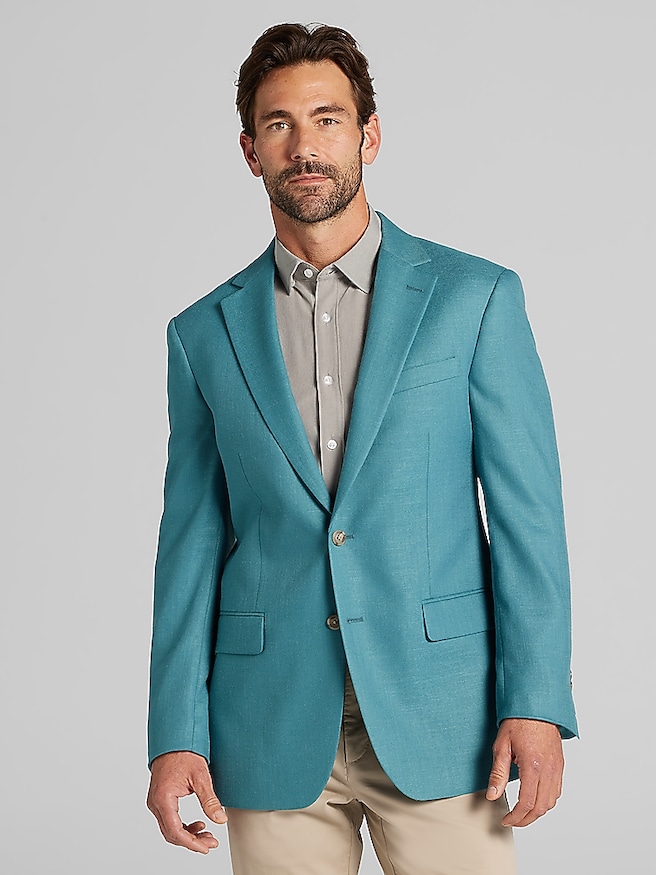
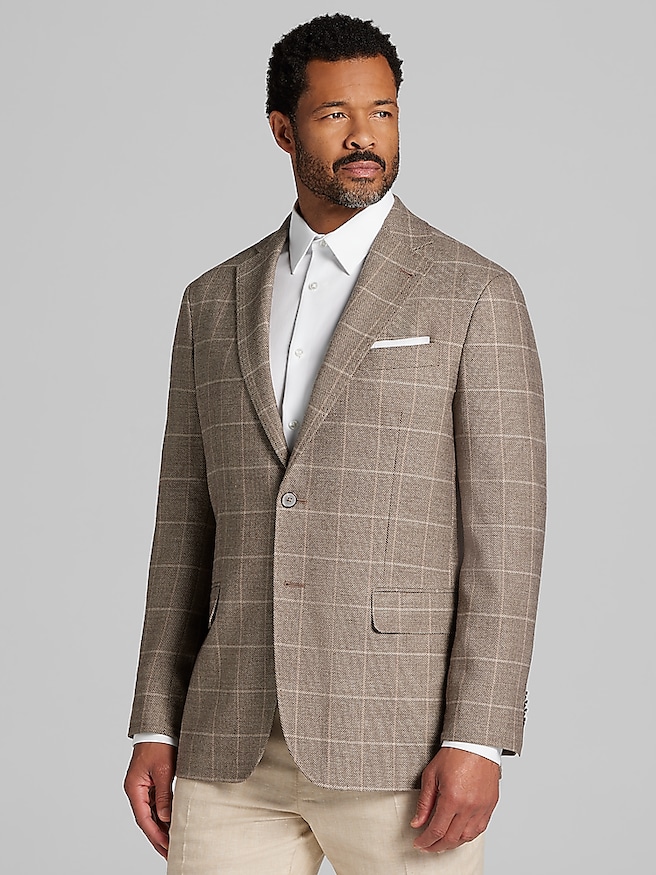
Winter suit coats for men bring cold-weather texture and warmth to tailored dressing, with fabrics such as wool, wool flannel, tweed, and cashmere blends offering distinct combinations of weight, softness, and structure. A suit coat is a tailored jacket, not an outer coat, so its warmth is best understood as one part of a layered outfit rather than a substitute for an overcoat outdoors. Wool is a natural choice because its crimped fibers help trap insulating air while allowing moisture vapor to escape. Wool flannel has a softly brushed surface that gives solid colors a rich, slightly muted appearance, while tweed typically has a more pronounced woven texture that suits less formal settings. Cashmere blended with wool can add a softer hand, though the fiber name alone does not determine warmth or durability; fabric weight, weave, construction, and the proportion of each fiber also matter. A heavier cloth can feel substantial on a walk between buildings, but a densely woven, moderately weighted jacket may be more comfortable for someone spending most of the day in a heated office. Lining affects how smoothly the coat moves over a shirt or sweater, while internal construction helps shape the chest and lapels. These details make a difference when a jacket needs to look composed through a morning commute, several hours at a desk, and an evening dinner. Charcoal, navy, and medium gray offer straightforward foundations for dress shirts and leather shoes. Brown, olive, and subtle checks bring more visual texture without requiring an elaborate outfit. Herringbone can add depth from a distance, while a quiet windowpane becomes more noticeable up close. The most useful combination depends on the setting: a smooth, dark cloth usually reads as dressier than a visibly nubby weave, even when both jackets share a similar cut. Winter tailoring works best when the fabric’s character supports the occasion, rather than relying on thickness alone to create a seasonal look.
Fit determines whether that substantial fabric feels comfortable or cumbersome. The shoulder line should sit close to the natural shoulder, with enough room through the upper back to reach forward without a strong pull across the blades. With the appropriate front button fastened, the coat should follow the torso without forming pronounced horizontal creases around the closure. Lapels should rest against the chest rather than bow outward, and the collar should sit neatly against the shirt collar. These details are particularly noticeable in winter fabrics because thicker cloth can exaggerate a fit problem instead of concealing it. A slim silhouette can still accommodate movement, while a roomier cut should retain definition through the shoulders and chest rather than simply hanging loose. The intended layers matter, too. A coat worn over a dress shirt needs less space than one paired with a fine-gauge merino sweater, but sizing up indiscriminately can leave the shoulders too wide and the sleeves too long. Trying the jacket with the type of layer it will accompany gives a more realistic sense of comfort. Sitting down, reaching for a bag, and bending the elbows reveal restrictions that may not be obvious while standing still. Sleeve length should allow a small amount of shirt cuff to show, with the exact balance influenced by the shirt and personal preference. Jacket length should also complement the wearer’s proportions and provide adequate coverage through the seat. For occasions that call for a coordinated jacket and trousers, winter dress suits for men keep fabric, color, and finish consistent across the outfit. A coat from a matching suit does not always function equally well as a separate jacket; smoother fabrics and more formal details can look disconnected from casual pants. Textured tailoring often pairs more naturally with contrasting wool trousers, provided the colors are clearly distinct rather than almost matching. A pale blue shirt, charcoal trousers, and a brown textured jacket create a grounded combination for a business-casual dinner, while a matching dark suit offers a more unified appearance for a dressier gathering.
A well-chosen winter suit coat should also suit the rhythm of the wearer’s day. Someone moving between client meetings may value a resilient wool fabric that recovers from light creasing, while someone dressing for occasional dinners may place greater emphasis on softness, texture, or a distinctive pattern. For a winter wedding guest, the invitation’s dress code and venue should guide the level of formality; a textured jacket appropriate for an afternoon gathering may not suit a formal evening reception. Indoor comfort deserves equal attention. A heavy sweater beneath a substantial coat can become uncomfortable in a crowded dining room, whereas a dress shirt or lightweight knit may provide a better balance. Outdoors, an overcoat with sufficient room through the shoulders protects the tailored shape beneath it without compressing the sleeves and lapels. Everyday care helps preserve that shape between wears. A broad, supportive hanger distributes the jacket’s weight across the shoulders, and some breathing room in the closet prevents the fabric from being crushed. Letting the coat air after wear helps release moisture before it goes back into storage. A gentle pass with a clothing brush can remove surface dust from wool, while a fabric’s care label should determine the appropriate cleaning method. Professional cleaning is useful when needed for soil or odors, rather than as an automatic step after every outing. Spills are best blotted promptly without rubbing, which can work residue deeper into the fibers or disturb the surface. Pressing and steaming also require care: excess heat or pressure can leave shine on wool or flatten a brushed finish. Rotating jackets when practical gives the cloth time to recover, and avoiding overfilled pockets helps prevent stretched openings and a distorted front. For gifting, a winter suit coat is most personal when the recipient’s measurements, preferred silhouette, and usual dress requirements are already understood. A familiar color and a texture that fits an established wardrobe can make the jacket useful well beyond a single occasion, from work presentations to evenings that call for a more considered outfit.