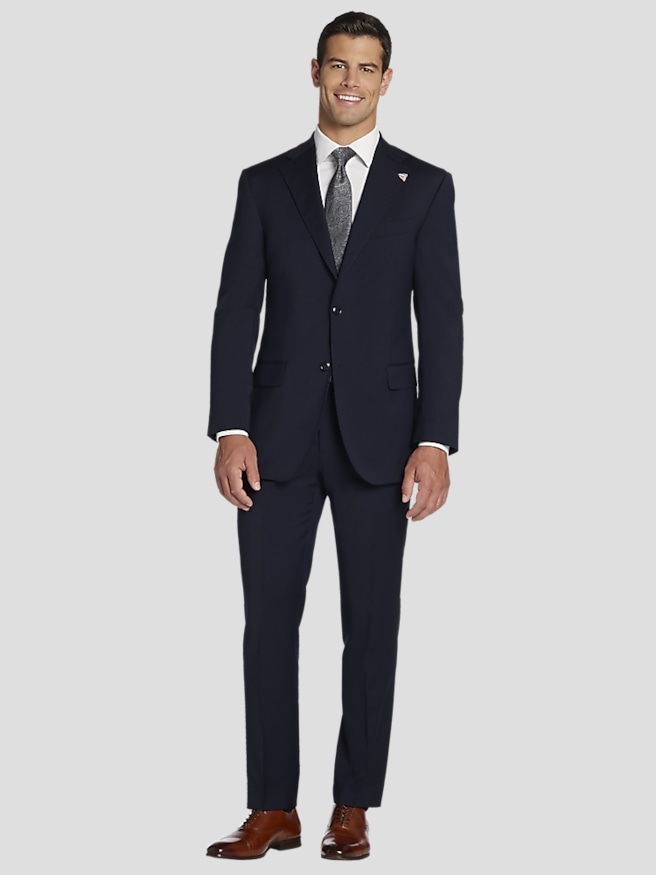
Winter dress suits for men bring together tailored structure, substantial fabric, and colors that feel at home at a business dinner, a wedding reception, or an important day at the office. A well-chosen winter suit offers warmth without unnecessary bulk, with enough room for a dress shirt and enough shape to look polished after the overcoat comes off. Wool is a strong starting point because its natural crimp helps trap air, while its resilience helps the fabric recover from everyday wrinkles. Fabric weight and weave matter as much as fiber content: a substantial wool cloth generally provides more insulation than a lightweight, open weave, even when both share the same fiber label. Worsted wool has a relatively smooth surface and a clean finish suited to business and dressier occasions. Wool flannel has a softly brushed surface that gives charcoal, navy, and medium gray extra depth, making it especially appealing for winter tailoring. Tweed brings a more pronounced texture and a substantial feel, often with herringbone or other traditional patterns; its character usually leans toward daytime celebrations, country settings, and less formal workplaces rather than strict evening dress. Wool blended with cashmere can add softness, though durability still depends on the weave, construction, and care. Other blends may contribute stretch or wrinkle resistance, so the full fabric composition is worth considering alongside how the cloth feels and hangs. A lining helps a jacket slide smoothly over a shirt and can add comfort, but full lining alone does not make a suit warm or weatherproof. For someone moving between a heated office and a short outdoor walk, a medium-to-heavy fabric under a proper overcoat can be more practical than the heaviest suit possible. The broader range of Mens Winter Suits offers another way to explore the relationship between seasonal texture and tailored style. The most useful choice balances the setting, time spent outdoors, and personal comfort rather than relying on a winter label alone.
Fit gives winter suiting its definition, particularly when a substantial fabric or an extra layer enters the picture. Jacket shoulders should follow the natural shoulder line without extending into a shelf or pulling inward across the upper back. With the jacket buttoned, the lapels should lie flat and the front should close without pronounced tension lines around the fastening. A trim silhouette can still allow comfortable movement; reaching for a car door, sitting through a ceremony, and shaking hands should not make the jacket feel restrictive. A classic fit offers more ease through the chest and body, while a slim fit sits closer to the frame, but neither should be chosen solely by its name. Proportions, posture, and the intended layers are more useful measures. Someone who plans to wear a fine-gauge sweater beneath a jacket needs to assess the fit with that layer in place, especially through the armholes and sleeves. Thick knitwear can crowd a tailored jacket and distort its shape, so a thin merino layer is often the cleaner option for a setting that permits it. Trousers should sit securely at the intended waist position, lie smoothly through the seat, and leave enough room to sit without strain across the thighs. The hem can have a slight break or a cleaner finish depending on preference, but excess fabric pooling over the shoes interrupts an otherwise sharp line. Alterations to sleeve length, trouser hems, and the waist can refine the overall effect; shoulder fit is generally more difficult to correct. An overcoat also needs sufficient space to cover the suit without compressing the jacket or bunching its sleeves. For a commuter carrying a briefcase or someone greeting guests outside a reception venue, that outer layer handles exposure while the suit maintains the dressed appearance underneath. Trying the full combination with the intended shirt, shoes, and coat gives a more accurate sense of comfort than evaluating the jacket alone.
Color, finishing details, and care determine how easily a winter dress suit becomes part of a lasting wardrobe. Charcoal and navy work across many business and social settings, pairing naturally with white or light blue dress shirts and restrained ties. Deep brown can complement textured fabrics and daytime gatherings, while burgundy or forest green makes a more distinctive choice where the dress code allows personality. A subtle pattern can add interest without overwhelming the outfit: a fine herringbone reads differently up close than it does across a room, and a muted windowpane gives a plain shirt a quiet point of contrast. For winter weddings, the invitation and venue should lead the decision. A dark wool suit can be appropriate for many cocktail-attire celebrations, but a conventional business suit should not be assumed to meet a black-tie requirement. Velvet offers a richer, light-catching surface for celebratory evening settings, although its suitability depends on the garment and the stated dress code. Accessories can support the fabric rather than compete with it. A textured tie sits comfortably against flannel, polished leather shoes sharpen a dark suit, and socks long enough to cover the calf preserve a finished appearance when seated. These details matter at a conference table just as much as they do in family photographs. Long-term performance comes from thoughtful use as well as construction. Letting a suit rest between wears helps moisture dissipate and gives the cloth time to recover. A broad, shaped hanger supports the jacket shoulders, while properly hung trousers are less likely to develop unwanted creases. Gentle brushing with a suitable garment brush can remove surface dust; follow the care label for cleaning and pressing, and avoid unnecessary dry cleaning. If the suit becomes damp, allow it to air-dry away from direct heat before storing it in a breathable garment bag. A winter suit can also make a meaningful gift for someone starting a professional role or preparing for a milestone occasion, particularly when the recipient can participate in fit and fabric decisions. Comfortable proportions, appropriate formality, and manageable care are what make that suit useful beyond a single event.