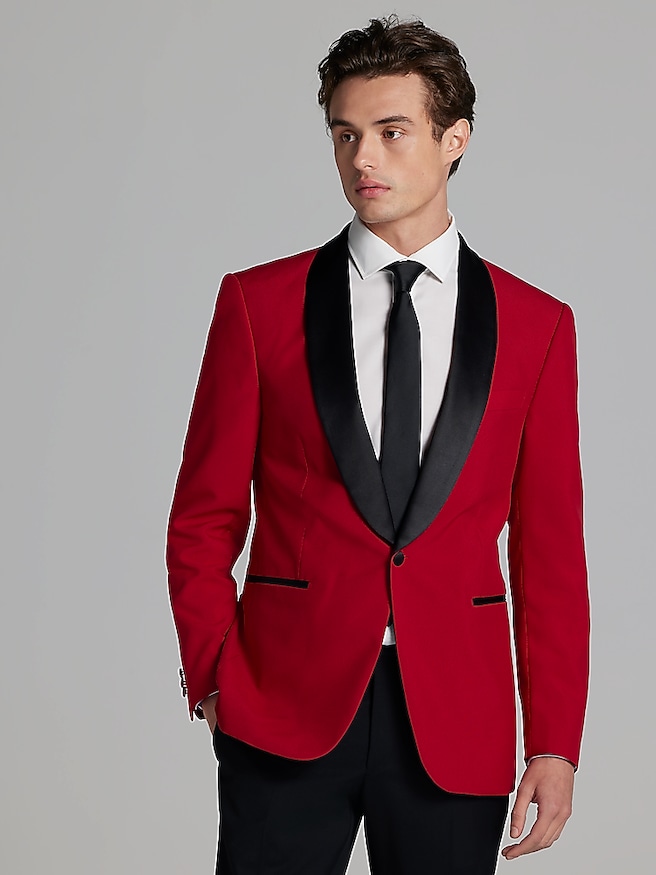
Wine-colored jackets offer a rich alternative to black, navy, and gray, bringing depth to an outfit without the brightness of a vivid red. The color generally falls in the deep-red family, often with purple or brown undertones; related descriptions such as burgundy, merlot, and Bordeaux can suggest similar shades, though exact colors vary by fabric and finish. A matte woven jacket may look restrained and earthy, while velvet can make the same color appear more saturated as its pile catches the light. That range gives wine a place in both tailored and relaxed wardrobes. A wine blazer with charcoal trousers and a white shirt creates a polished combination for a dinner reservation, reception, or presentation. A casual jacket in the same color can work over a plain T-shirt with dark, clean-finished denim. Black, gray, navy, cream, and white are dependable companions because they give the color room to stand out. Deep olive and muted gold can also complement wine, especially when used sparingly in a tie, pocket square, or other small accent. For a coordinated look, the shirt and trousers do not need to match the jacket’s intensity: a pale blue shirt and medium-gray trousers provide contrast while keeping the overall effect understated. Dark brown shoes tend to emphasize the color’s warmer qualities, while black footwear creates a sharper finish. Wine shades can complement both warm and cool skin undertones, but the balance of red, purple, and brown matters more than the color name alone. Seeing the fabric near the face in neutral lighting gives a better sense of its effect than relying on a screen image. Within the broader red palette highlighted by Stylish Red Jackets, wine stands out for its depth and versatility, offering a distinctive focal point that still works with familiar wardrobe staples.
Fabric and construction shape how a wine-colored jacket looks, moves, and holds up to repeated wear. Wool and wool-blend tailoring can provide drape, structure, and resilience, with the exact feel depending on the weave, fabric weight, and blend. A fine, smooth surface generally reads dressier than a visibly textured weave, even when both jackets share a similar shade. Velvet has a plush surface and a light-catching finish that suits celebratory dressing, particularly when the rest of the outfit stays simple. Cotton twill and denim bring a more relaxed character, while leather adds a defined surface that may develop character with use. Suede offers a softer, matte appearance but needs particular attention to staining and cleaning. Stretch fibers can improve ease of movement, although stretch alone does not guarantee a comfortable fit or lasting shape. Lining, shoulder construction, and the cut through the chest all influence how the jacket feels during an evening of sitting, standing, and reaching. On a tailored jacket, the shoulder seam should sit close to the natural shoulder, with lapels resting smoothly rather than bowing away from the chest. When the jacket is fastened, pronounced pulling around the button usually indicates that the body is too snug. Enough room through the upper back allows a comfortable handshake or a reach across a table without making the jacket look oversized. Sleeve length should work with the intended shirt, and a tailored jacket commonly leaves a small amount of shirt cuff visible. Casual silhouettes follow their own proportions: a bomber’s shorter hem and ribbed waistband should not be judged by the length standards of a blazer. Trying a jacket with the clothing likely to be worn underneath helps reveal bunching, tight armholes, or excess fabric. Secure stitching, neatly finished seams, stable buttons, and smoothly operating closures are useful details to examine, since daily wear puts stress on these areas regardless of the fabric’s appearance.
The intended occasion helps determine which expression of wine feels appropriate. A softly structured sport coat can add personality to business-casual dressing, while a more defined blazer brings polish to an anniversary dinner, an engagement celebration, or an evening reception. For a wedding guest, wine can provide a tasteful departure from familiar neutrals when the invitation permits a separate jacket and trousers. A textured jacket over a fine-gauge knit creates a quieter look for a restaurant or theater outing. Formal dress codes still take priority over color preference: an ordinary blazer does not become black-tie attire simply because it is dark or richly colored. Long-term appearance also depends on care suited to the material. The care label should govern cleaning, pressing, and any treatment, particularly when a jacket combines a shell fabric, lining, padding, and trim with distinct needs. A broad, supportive hanger helps a tailored shoulder retain its shape, and avoiding overfilled pockets reduces strain and distortion. Allowing a jacket to air between wears can help it stay fresh without unnecessary cleaning. Surface dust on suitable woven fabrics may be removed with a gentle clothing brush, while spills are best blotted promptly with a clean cloth rather than rubbed into the fibers. Velvet needs attention to its pile, and direct pressing can flatten its surface; leather and suede require material-specific methods rather than ordinary fabric treatments. Persistent stains or uncertain care requirements are reasons to consult a qualified cleaner. Keeping the jacket away from prolonged direct sunlight can also help preserve its rich color. As a gift, a wine-colored jacket can suit a partner, father, brother, or friend who already enjoys tailored clothing or wants one expressive piece for dinners and celebrations. Familiarity with the recipient’s measurements, preferred silhouette, and usual dress codes makes the choice more personal. The most useful jacket is one whose color feels distinctive, whose fit allows natural movement, and whose fabric suits the way it will actually be worn.