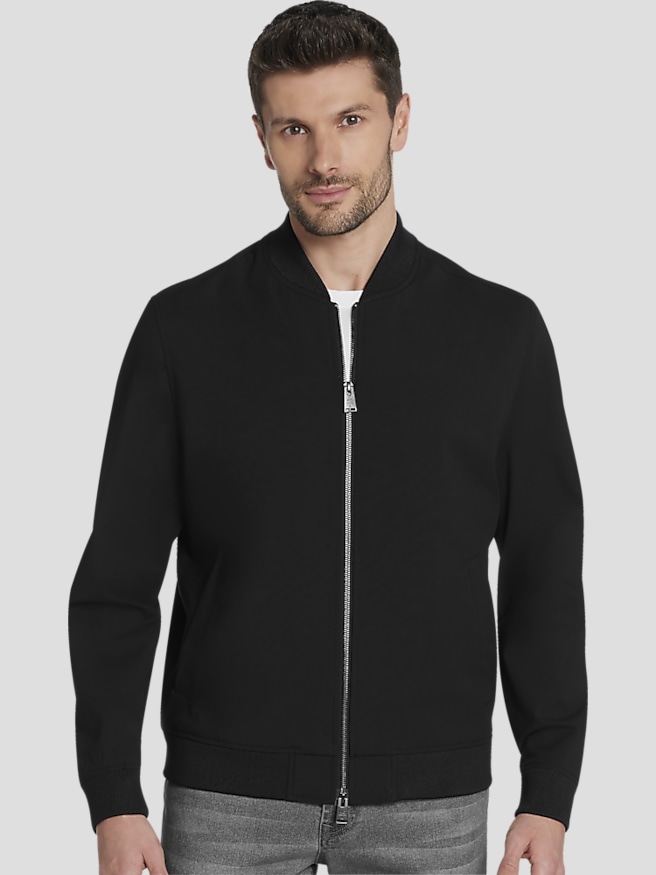
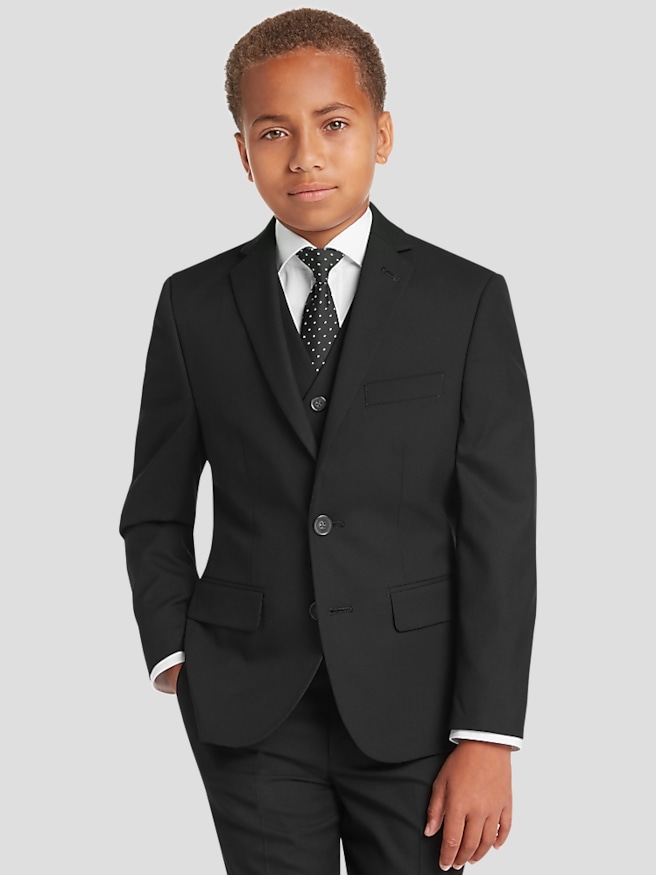
Black jackets include tailored blazers, sport coats, bombers, denim jackets, leather jackets, and other casual silhouettes, giving the same versatile color several distinct personalities. A black blazer brings structure to dress pants and a button-down shirt, while a black bomber creates a more relaxed outline with chinos, jeans, or knit pants. A denim jacket adds visible seams and familiar button-front detailing; a leather jacket emphasizes texture, clean lines, and a more substantial feel. The silhouette matters as much as the color: a narrow lapel and shaped waist look polished, while a ribbed hem or roomy body reads more casually. For men building a practical wardrobe, black offers a useful starting point because it works with white, gray, navy, olive, and a broad range of neutrals. Over a white shirt, a black jacket creates crisp contrast for a dinner reservation or an evening gathering. Paired with charcoal trousers and a fine-gauge knit, it produces a quieter, tonal combination suited to an office with a flexible dress code. With dark jeans and simple sneakers, an unstructured jacket can look considered without feeling formal. Black also puts the focus on proportion and texture rather than color, making the distinction between smooth leather, washed denim, and a textured woven fabric especially noticeable. An all-black outfit benefits from those subtle variations; a matte shirt beneath a jacket with a slight sheen gives each layer its own definition. When pairing a black tailored jacket with black trousers, compare the fabrics together rather than assuming every black shade will match. Some blacks have a warmer cast, while others appear cooler, and mismatched textures can make separately chosen pieces look unintentionally uneven. Clearly contrasting trousers often create a more deliberate combination. For formal occasions, the dress code still determines the appropriate jacket: a black blazer is not automatically a substitute for a tuxedo jacket, whose lapels, fabric, and detailing serve a distinct purpose.
Materials influence how a black jacket drapes, moves, and holds up to regular wear. Wool and wool-blend tailored jackets can provide a refined surface and a pleasing balance of structure and flexibility, while cotton often lends a more casual feel with visible texture. Linen has a naturally relaxed character and develops creasing that belongs to its appearance rather than signaling poor quality. Synthetic fibers and blends may help a jacket retain its shape or resist wrinkling, depending on the fabric and construction. Stretch can make reaching, sitting, and moving more comfortable, but it should complement a sound fit rather than compensate for a jacket that is too tight. Leather generally softens with use and develops character, while suede has a softer, napped finish that needs more attentive handling. Denim changes through repeated wear and washing, with fading that may become part of the jacket’s appeal. Lining, seam finishing, and closures also deserve attention. A smooth lining helps sleeves move over a shirt; neatly finished seams reduce roughness inside the garment; reinforced pocket openings support areas that receive frequent handling. Fit begins at the shoulders, where a tailored jacket should sit cleanly without obvious overhang or tight pulling. Across the chest, the front should close comfortably without pronounced strain around the button. Sleeves should allow natural arm movement, and the back should remain reasonably smooth when standing at ease. Casual black jackets may have dropped shoulders or a fuller shape by design, so their fit is better judged by balance and ease than by tailoring rules alone. Try the jacket over the kind of clothing it will actually accompany. A close-fitting leather style that feels comfortable over a T-shirt may feel restrictive over a substantial knit. For a tailored jacket worn with a dress shirt, a small amount of visible shirt cuff can give the sleeves a tidy finish. Jacket length changes the overall effect, too: a shorter bomber emphasizes the waist, while a longer blazer creates a continuous line through the torso. Someone who spends much of the day seated may also appreciate a closure and hem that remain comfortable at a desk or behind the wheel.
Care helps preserve the depth of black fabric and the shape that makes a jacket look polished. Follow the garment’s care label, since two jackets with similar appearances may require entirely separate cleaning methods. Washable denim and cotton styles often benefit from being turned inside out and cleaned with similar dark colors when the label permits; unnecessary washing can contribute to fading. Tailored wool jackets generally need more measured attention, including gentle brushing and professional cleaning as directed. Leather and suede require products and methods suited to their particular finishes, and household cleaners can leave marks or alter the surface. A padded or shaped hanger supports the shoulders of a structured jacket, while enough space in the closet helps prevent crushing and deep wrinkles. Empty pockets before putting the jacket away so keys, phones, and wallets do not stretch the fabric or distort its outline. Black surfaces can make lint, pet hair, and pale marks more visible, so a fabric-appropriate brush or lint roller is useful before leaving for a meeting or an event. Address small stains promptly according to the care instructions rather than rubbing aggressively, which may damage the finish. These habits are especially worthwhile for a jacket worn repeatedly to work, dinner, or social gatherings. For travel, consider how readily the fabric creases and whether the jacket remains comfortable through extended sitting; an easy-moving construction can be more useful than a sharply structured shape for a long day in transit. As a gift, a black jacket can suit a graduate beginning a professional wardrobe, a partner refining an everyday look, or someone who prefers understated clothing with distinctive details. Size, usual layering habits, and personal style matter more than choosing the most formal silhouette. A familiar collar shape or preferred pocket arrangement can make the gift feel particularly thoughtful. For a more expressive take on the same wardrobe role, Statement Jackets offer another direction to consider. Whether the preference is a clean tailored profile or a relaxed casual shape, a well-chosen black jacket earns its place through comfortable fit, useful details, and the ability to work with clothing already worn and enjoyed.