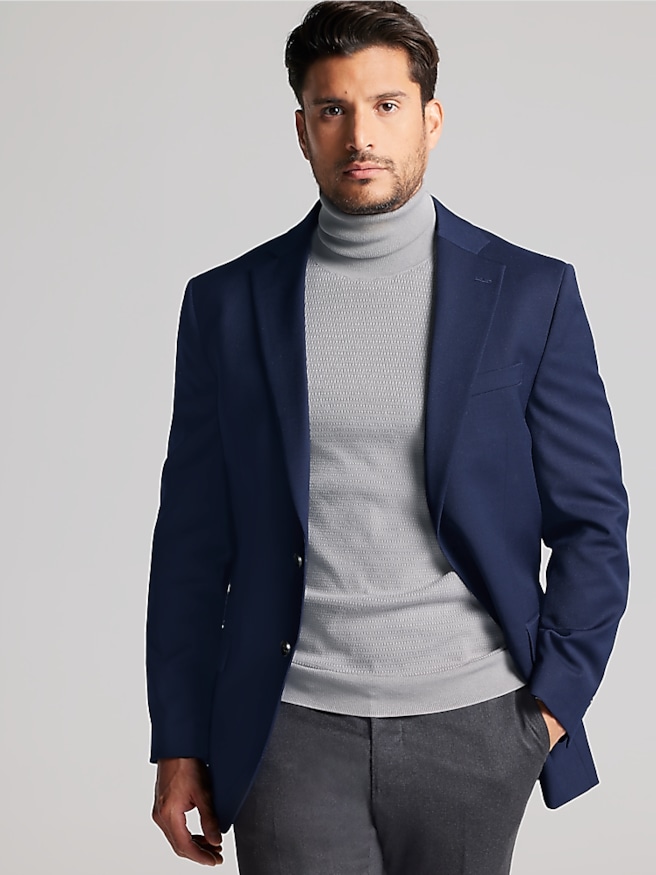
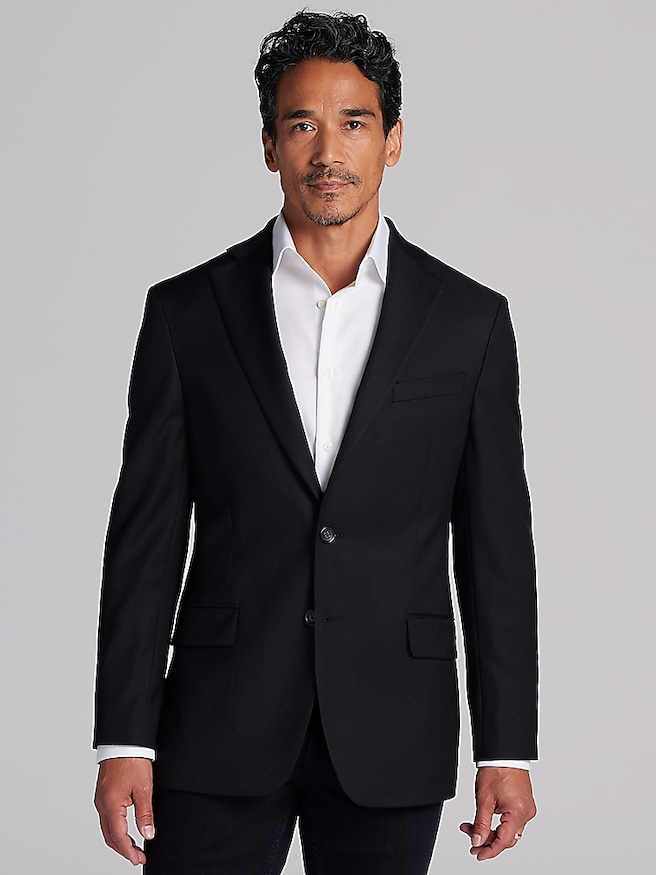
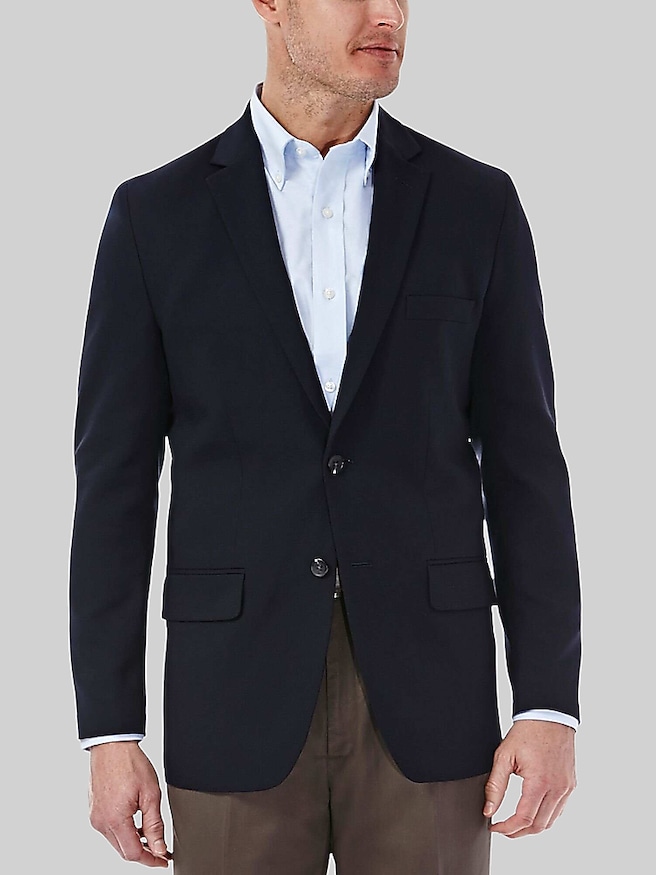
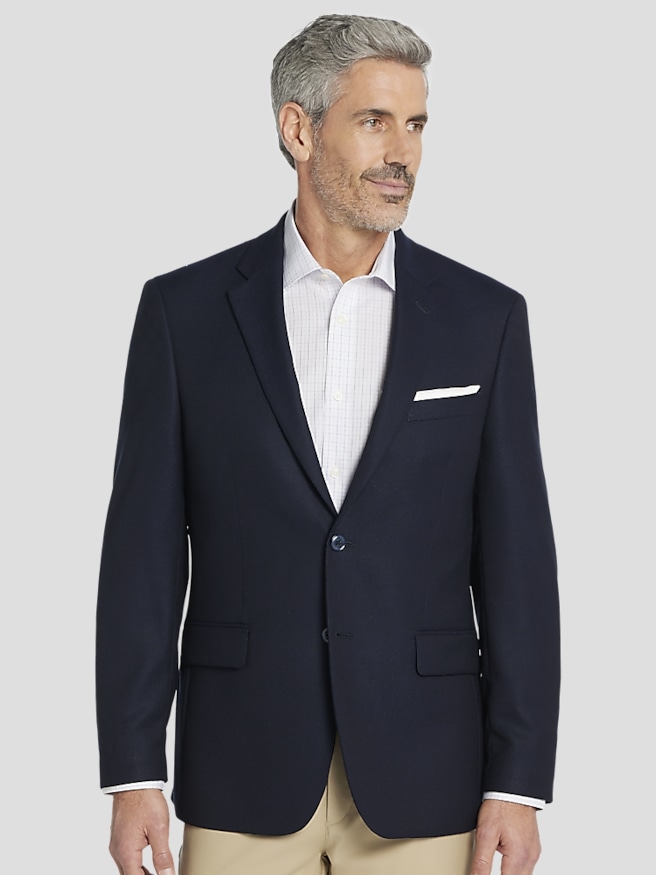
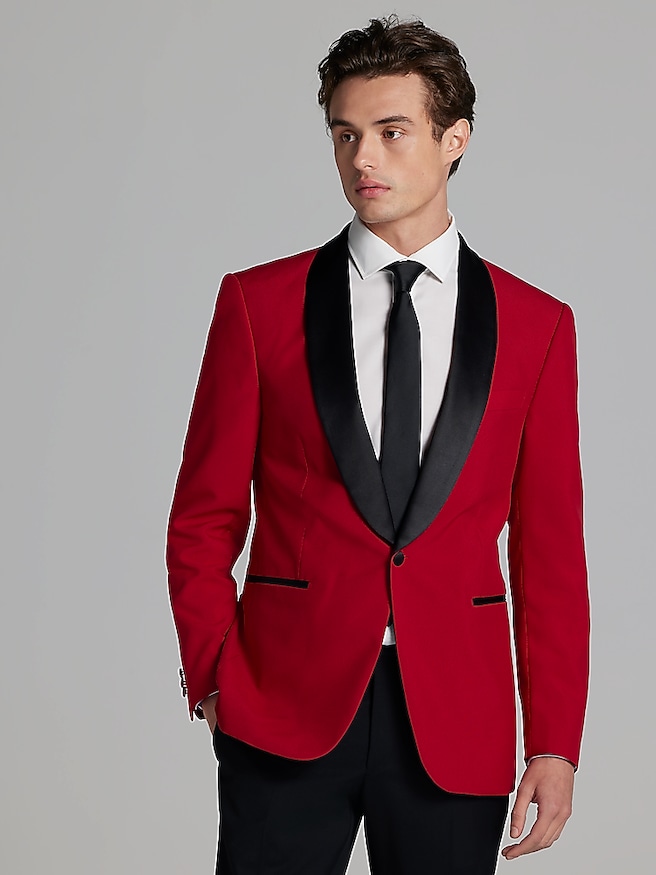
Stylish red jackets bring a clear focal point to an outfit, with options ranging from relaxed bombers and zip-front layers to leather moto jackets and tailored blazers. The silhouette determines much of the effect: a ribbed hem and compact shape feel sporty, an asymmetric closure adds edge, and lapels give the color a more polished setting. Shade matters just as much. Bright scarlet creates a crisp contrast against black or white, while brick, oxblood, and burgundy offer a quieter approach that works naturally with navy, charcoal, and indigo denim. A red jacket does not need an elaborate outfit around it. Dark straight-leg jeans, a plain crewneck, and clean sneakers leave the color room to stand out; charcoal trousers, a pale blue shirt, and leather loafers take the same idea in a dressier direction. For a more structured look, Red Tailored Jackets bring defined shoulders and a shaped front into the mix, making color feel deliberate rather than overwhelming. A blazer worn with contrasting trousers reads as a coordinated outfit without suggesting that the pieces belong to a matching suit. Casual jackets offer their own range of expression, from a smooth, minimal front to visible stitching, patch pockets, and substantial hardware. Keeping the surrounding colors simple helps those details remain distinct. Texture can soften the contrast, too: a matte red jacket over a fine-gauge knit has a more understated effect than a glossy finish against a stark white shirt. For a dinner reservation, gallery opening, or creative workplace that welcomes expressive clothing, red can provide personality without relying on a busy pattern. The most versatile choice is often the shade and shape that already connect with the trousers, shirts, and shoes worn most often. Someone whose wardrobe centers on dark denim may find a muted red easy to repeat, while a person who favors crisp monochrome outfits may appreciate a clearer, brighter tone. Both approaches let the jacket carry the look without making every other piece compete for attention.
Material gives a red jacket its character beyond color, influencing how it drapes, moves, and holds its shape. Cotton twill generally has a grounded, casual appearance, with a visible diagonal weave that works well alongside denim and chinos. Wool and wool-blend fabrics can provide a softer surface and a more fluid line, particularly in tailored designs, although the weight and weave make a meaningful difference. A tightly woven fabric looks cleaner and more compact; a pronounced texture gives a solid red shade additional depth. Leather adds substance and develops creases with wear, while suede has a velvety surface that makes the same color appear richer and less reflective. Synthetic fabrics and blended constructions can support lightweight shapes, easy movement, or a smooth finish, depending on their composition. Stretch may improve comfort, but comfortable movement also depends on the cut, lining, and room through the back and arms. Construction deserves attention alongside the fabric description. Even stitching, securely attached buttons, smoothly operating zippers, and pocket openings that lie flat contribute to a jacket that feels finished in everyday use. Reinforcement around frequently handled areas, such as pocket corners and closures, can help those points tolerate repeated wear. A lining can make the jacket easier to slip over a shirt, while a partially lined design may have a less structured feel. Care should follow the garment label rather than assumptions about its appearance. Some casual fabrics permit machine washing, while structured tailoring may require professional cleaning. Leather and suede need material-appropriate care, and an unfamiliar cleaner should never be applied across a visible panel without testing as directed. Prompt attention to marks, gentle handling of fasteners, and avoiding overloaded pockets help preserve the original shape. Red fabrics can also be sensitive to fading or color transfer, so washing directions, colorfastness guidance, and storage away from prolonged direct sunlight are worth observing. Supportive hangers suit many structured jackets, while storage instructions should take priority for softer constructions that may stretch.
Fit is what makes a bold jacket look comfortable and intentional rather than simply noticeable. On a traditionally tailored style, the shoulder line should sit cleanly without a deep dent below the seam or excess fabric collapsing over the upper arm. The front should close without pulling into pronounced lines around the button, and the back should allow normal reaching and sitting. A deliberately relaxed bomber or casual jacket may have a dropped shoulder or extra room through the body, so its proportions should be judged by the intended silhouette rather than blazer rules. Length changes the balance of an outfit: a shorter jacket puts more emphasis on the waistband and trouser shape, while a longer tailored cut creates a continuous line over the hips. Sleeve length should leave the hands free, and a blazer worn with a dress shirt often looks polished with a small amount of cuff showing. Trying the jacket over the type of layer it will actually accompany gives a more useful impression than trying it over an unusually thin or bulky top. A red jacket intended for dinners and social events might need room for a button-down shirt, while an everyday casual style may need to sit comfortably over a knit polo or sweatshirt. For someone who prefers subtle clothing, dark red with minimal hardware can offer a manageable step beyond familiar neutrals. Someone drawn to stronger color may enjoy a clean scarlet shape with understated accessories. Red jackets can also make thoughtful gifts for a partner, father, brother, friend, or graduate whose personal style is already recognizable. Familiarity with the recipient’s usual jacket size, preferred fit, and favored materials is more valuable than choosing the brightest option. A successful choice feels connected to the person wearing it: easy to move in, appropriate for the places they go, and distinctive enough to bring fresh energy to clothes they already enjoy. With balanced proportions and suitable care, a red jacket can become a repeat favorite rather than a piece reserved for one photograph or occasion.