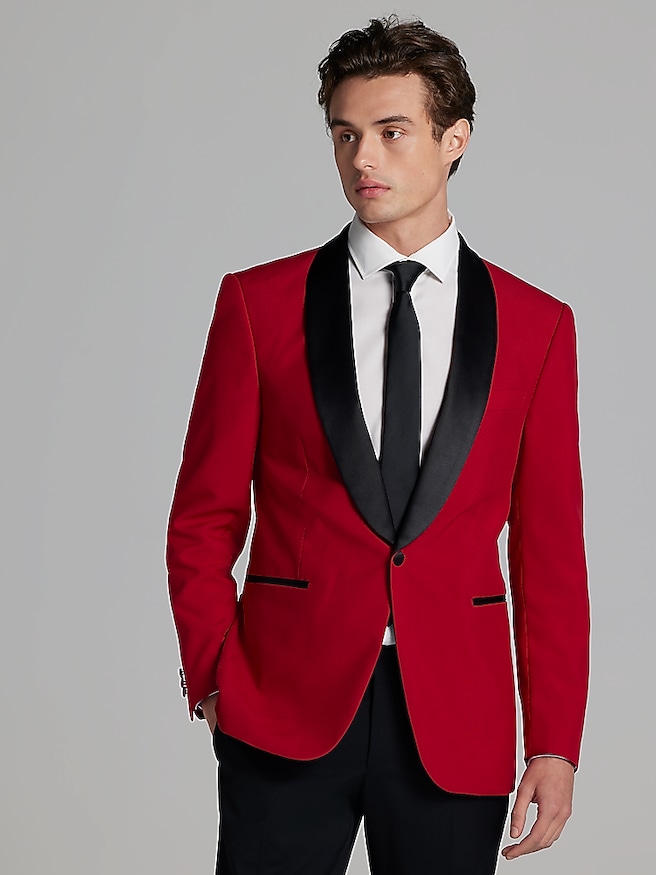
Red tailored jackets bring the clean lines of classic menswear into a more expressive color palette, combining a shaped silhouette with shades that range from bright scarlet to deep burgundy. The effect depends as much on the fabric and construction as on the color itself: a smooth, structured jacket can look crisp and dressy, while a softly constructed version with visible texture feels more relaxed. In this context, tailored describes a jacket with deliberate shaping through the shoulders, chest, and waist; it does not necessarily mean custom-made. Blazers, sport coats, and suit jackets can all have a tailored profile, although their details and intended pairings vary. A suit jacket is designed to coordinate with matching trousers, while a blazer or sport coat is generally easier to wear with separate pants. Red gives each of these familiar shapes a distinct personality without requiring an elaborate outfit. Against charcoal trousers and a white shirt, the color becomes a clear focal point; over a fine-gauge sweater with dark denim, it takes on a quieter, more casual character. Dark wine and brick tones often feel understated enough for creative workplaces, dinner reservations, and evening gatherings, while brighter reds can suit celebrations, performances, and occasions where a more noticeable look is welcome. The dress code still matters: a red tailored jacket can be festive and polished, but it is not automatically a substitute for prescribed black-tie attire. For wedding guests, hosts, performers, and anyone who enjoys color beyond navy and gray, the appeal lies in making a familiar outfit feel personal. The broader category of men’s red jackets also provides context for how tailored shapes differ from casual outerwear: lapels, a defined shoulder line, and a balanced hem create a dressed-up impression rather than the utilitarian feel of a zip-front layer. That distinction makes a tailored jacket especially useful when an occasion calls for polish without a full matching suit.
Fabric determines how a red tailored jacket drapes, feels, and holds up to repeated wear. Wool is a traditional choice for tailored clothing because its natural resilience helps the cloth recover from light creasing, while its structure supports a clean silhouette. Wool blends can combine that character with other qualities, though the result depends on the full fiber composition and weave. Cotton tends to have a drier hand and a more relaxed appearance, with creases that can become part of its character. Linen has an airy texture and wrinkles readily, making it more closely associated with relaxed dressing than a sharply pressed finish. During the cooler months, textured weaves and corduroy can give deeper reds added dimension, while velvet creates a richer surface that changes with the light and often feels suited to evening celebrations. Stretch fabrics may offer extra ease when reaching forward or sitting through a long dinner, but stretch alone does not guarantee a comfortable fit. Shoulder placement, sleeve shape, and room across the back remain important. A well-fitting tailored jacket generally follows the shoulder without extending noticeably beyond it, and the lapels should lie smoothly rather than lift away from the chest. When the jacket is buttoned as intended, strong pulling around the closure or pronounced horizontal wrinkles can signal that the body is too tight. The waist can look defined without gripping the torso, leaving enough room for the shirt or lightweight sweater worn underneath. Sleeve length commonly allows a small amount of shirt cuff to show, although the right balance depends on the outfit and personal preference. Jacket length should look proportionate to the torso and provide balanced coverage through the seat rather than simply following the shortest trend. Alterations can refine sleeves and the waist within the limits of the construction, while substantial shoulder changes are more complex. For someone moving between a desk, a commute, and an evening event, comfortable movement matters just as much as the view in a mirror.
The most versatile red tailored jackets work with clothing that lets their color stand out without creating unnecessary competition. Charcoal wool trousers offer a softer contrast than black, while navy adds depth and light gray creates a brighter overall effect. A white or pale blue shirt keeps the combination clear and familiar; a black knit under a dark red jacket produces a more streamlined evening look. For a relaxed dinner, dark, clean-finished jeans and leather loafers can bridge the gap between dressed-up and casual, provided the jacket’s texture and construction are similarly easygoing. Shoes and accessories need not repeat the jacket’s red exactly. Burgundy leather, dark brown suede, or black polished leather can each work depending on the trousers and occasion, and a restrained pocket square often looks more natural than several matching accents. Durability comes from both construction and care: secure buttons, neatly finished seams, and fabric appropriate to the intended use all contribute to a jacket’s service life. High-friction areas such as elbows and pocket edges deserve attention, especially when the jacket is worn frequently. Overfilled pockets can distort the front, and repeatedly carrying a heavy shoulder bag may put pressure on the fabric and shoulder shape. Care should always follow the garment label, since fiber content, lining, and internal structure affect which cleaning methods are suitable. A washable fabric does not necessarily make the finished tailored jacket machine washable. Between wears, a broad, supportive hanger helps preserve the shoulders, while time to air out allows moisture and odors to dissipate. Gentle brushing may suit some wool fabrics; velvet and other pile fabrics require methods appropriate to their surface. Prompt professional attention to stains can help avoid damage from rubbing or unsuitable spot treatments. As a gift, a red tailored jacket is especially thoughtful for someone who already enjoys expressive tailoring, with shoulder fit, preferred shade, and usual occasions offering more useful clues than color alone. With those details aligned, it can become a familiar choice for memorable evenings rather than a piece reserved for a single appearance.