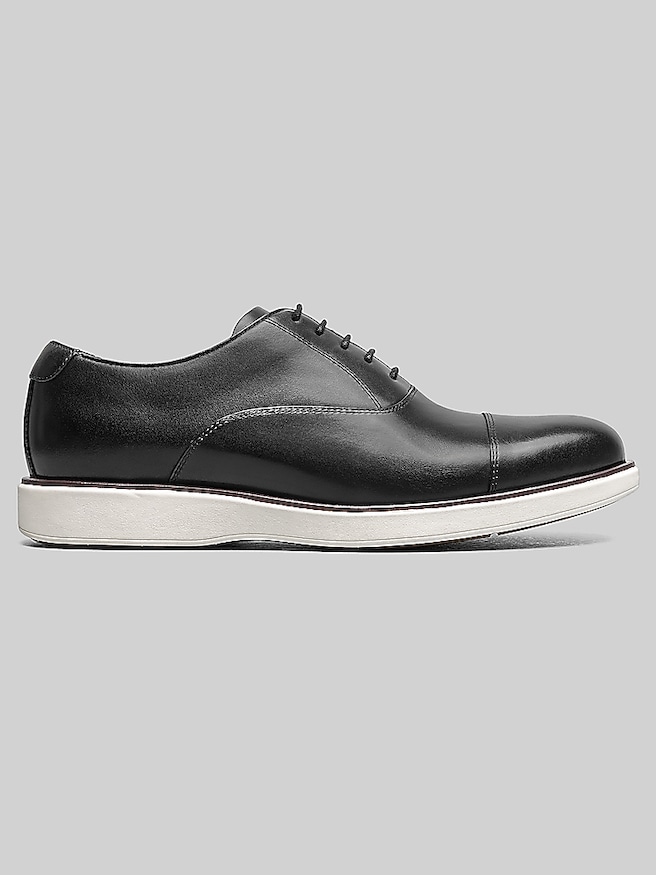
White leather dress shoes bring a crisp, distinctive finish to tailored clothing, with a lighter visual presence than traditional black or brown footwear. Against navy trousers, they create a deliberate contrast; beneath an ivory suit, they help carry a coordinated look from jacket to hem. Their appeal lies partly in that balance between familiar dress-shoe construction and an expressive color. A streamlined lace-up can look precise and understated, while a loafer introduces a more relaxed line without losing its polished character. Shape matters as much as color: an almond-shaped toe generally follows the foot’s outline, while a softly rounded toe gives the shoe a fuller profile. Minimal stitching keeps the emphasis on the leather, whereas broguing, a raised apron seam, or a decorative strap adds texture that becomes especially noticeable against a white surface. These details make white leather dress shoes a distinctive choice for wedding celebrations, milestone birthdays, stage performances, and social occasions where personal style has room to stand out. They can also work with tailored separates for a dinner or reception that calls for something more considered than everyday footwear. The dress code still comes first, particularly for formal events with established expectations; white footwear is a style choice rather than a universal substitute for conventional evening shoes. For a cohesive outfit, repeat a light tone elsewhere through a shirt, pocket square, or subtle pattern instead of matching every accessory exactly. Trouser length deserves attention, too. A clean hem with little excess fabric allows the shoe’s shape to show, while a heavy break can crowd the upper and hide its details. Socks close to the trouser color create continuity through the leg; a discreet no-show option can suit a loafer and a less formal setting. For someone whose wardrobe centers on soft tailoring and casual trousers, white leather men's sneakers offer a more casual point of comparison, while dress shoes retain the sharper profile associated with tailored dressing.
The character of white leather dress shoes depends on more than the finish visible across the toe. Leather uppers vary in grain, thickness, surface treatment, and flexibility, all of which influence how a shoe feels and how it develops with wear. Smooth leather gives white footwear a clean appearance, but a uniform surface alone does not establish leather quality. Some finishes preserve more natural grain, while others use surface coatings to achieve an even color and texture. A glossy finish reflects light and draws attention; a softer sheen usually blends more quietly into an outfit. Product material descriptions are useful because leather uppers do not necessarily mean leather linings or leather soles. Inside the shoe, smooth seams, a comfortable lining, and cushioning beneath the heel and forefoot can make a meaningful difference during a reception or an evening spent standing. Fit should feel secure without squeezing the toes or pressing across the instep. When trying on dress shoes, wear the socks intended for the occasion and check both feet, since one may need slightly more room. Walk, turn, and pause on a firm surface to notice heel movement, pressure at the little toe, or a vamp that digs in as the foot bends. Lace-ups allow some adjustment over the instep, while loafers depend more closely on the relationship between foot shape and shoe shape. Leather may soften with use, but an uncomfortable fit should not be treated as something that will inevitably correct itself. Sole construction also affects the experience. Leather soles can provide a slim, traditional profile, while rubber components may add flexibility and grip, depending on their design. Neither material guarantees comfort or traction on every floor. For an occasion involving stairs, smooth tile, or several hours on foot, a stable heel and a comfortable flex point matter more than appearance alone. A brief indoor wear test before the event can reveal a rubbing seam or an insecure heel while there is still time to reconsider the fit.
Keeping white leather dress shoes looking polished requires gentle, consistent care rather than aggressive scrubbing. Pale uppers make dust, scuffs, and transferred color easier to see, especially around the toe, heel, and edges of the sole. After wear, remove loose debris with a soft brush or clean cloth before addressing marks; rubbing grit across the surface can create scratches. Follow the maker’s care directions and choose cleaners intended for the specific leather finish, testing any treatment in a discreet area first. A lightly dampened cloth may be enough for simple surface dirt on some smooth finished leathers, but soaking the upper can affect its shape and finish. Household bleach, abrasive pads, and strong solvents can damage leather or alter its color. White shoe cream may help refresh certain smooth leather finishes, though it is not suitable for every surface and should not be applied automatically to patent or specialty coatings. If conditioning is recommended, use a compatible product sparingly rather than saturating the leather. Let shoes dry naturally away from direct heat, and use properly sized shoe trees to support their shape between wears. Separate storage bags can help prevent dark footwear or other materials from rubbing against the white uppers. Durability also depends on construction and use: repeated toe dragging, worn heel edges, and neglected sole damage can shorten a shoe’s useful life even when the upper still looks presentable. A shoe repair professional can assess whether heel replacement, sole work, or finish restoration is practical for a particular pair. For regular wear, allowing shoes time to air out between outings supports interior freshness and gives absorbed moisture time to dissipate. As a gift, white leather dress shoes are especially personal, best suited to someone who already enjoys expressive tailoring or has mentioned wanting a light-colored dress shoe. Knowing the recipient’s usual size is helpful, but width, instep height, and preferred silhouette are equally important. The strongest choice is one that suits both the wearer’s clothing and the way the shoes will actually be used, whether that means walking into a celebration, standing for photographs, or spending an evening on the dance floor.