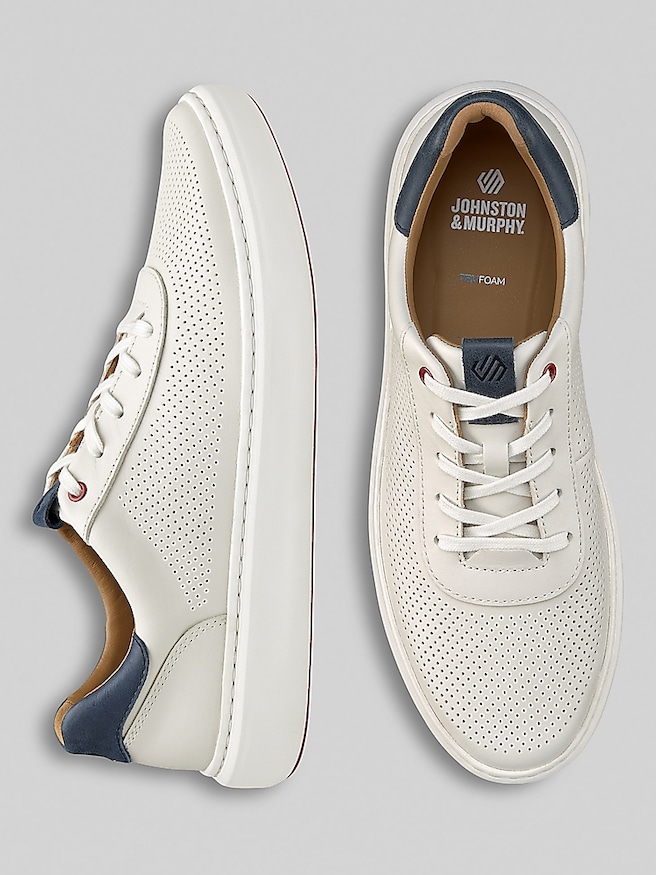
White leather sneakers bring a crisp finish to everyday clothing, with enough polish to sit comfortably alongside chinos, dark denim, and relaxed tailoring. Their appeal comes from contrast: a bright, simple shoe can lighten the look of charcoal trousers, sharpen faded jeans, or give a textured sweater and wool coat a less formal feel. Leather also lends structure to the upper, helping a sneaker look more substantial than a lightweight fabric shoe without taking on the formality of a dress shoe. The silhouette makes a noticeable difference. A low-top with restrained stitching and a relatively slim sole creates a clean line beneath tapered pants, while a fuller shape and thicker sole work well with straight-leg denim and more relaxed proportions. Smooth leather, tonal laces, and subtle detailing keep attention on the outfit as a whole; perforations, layered panels, and contrasting textures bring a more athletic character. Neither approach is universally better. The best white leather sneakers for an everyday wardrobe are the ones whose shape, support, and level of detail suit the way they will be worn. For a casual office, a neat low-top can complement navy chinos and an open-collar shirt, provided the workplace dress code allows sneakers. For dinner, dark jeans, a fine-gauge knit, and an unstructured jacket create a comfortable combination that still feels considered. Pairing sneakers with a suit calls for a similarly relaxed setting and tailoring that does not pool over the shoe. They are not a substitute for dress footwear at an occasion that explicitly calls for formal attire. During the cooler months, white leather looks especially sharp against deep blue, olive, brown, and heather gray. The color remains useful beyond warm-weather outfits, offering a clear visual break beneath heavier fabrics. A hem that rests lightly near the top of the shoe helps preserve that effect without requiring exposed ankles or cropped pants. Even a familiar combination of jeans and a sweatshirt looks more intentional when the sneakers are clean and the proportions feel balanced.
Materials and construction influence how white leather sneakers feel on the first outing and how they hold up after repeated wear. Full-grain leather retains its natural grain surface and can develop character over time, though its softness and resistance to marking depend on the hide and finish. Other leather finishes can offer a more uniform appearance, and a smooth, coated surface may be easier to wipe clean than suede or nubuck. White leather is not one consistent shade, either: bright white reads crisp and graphic, while an off-white finish creates a softer contrast with earth tones and textured fabrics. The lining deserves attention as well. Leather linings can feel smooth against the foot and absorb some moisture, while textile linings vary in softness, breathability, and drying time. Underfoot, cushioning, flexibility, and heel stability matter more than appearance alone. A thick sole does not automatically provide better support, and an especially soft footbed is not necessarily the most comfortable choice for hours of standing. For a commute that includes several blocks on foot, a secure heel and a sole that flexes comfortably near the ball of the foot can be more useful than extra bulk. Fit should allow the toes to move without letting the foot slide forward at each step. The widest part of the foot should sit comfortably within the widest part of the shoe, with no pinching across the forefoot or pressure from the upper. Trying sneakers with the socks intended for regular wear gives a more realistic sense of volume, particularly when switching to thicker socks in cooler weather. Leather may soften with use, but a shoe that feels painfully tight should not be expected to stretch into the right size. Anyone using an orthotic should check interior depth and whether the existing footbed is removable. Everyday leather sneakers suit commuting, social plans, travel, and casual walking, but their athletic appearance does not make them running or training shoes. Outsole texture also matters on damp sidewalks; a smooth tread offers less purchase than a more defined pattern, and ordinary leather sneakers should not be assumed to provide traction on ice.
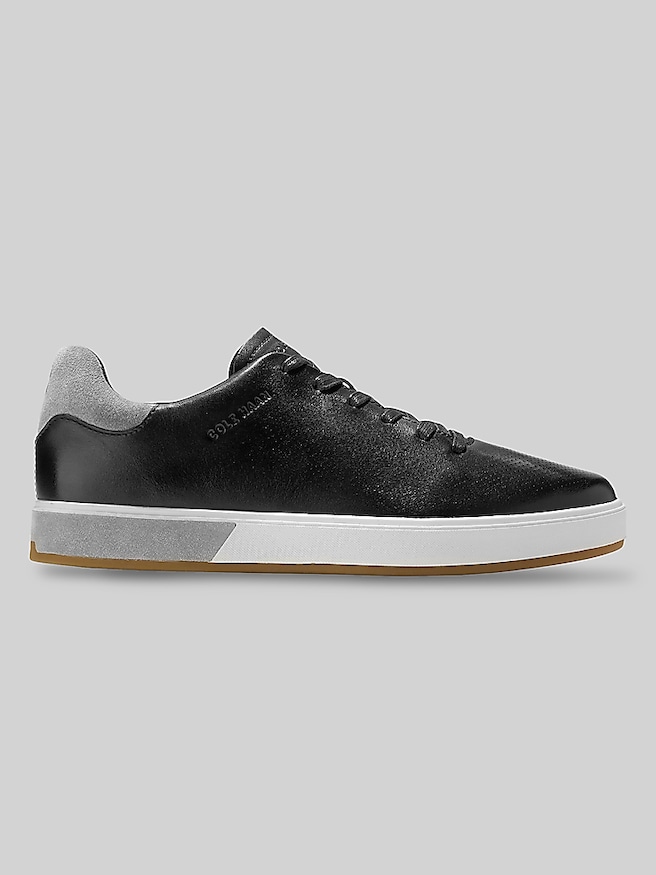
Keeping white leather sneakers looking sharp is largely a matter of gentle, consistent care rather than aggressive scrubbing. Surface dust and grit are easier to remove before they settle into creases or rub against the finish. A soft cloth or brush can lift loose debris, followed by a lightly damp cloth and, when needed, a cleaner specifically approved for the shoe’s leather. Testing any cleaner on an inconspicuous area helps avoid discoloration, and the maker’s care directions should take precedence over a general cleaning routine. Smooth leather, suede panels, textile tongues, and rubber sidewalls may each need a separate approach. A brush appropriate for the outsole can be too harsh for the upper, while soaking the entire shoe can affect its shape, adhesives, and finish. Laces can often be removed for separate cleaning according to their care instructions, a small step that makes a visible difference around the opening. A compatible protective treatment may help resist moisture and staining, but it does not make leather footwear waterproof. After an unexpected shower, blotting away moisture and allowing the shoes to dry naturally at room temperature is gentler than placing them beside a heater. Lightly filling the toes with clean, unprinted paper can help absorb moisture and maintain shape. Road salt should be addressed promptly with a leather-safe method rather than left to dry into pale rings. Between outings, dry storage with some airflow and time to rest helps limit lingering moisture. Creasing at the forefoot is a normal result of movement, not necessarily a sign of poor quality; persistent heel wear, separating soles, or damaged linings deserve closer attention. For someone who repeatedly reaches for the same jeans, chinos, and knitwear, white leather sneakers can also make a useful gift when size, width, and style preferences are known. For a darker counterpart with a less conspicuous finish, Black Leather Sneakers offer another way to connect casual footwear with a polished wardrobe. White pairs bring their own distinctive effect: a fresh, uncluttered foundation that works across everyday settings without making an outfit feel overly dressed.