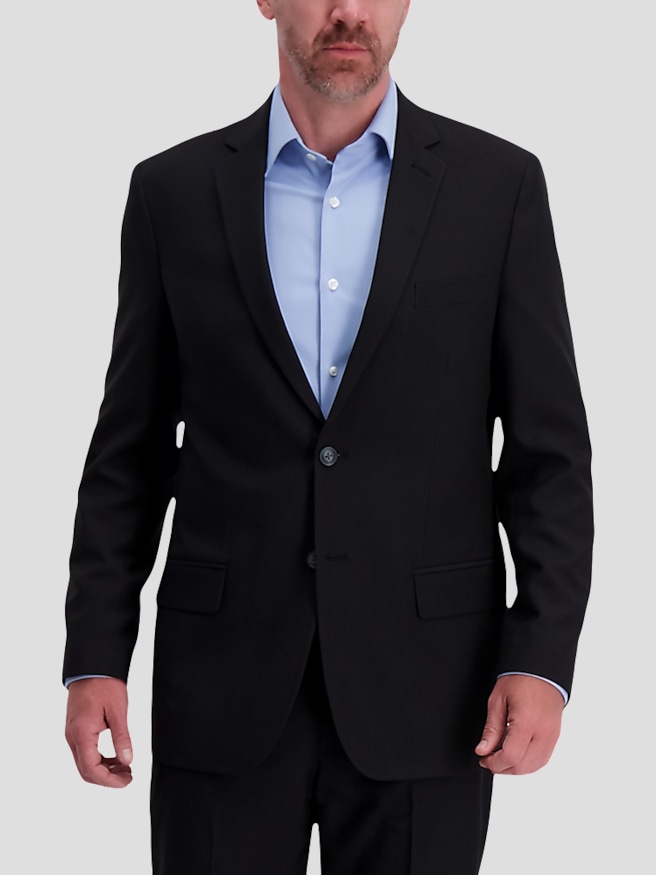
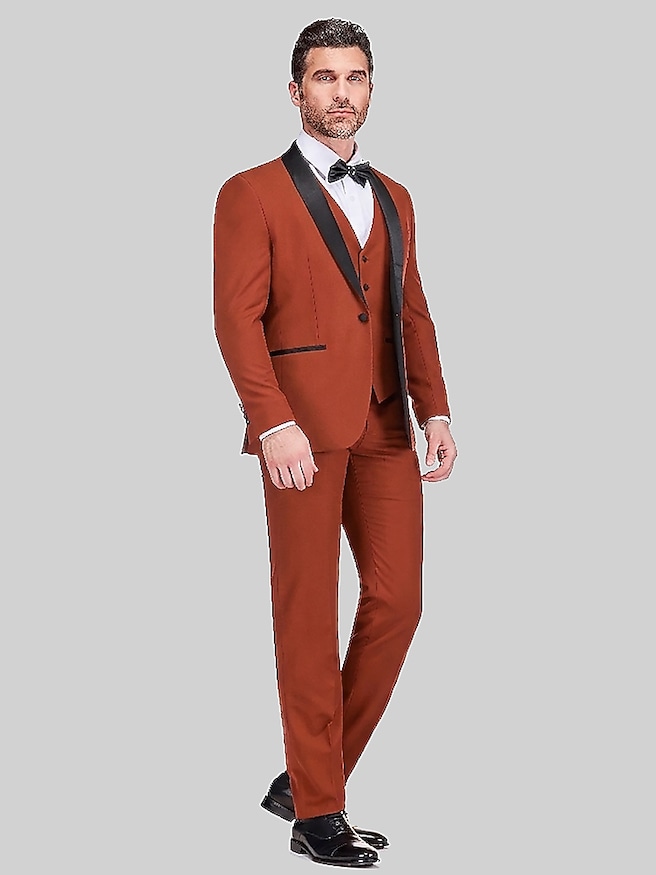
Wedding party style centers on coordinated attire that reflects the couple’s vision, the celebration’s dress code, and each person’s role. The invitation establishes the event’s overall formality, while the couple’s specific directions shape what the wedding party wears. Suits, tuxedos, dress shirts, and accessories create that shared visual language, giving the group a cohesive appearance without requiring every detail to match. For a black-tie celebration, tuxedos provide the traditional foundation, with formal shirts, bow ties, and polished dress shoes completing the look. A formal or black-tie-optional dress code may accommodate a dark suit or tuxedo, depending on the couple’s plans. Cocktail attire generally leaves more room for tailored suits and expressive accessories, while a less formal celebration may call for coordinated separates when the couple approves. The setting adds context rather than replacing those instructions: a ballroom, courthouse, place of worship, or intimate restaurant each gives tailored clothing a distinct backdrop. Color helps connect the group across those settings. Navy, charcoal, gray, and black provide familiar foundations, while a shared accent can carry the wedding palette through ties, pocket squares, or other finishing details. Matching does not have to mean identical shades from head to toe. A consistent suit color paired with complementary accessories can photograph beautifully while leaving room for individual expression. The groom might stand apart through a distinctive waistcoat or tie, with groomsmen, attendants, ushers, and family members sharing selected elements of the look. Consistency in formality often matters more than matching every accessory. A highly polished tuxedo beside a casually styled suit can feel disconnected even when both are black. By contrast, coordinated tailoring and a common level of finish make subtle variations feel intentional. The result is clothing that supports the occasion, looks considered in group portraits, and still feels natural during a toast or a conversation across the dinner table.
Fabric and fit determine how wedding party clothing feels through the ceremony, photographs, dinner, and dancing. Wool suiting is valued for its drape, breathability, and ability to recover from light creasing, making it a practical foundation for an extended celebration. Wool blends can offer resilience and a range of textures, though the fiber content and construction determine how a particular fabric performs. Cotton has a less formal character, while linen brings visible texture and relaxed elegance; both can develop creases that become part of their appearance. Velvet adds depth and a plush surface to dressier styling, especially when used as a deliberate accent rather than an unrelated statement. Smooth cloth tends to read as more polished, while textured weaves create a softer impression. Fit gives those materials their shape. Jacket shoulders should sit cleanly without extending noticeably beyond the natural shoulder, and the collar should rest against the shirt rather than pulling away. A buttoned jacket should lie smoothly across the torso without pronounced pulling, with enough room to sit and reach comfortably. Sleeves that reveal a small amount of shirt cuff create a finished transition at the wrist. Trousers should sit securely at the intended waist and fall neatly over the shoes, with the break reflecting the desired silhouette rather than excess length. Slim, modern, and classic fits describe different proportions, not a ranking of how dressed up someone looks. A closer cut can look sharp when it allows movement; a roomier cut can look equally refined when the shoulders, waist, and length are right. Stretch can add ease, but it does not replace a well-proportioned fit. These details become especially noticeable when someone lifts a glass, takes a seat for dinner, or joins the dance floor. Thoughtful alterations help create consistency across a group with varied builds without forcing everyone into the same silhouette. Durable construction also matters beyond the wedding: secure buttons, tidy seams, and fabric suited to repeated wear help tailored clothing remain useful for future celebrations and professional occasions.
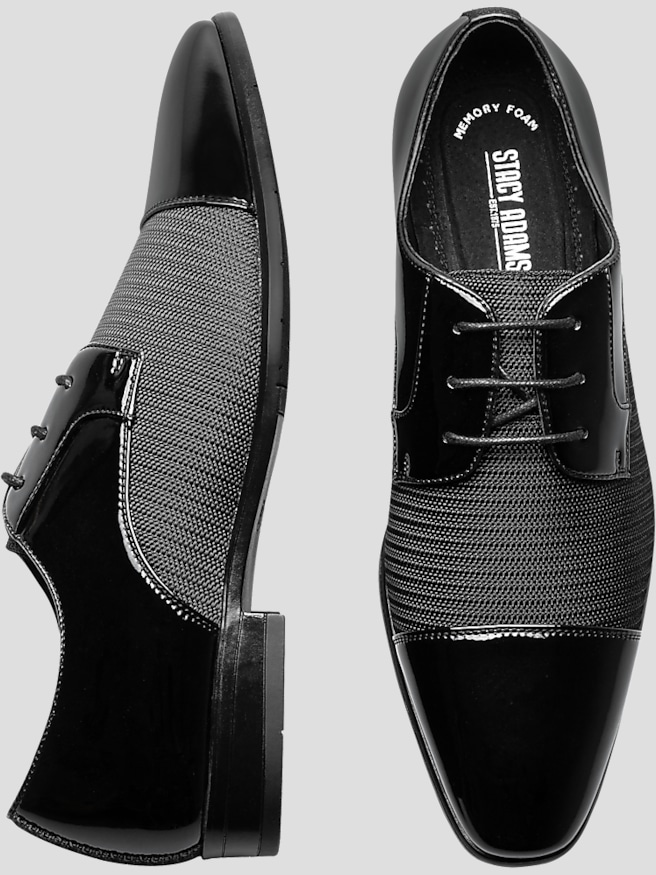
Accessories bring personality to wedding party attire while reinforcing the overall level of formality. A dress shirt creates a clean base, with its collar chosen to sit comfortably beneath the jacket and work with the intended tie. A bow tie has a traditional place with a tuxedo, while a necktie offers a broad range of colors, patterns, and textures for suited looks. Pocket squares can echo a color in the wedding palette without repeating the tie exactly; a small contrast often looks more considered than an identical pattern across every detail. Cufflinks belong with compatible shirt cuffs, and their finish can coordinate with other visible metal accents. Dress shoes complete the silhouette, with sleek shapes and a well-kept surface supporting a formal appearance. Comfort deserves equal attention, since wedding party members may spend considerable time standing for photographs or moving between parts of the celebration. Socks that stay in place and sit high enough to cover the leg when seated help maintain a neat finish. Related looks on Outfit For Wedding Party can be considered with the couple’s preferred palette and each attendant’s role in mind. Beyond the event itself, versatile accessories can make thoughtful gifts for attendants, particularly when they suit the recipient’s personal style and can be worn again. A restrained pattern or simple metal finish often transitions easily to other dress occasions. Care helps preserve that usefulness. Following garment labels is essential, since tailored jackets, formal shirts, and textured fabrics can require different treatment. Suits benefit from supportive hangers, breathing room between wears, and prompt attention to marks rather than repeated cleaning without need. Pressing or steaming should follow the fabric’s care instructions, especially around delicate finishes and structured areas. Shoes should be cleaned according to their material and stored so they retain their shape. With coordinated details, comfortable proportions, and appropriate care, wedding party clothing can feel special enough for the ceremony and remain a dependable part of a dress wardrobe afterward.