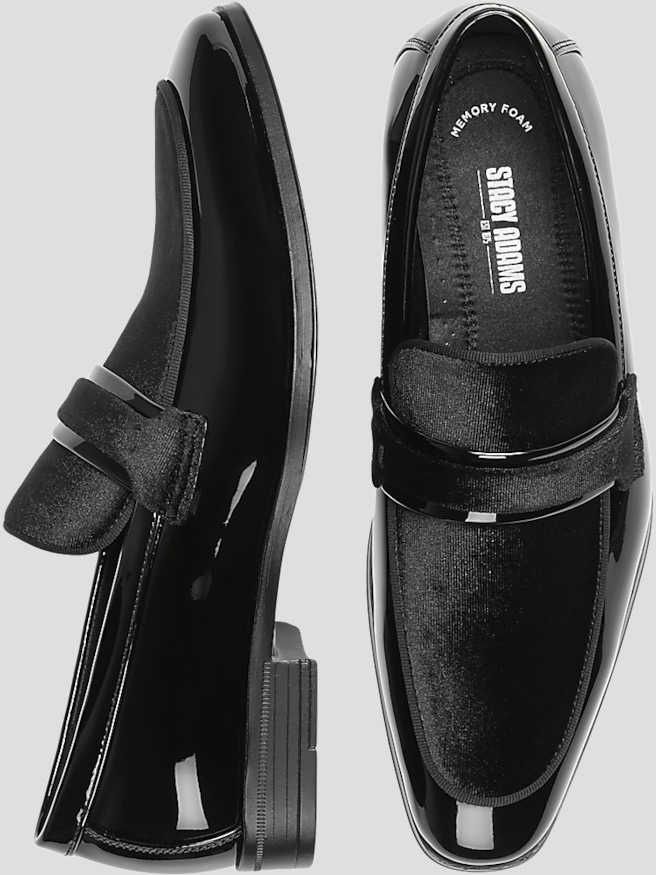
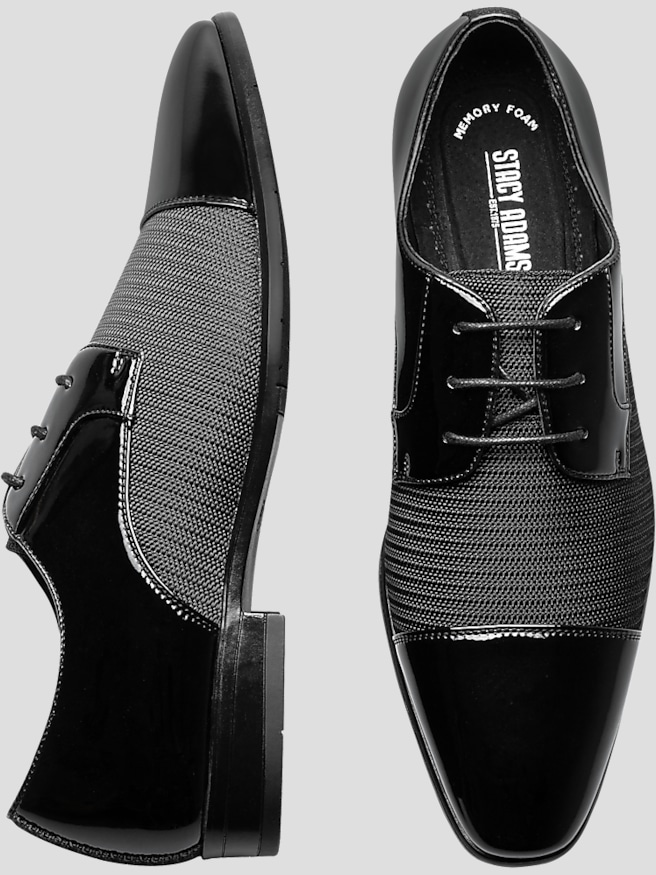
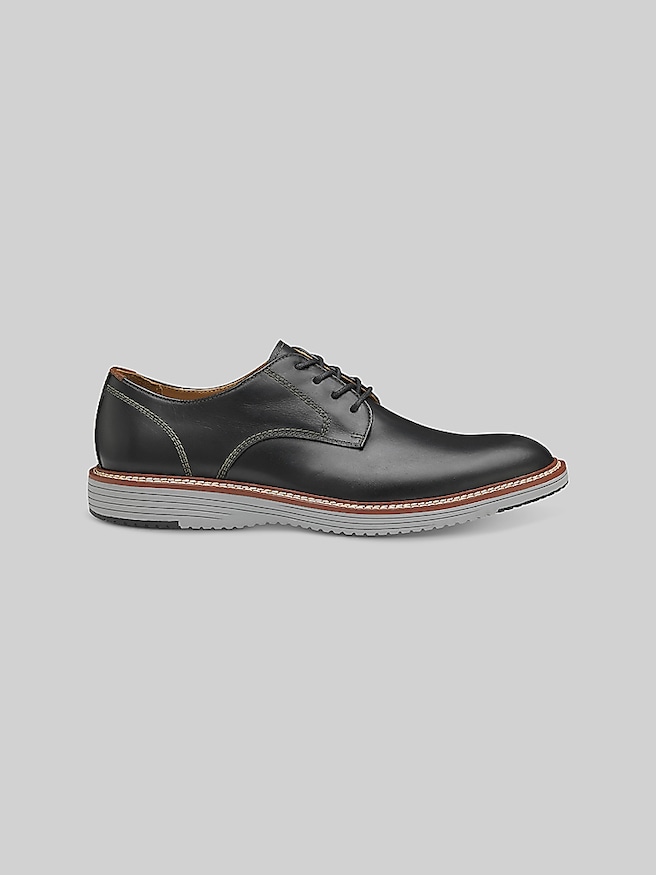
Wedding party shoes bring the wedding’s dress code, the setting, and the details of a suit or tuxedo together in one finishing touch. The right pair looks appropriate beside the other attendants while feeling comfortable through the ceremony, photographs, dinner, and dancing. For a black-tie celebration, black patent leather or highly polished black leather creates a clean, formal finish beneath tuxedo trousers. Oxfords, recognizable by their closed lacing, have a streamlined profile that works especially well with formal tailoring. Derby shoes have open lacing and a slightly more relaxed appearance, making them a versatile complement to many wedding suits. Loafers can suit cocktail attire or a more relaxed celebration when their shape, material, and finish remain refined. Color matters just as much as silhouette: black shoes create a crisp foundation for black, charcoal, and many navy outfits, while brown leather can complement navy, blue, tan, and other less formal suit colors. Dark brown generally reads as more understated than lighter tan, particularly when the rest of the outfit is dressy. For grooms, groomsmen, ushers, and fathers taking part in the celebration, coordination does not have to mean an identical shoe on every foot. A shared color family, similar level of shine, and consistent degree of formality can create a cohesive wedding party while allowing for individual fit needs. Plain toes offer an uncluttered appearance; cap toes add subtle definition; broguing introduces decorative detail that often feels less formal. These distinctions become visible in group portraits, especially when trouser hems fall cleanly over the shoes rather than bunching around them. Shoe color and finish can also connect with a leather belt when the outfit calls for one. A black belt with black shoes, or a brown belt in a closely related shade, keeps the overall effect intentional without requiring every accessory to match exactly. The result is a coordinated look that supports the occasion rather than drawing attention away from it.
Comfort in wedding party shoes comes from the relationship between shape, size, construction, and the way the shoes will be worn. A pair that feels fine for a brief fitting may feel different after standing through a ceremony and walking between photo locations, so a secure heel and enough room across the forefoot are important. Toes should have space without sliding forward, and the upper should hold the foot without pinching or creating pressure along the sides. Width can be as important as length; going up a size to solve a width issue may leave too much movement at the heel. Trying shoes with the dress socks intended for the wedding gives a more useful impression of fit than trying them with thick athletic socks. If an insert or orthotic is part of everyday comfort, sufficient interior room helps preserve that fit. Leather uppers can gradually soften with wear, but a break-in period should not be expected to correct painful pressure or a fundamentally unsuitable shape. Smooth leather offers a classic appearance and can be polished, while patent leather provides a glossy finish associated with formal evening attire. Suede brings a softer, more textured character that generally fits less formal wedding outfits better than a traditional tuxedo. Linings, cushioning, and flexible construction influence how a shoe feels over several hours, although a soft footbed alone cannot compensate for poor fit. The outsole deserves attention, too. Leather soles have a traditional dress-shoe appearance, while rubber soles or rubber inserts may provide additional traction depending on their design and the walking surface. Smooth ballroom floors, stone walkways, and stretches of lawn each place different demands on footing; a sole with suitable grip and a stable heel can make moving between them feel more assured. Durable stitching, secure heel attachment, and a well-finished upper support repeated wear beyond the wedding. For a celebration with a long reception, comfort and a polished appearance work best as equal priorities rather than competing ones.
Wedding party shoes can remain useful long after the final dance, particularly when their shape and finish work with clothing already in the closet. A restrained leather lace-up may move easily from a wedding suit to a business outfit or another dressy occasion, while a glossy formal shoe has a more specialized role alongside eveningwear. That intended use helps distinguish a versatile choice from one reserved for especially formal events. The rehearsal dinner, ceremony, and reception may also call for different levels of dress, making the overall wedding schedule relevant to how a pair will be worn. Guests coordinating their own attire can find a related perspective in Wedding Guest Shoes, where the same balance of dress code, outfit coordination, and lasting comfort applies without the need to match the wedding party. For attendants receiving shoes as a gift, confirming size, width, and preferred style beforehand makes the gesture more personal and practical. Familiarity with the recipient’s everyday fit can help, but dress shoes may fit differently from sneakers, so the marked size alone does not tell the whole story. Care also plays a part in preserving their appearance. Smooth leather benefits from gentle cleaning and conditioning with products appropriate to its finish, followed by polish when needed to restore an even color and luster. Patent leather requires care suited to its glossy surface, while suede generally calls for a suede brush and material-specific cleaning rather than conventional shoe polish. Care instructions for the particular material should take precedence over a one-method-fits-all routine. Allowing shoes to air out after wear, using shoe trees where appropriate, and storing them away from direct heat can help maintain their shape and condition. A shoehorn reduces strain on the heel during dressing, and checking laces and soles before the event leaves time to address everyday wear. These small details help wedding party shoes look considered from the first walk down the aisle to the last photograph, with a fit and finish worth wearing again.