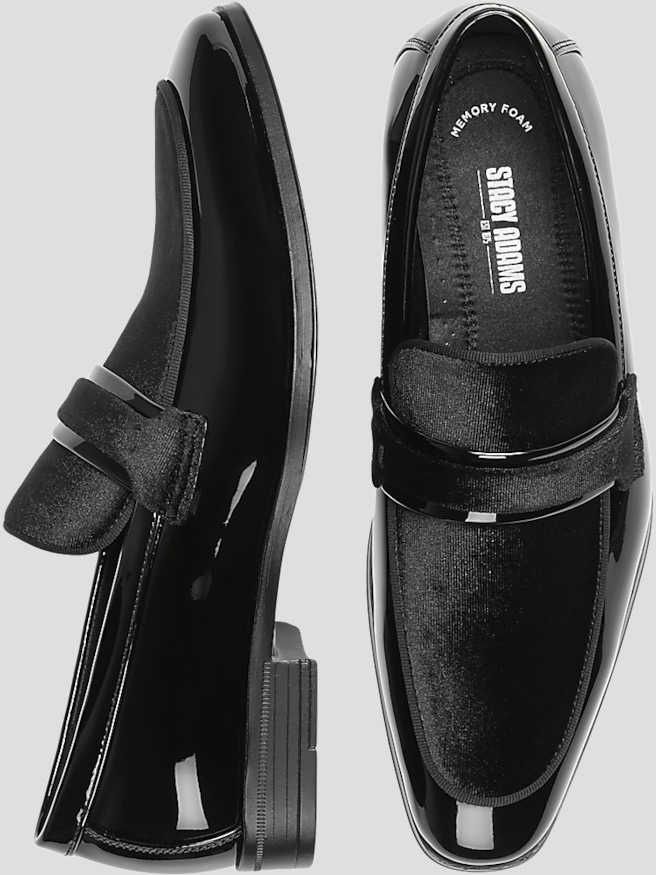
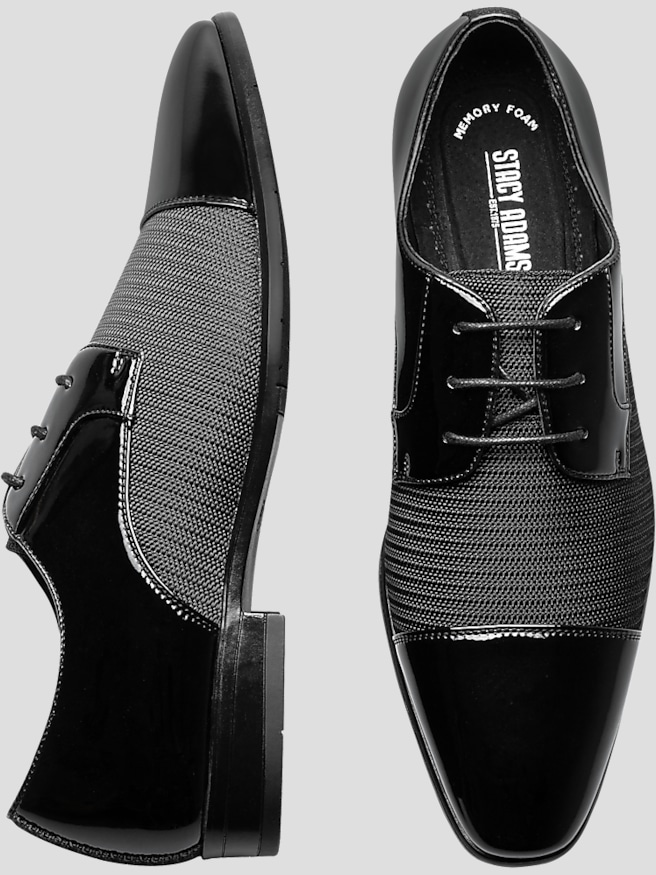
Wedding guest shoes balance the dress code, the setting, and the comfort needed for hours of standing, walking, and dancing. For men, classic options include oxfords, derbies, loafers, and other dress shoes, with smooth leather, restrained detailing, and a well-kept finish helping create a polished appearance. The right level of formality starts with the invitation: a black-tie celebration calls for more formal footwear than a relaxed reception at a restaurant or garden venue. Black patent leather shoes are a traditional match for a tuxedo, while sleek black leather oxfords can complement formal tailoring when appropriate to the dress code. Oxfords have closed lacing, which gives the upper a neat, streamlined shape; derbies have open lacing and a slightly more relaxed character. Both can work beautifully with a suit, depending on their shape, finish, and detailing. Brown leather shoes bring warmth to navy tailoring, while black footwear creates a crisp pairing with charcoal or black. Burgundy and deep brown offer additional possibilities without drawing attention away from the overall outfit. Loafers can suit cocktail attire and less formal celebrations, especially when their proportions are refined and their finish is dressy rather than casual. Decorative perforations, known as broguing, add texture, although heavily detailed shoes generally feel less formal than a simple cap-toe or plain-toe design. Coordinating footwear with Wedding Guest Outfits means considering the entire silhouette, from the jacket and trousers to the belt and socks. A belt in a similar leather color creates continuity without requiring every accessory to match exactly. Trouser length matters, too: a clean hem lets the shoe’s shape show without fabric pooling over the laces. The result should feel appropriate for the ceremony and natural at the reception, whether the occasion involves a ballroom dinner, a courthouse celebration, or an intimate gathering with close friends and family. Shoes that support that balance help the outfit feel considered rather than overly coordinated.
Comfort becomes especially important when a wedding includes a walk between venues, a standing cocktail hour, and several hours at the reception. A good fit feels secure through the heel and midfoot while leaving enough space for the toes to rest naturally. Toes should not press against the front, and the widest part of the foot should sit comfortably within the widest part of the shoe. Extra length is not a reliable substitute for the correct width; a shoe that is too long can slip at the heel even while feeling tight across the forefoot. Trying dress shoes with the socks intended for the event gives a more accurate sense of fit than trying them with thick athletic socks. Lace-up styles allow some adjustment across the instep, while loafers depend more heavily on a close, comfortable fit from the start. Leather may soften with wear, but that gradual change should not be expected to resolve pinching, numbness, or a cramped toe box. Materials and construction also shape the experience. Smooth leather offers a traditional dress appearance and can develop character with proper care. Suede has a softer, textured surface that pairs naturally with less formal tailoring, though it requires its own cleaning tools and may be less suitable for very formal dress codes. Linings, seams, insoles, and outsole flexibility all influence how shoes feel over a long celebration. Cushioning can soften the sensation underfoot, while a secure heel helps limit distracting movement inside the shoe. Leather soles have a traditional look; rubber soles or discreet rubber inserts may offer useful traction on smooth floors, depending on the tread and surface. For a venue with lawn paths, gravel, or uneven paving, stable footing deserves as much attention as appearance. Wearing a new pair for short periods before the event can reveal pressure points early. Shoes should feel comfortable enough for the walk from the ceremony to the reception, not merely look right while standing in front of a mirror.
Well-made wedding guest shoes can remain useful long after the last dance, becoming part of a wardrobe for business occasions, anniversary dinners, and other celebrations. Versatility often comes from a balanced shape, a wearable color, and details that complement several outfits rather than only one suit. A moderately rounded or almond-shaped toe tends to pair easily with classic tailoring, while an exaggerated point or very bulky sole creates a more distinctive effect. The most useful choice depends on personal style and the occasions ahead: someone who regularly wears dark suits may favor a sleek black lace-up, while someone whose wardrobe centers on navy trousers and textured jackets may get more use from brown leather. Durability depends on the quality of the upper, the sole, the construction, and ongoing care rather than on appearance alone. Leather uppers benefit from having surface dust removed with a soft brush or cloth, followed by suitable conditioning and polish when needed. Polish can refresh color and shine, but it should be compatible with the leather and finish. Suede generally calls for a suede brush and material-specific care rather than standard leather cream. Patent finishes need an approach suited to their glossy surface, with product care directions taking priority. Cedar shoe trees can help absorb residual moisture and maintain shape between wears, while a shoehorn helps protect the heel counter when putting shoes on. Allowing footwear to rest and dry naturally after wear supports its condition; direct heat can damage leather and adhesives. Some stitched constructions can be resoled, although repair options depend on how the shoe is made. These practical details matter for footwear expected to accompany more than a single celebration. A clean upper, tidy laces, and maintained soles also contribute more to a finished appearance than elaborate detailing alone. From greeting other guests to joining the dance floor, wedding footwear works best when its proportions, comfort, and condition support the occasion without becoming a distraction.