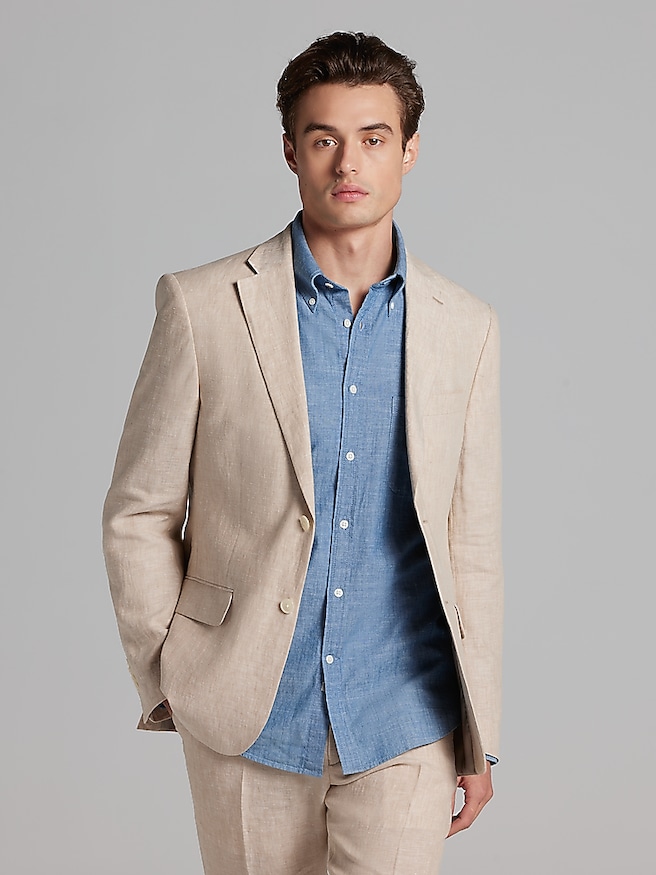
Wedding apparel includes the suits, tuxedos, dress shirts, trousers, shoes, and accessories worn by grooms, groomsmen, wedding guests, and family members celebrating the couple. The right combination reflects the invitation’s dress code, the setting, and each person’s role in the celebration. A tuxedo has a distinct place at a black-tie wedding, where satin lapel detailing, a formal shirt, and a bow tie create a cohesive evening look. A suit offers a broader range of expression, from a dark, understated ensemble for a formal ceremony to a textured fabric or softer neutral for a more relaxed setting. Black-tie-optional occasions can accommodate either a tuxedo or a dark suit with polished accessories, while cocktail attire generally calls for a tailored suit rather than full evening dress. Color helps establish the mood without needing to dominate it. Navy and charcoal provide a restrained foundation; black creates a crisp formal impression; and brown, tan, or muted blue can complement a less traditional celebration. For a wedding party, coordination does not have to mean that every detail is identical. A shared suit color can connect the group, while a distinctive tie, pocket square, or boutonniere gives the groom a clear point of difference. Guests generally benefit from an outfit that respects the requested level of formality without appearing to be part of the wedding party. The same wardrobe may also support a rehearsal dinner, a welcome gathering, or an anniversary celebration, with changes in shirts and accessories creating a different impression. A jacket worn open over a dress shirt feels less ceremonial than the same jacket buttoned with a tie and a neatly folded pocket square. These details make wedding clothing useful beyond a single photograph, while preserving the sense of occasion that separates a wedding ensemble from everyday office attire.
Fabric and construction influence how wedding apparel looks in person, how it photographs, and how comfortably it moves through a full celebration. Wool is valued in tailored clothing for its drape, resilience, and ability to recover from ordinary creasing. Wool blends can combine those qualities with other characteristics, such as added stretch or easier maintenance, depending on the fabric composition. Cotton offers a more matte appearance and a less formal character, while linen brings visible texture and a naturally relaxed finish; its tendency to wrinkle is part of that appearance rather than a sign of poor quality. A fine, smooth weave generally looks dressier than a pronounced texture, and a subtle pattern can add depth without becoming the focal point of group photographs. Lining, seams, closures, and reinforced areas also contribute to how a garment holds its shape through repeated wear. Fit matters just as much as fabric. A jacket’s shoulders should follow the wearer’s natural shoulder line, with a collar that rests neatly against the shirt instead of standing away from the neck. Lapels should lie flat, and the front should close without pulling into deep creases around the button. Sleeves that allow a small amount of shirt cuff to show help the outfit look intentional, while trouser length influences the entire silhouette: a clean hem with little excess fabric reads differently from a fuller break over the shoe. Neither a slim nor a roomier cut is automatically the better choice; the strongest fit balances proportion with ease of movement. Sitting through the ceremony, reaching for an inside pocket, embracing relatives, and dancing all require more flexibility than standing still for a fitting. Shirt collars, waistbands, and armholes should remain comfortable in those moments. Attention to the seat, thigh, and jacket length can make a greater difference than choosing a size based only on chest or waist measurements. Thoughtful adjustments help the clothing look composed without making it feel restrictive.
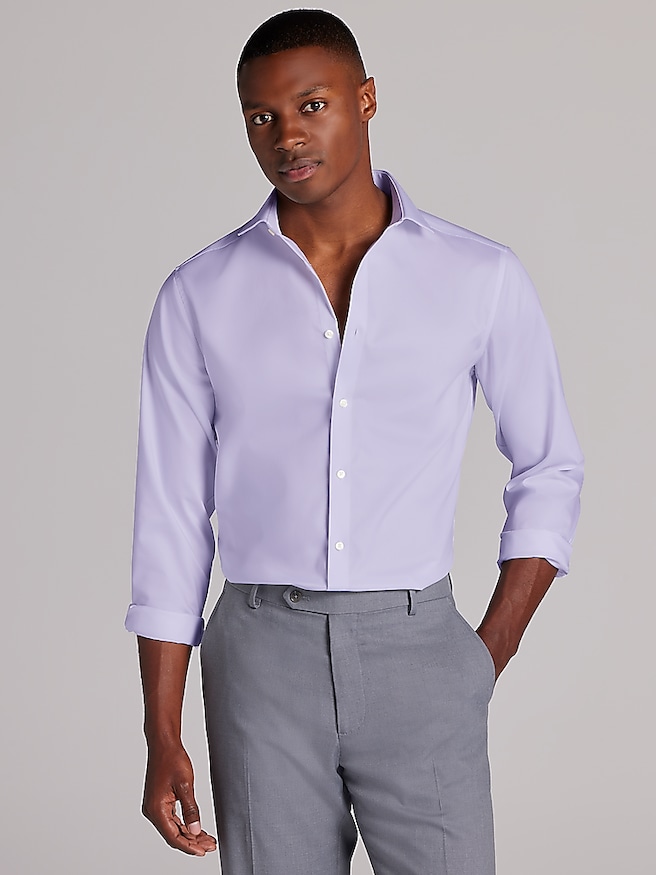
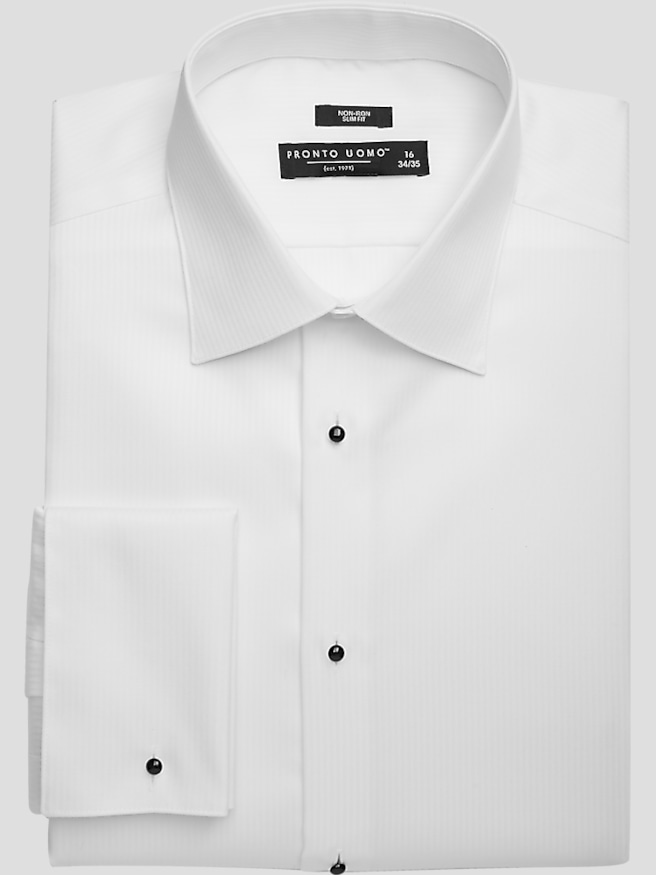
Finishing pieces give wedding attire its final level of polish, connecting the larger garments without competing with them. A dress shirt creates the foundation near the face, where collar shape, fabric texture, and the relationship between shirt and tie are especially noticeable. White offers a crisp contrast with dark tailoring, while a restrained color or subtle pattern can work with a suit when the dress code allows. A tie with a quiet texture adds dimension to a solid jacket; a pocket square can echo one color in the ensemble without repeating the tie exactly. Formal accessories work best when their level of dress matches the rest of the outfit, from cufflinks and shirt studs to polished lace-up shoes. Leather footwear should feel secure at the heel and comfortable across the forefoot, particularly for a celebration with extended standing and dancing. Socks that coordinate with the trousers help maintain a continuous line when seated, and a belt, when worn, should complement the shoes rather than draw attention away from the suit. The Wedding Ceremony Outfit collection offers another way to explore clothing and finishing touches for the vows and the celebration that follows. Longevity also depends on care after the event. Garment labels provide the most reliable direction for cleaning, since the needs of a structured jacket can differ from those of a washable shirt. A broad, supportive hanger helps a jacket retain its shoulder shape, and shoes benefit from drying naturally before storage. Prompt attention to spills and professional care when appropriate can help prevent a single celebration from leaving a lasting mark. For a groom or wedding-party member, a tie, pocket square, or pair of cufflinks can also make a thoughtful gift when chosen to suit the planned attire. Well-coordinated wedding apparel brings together ceremony, comfort, and personal style, with enough versatility to remain meaningful long after the last dance.