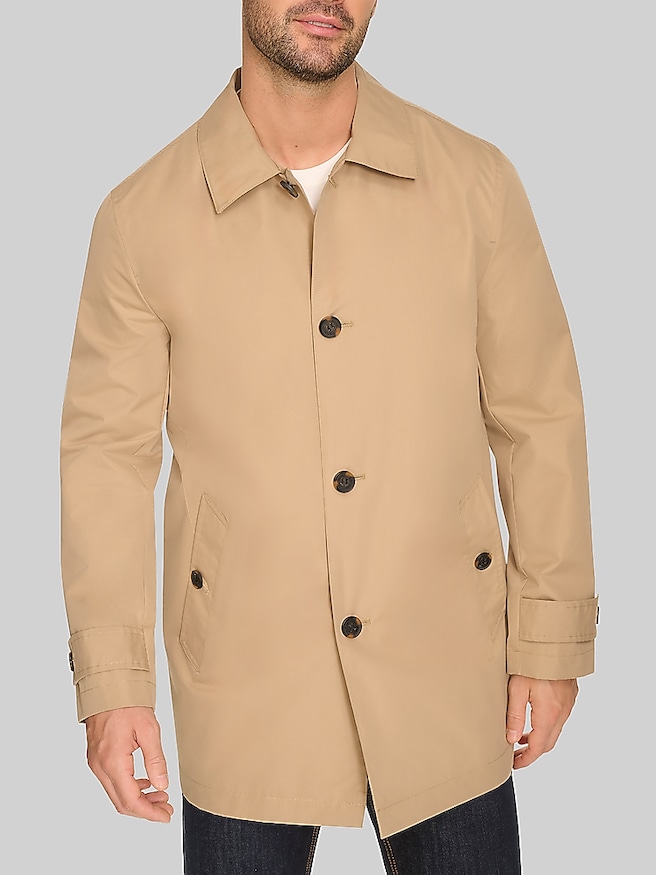
Weatherproof parkas bring extended coverage, practical storage, and protection from wind and precipitation to an outerwear silhouette built for cold, unsettled conditions. A parka typically reaches below the hips, helping shield more of the body than a waist-length jacket when walking to the train, waiting outside a restaurant, or crossing an exposed parking lot. That extra length is only part of the story: shell construction, insulation, seams, and closures all contribute to how the coat performs. Weatherproof is a broad description rather than a single performance standard, so water-resistant and waterproof constructions deserve a clear distinction. A water-resistant shell can shed light rain or brief snow flurries, while sustained precipitation calls for a waterproof construction with appropriately sealed seams. A durable water-repellent finish helps moisture bead on the exterior, but that finish alone does not make a garment waterproof. Polyester and nylon are common shell materials because they can combine relatively light weight with resistance to everyday abrasion; woven texture, fabric weight, and reinforcement also influence durability. A waterproof membrane or coating provides another barrier against moisture, while breathable construction helps water vapor escape rather than collect inside. Breathability still has limits, particularly during brisk walks or strenuous activity, making ventilation useful when exertion increases. Features such as storm flaps, protected zippers, adjustable cuffs, and a well-shaped hood help reduce openings where wind and moisture can enter. Insulation adds another layer of comfort. Down can provide substantial warmth without excessive weight, although its loft generally suffers when it becomes wet. Synthetic insulation typically retains more insulating ability in damp conditions, with performance varying by construction and fill. Neither insulation type makes a parka waterproof on its own. The overlap between weatherproof parkas and Men's Waterproof Jackets is protection from precipitation; the parka silhouette generally emphasizes longer coverage and often includes insulation suited to cold conditions. Reliable comfort comes from the complete garment, not a single fabric name or feature.
Fit determines how comfortably that protection works through an ordinary day. A weatherproof parka needs enough room for the clothing underneath without leaving so much empty space that the coat feels cumbersome or lets drafts circulate freely. For a commute in tailored clothing, space across the shoulders and upper arms helps a suit jacket sit smoothly beneath the shell. Over a sweater or fleece, a little ease through the chest supports comfortable movement without compressing the insulating layers. Sleeves should accommodate reaching for a subway strap or lifting a bag, while the back should allow movement without pulling tightly across the shoulders. The hem matters just as much: longer coverage can be welcome beside a windy playing field, but the cut also needs to accommodate stairs, a full walking stride, and sitting behind the wheel. When included, a two-way front zipper can create extra room at the lower hem without opening the entire coat. An adjustable hood should sit securely enough to stay useful in gusts without obstructing side vision, and a high collar feels more comfortable when its lining is soft against the chin. Cuffs that adjust around gloves help manage exposed gaps, while pocket placement makes a noticeable difference when carrying keys, a phone, or a transit pass. Protected outer pockets are useful for frequently handled belongings, though water resistance should never be assumed to mean a pocket is fully waterproof. Interior storage can keep small essentials close to the body and reduce the need to unzip the coat repeatedly. For everyday wear, a restrained silhouette and understated hardware can work naturally over both office clothing and casual layers. More pronounced utility details may suit long walks, outdoor gatherings, or days spent moving between indoor and outdoor settings. The right balance is less about maximum bulk than comfortable coverage matched to the wearer's routine, clothing, and time spent outside.
Long-term performance depends on care as well as construction. Road splash, sidewalk grime, body oils, and repeated handling can affect a shell's appearance and interfere with how its surface sheds moisture. Cleaning methods vary with the outer fabric, membrane, lining, and insulation, so the garment's care label takes priority over a general washing routine. Some parkas can be machine washed under specified conditions, while others need professional care or a more specialized process. Fabric softeners, bleach, and harsh cleaners can damage certain technical materials or leave residues that affect performance. A suitable cleaning product, thorough rinsing, and the prescribed drying method help maintain the garment without unnecessary wear. Where permitted by the care instructions, gentle heat or an appropriate reproofing treatment may help restore a water-repellent finish; neither repairs a damaged waterproof barrier. Down-filled construction may need careful drying to restore loft, and all insulated outerwear should be completely dry before storage. A roomy hanging space helps prevent prolonged compression, while keeping the coat away from direct heat protects fabrics and finishes. Between cleanings, a check of zipper tracks, pocket seams, cuff edges, and high-friction areas can reveal small issues before they become larger repairs. Durability also shows up in everyday details: secure stitching, smooth closures, reinforced stress points, and hardware that is manageable with cold hands. Those qualities matter to commuters, frequent travelers, outdoor spectators, and anyone whose routine includes waiting or walking in rough conditions. A weatherproof parka can also make a thoughtful gift for someone who spends considerable time outside, provided the fit, preferred length, and usual layers are considered. For that wearer, useful protection feels personal: a collar that does not chafe, a hood that stays put, pockets within easy reach, and enough freedom to move comfortably through the day.