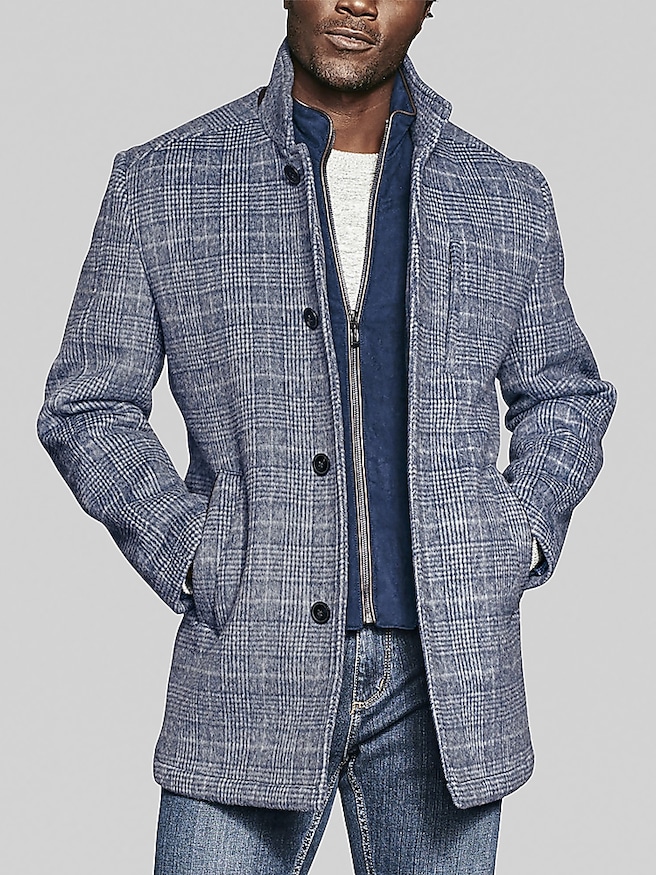
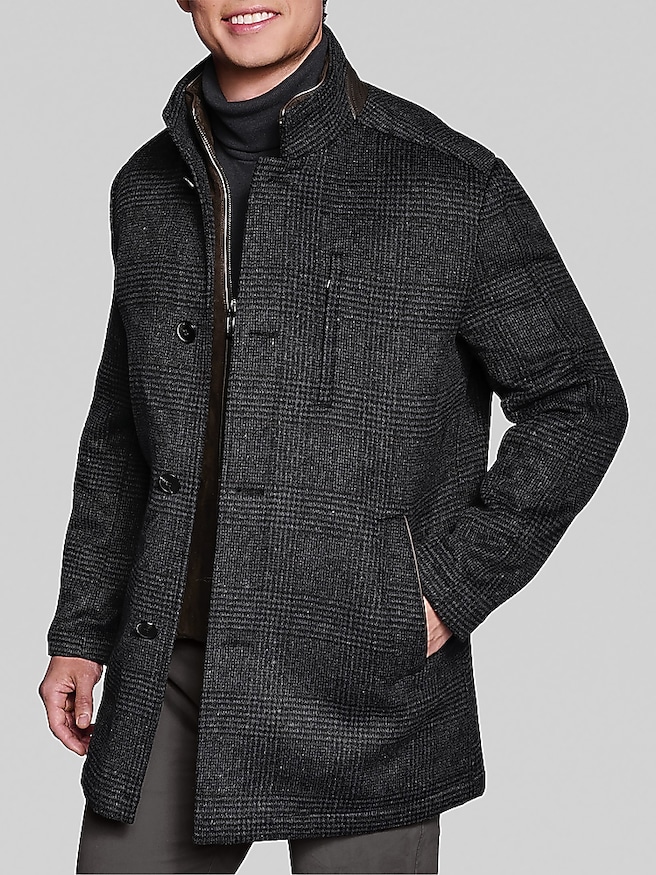
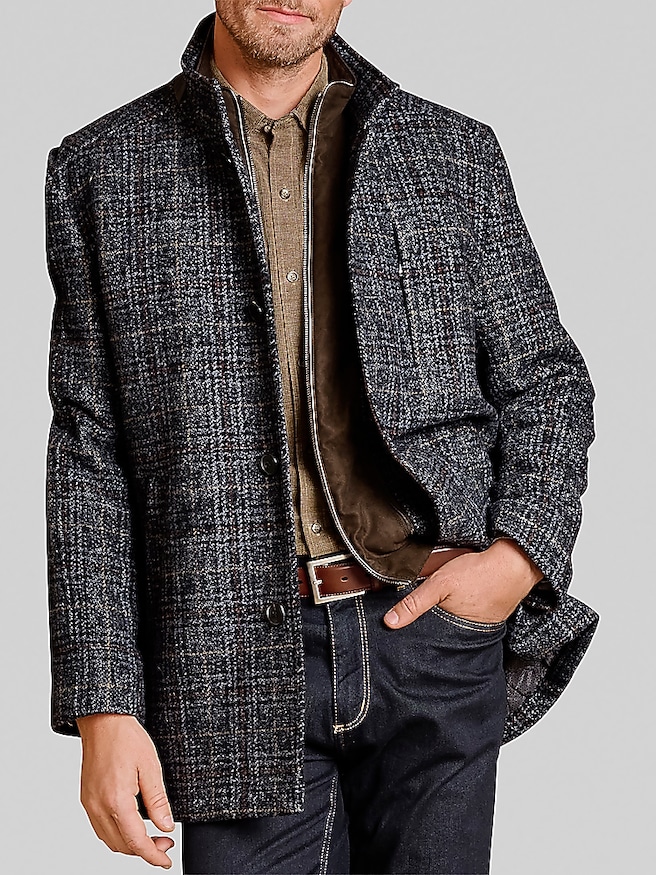
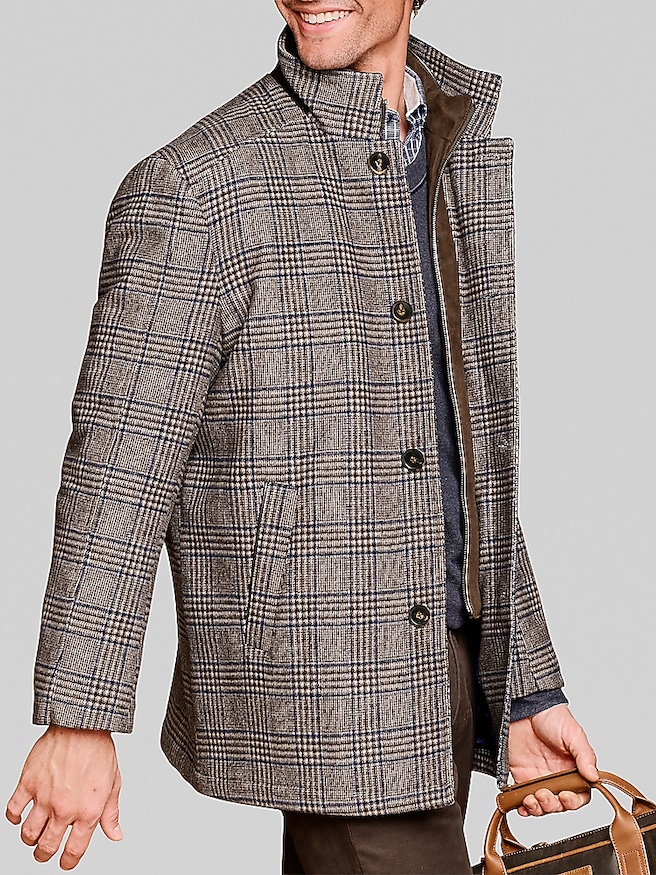
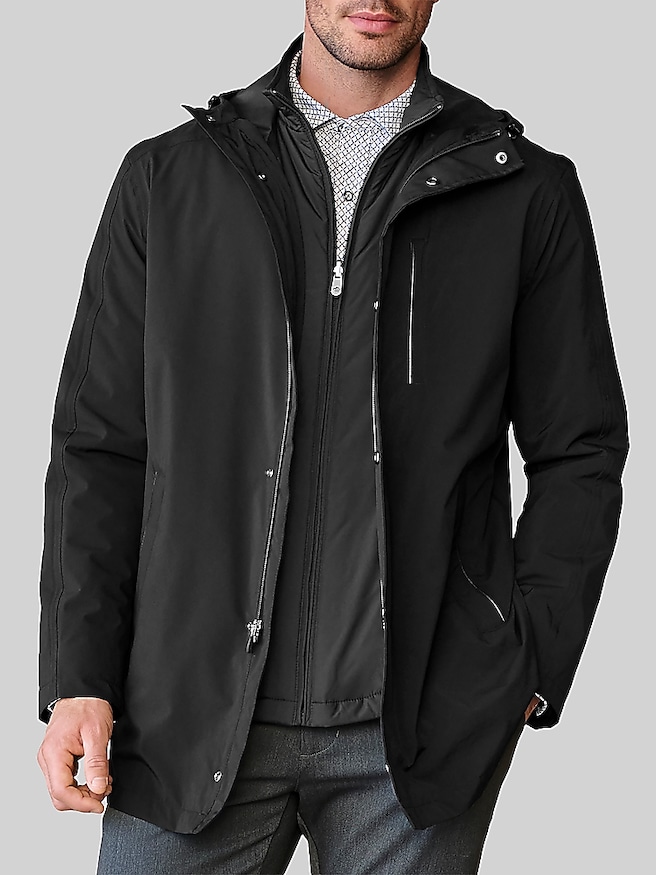
Men’s weatherproof jackets bring practical protection to everyday outerwear, whether the day involves a windy walk to the office, a damp commute, or time outdoors between appointments. Weatherproof is a broad description rather than a single performance standard: a jacket may help block wind, shed light rain, provide warmth, or combine those qualities. Water-resistant fabric typically handles brief showers and splashes, while waterproof construction is designed to resist water penetration more thoroughly. The distinction depends on the fabric, its protective treatment or membrane, and how the seams and closures are finished—not simply how substantial the jacket feels. Tightly woven nylon and polyester are common shell materials because they can be lightweight, durable, and quick to dry. Some fabrics have a water-repellent finish that encourages droplets to bead on the surface; others incorporate a coating or membrane for additional protection. Taped or sealed seams help close the tiny openings left by stitching, while a storm flap over the front zipper can reduce exposure at the closure. These details matter when rain blows sideways at a bus stop or collects across the shoulders during a walk from a parking garage. A hood with useful adjustment points can provide coverage without slipping into the line of sight, and adjustable cuffs help limit drafts at the wrists. Breathability matters, too, especially when a brisk walk generates heat beneath a protective shell. Waterproofing and breathability are separate characteristics, so a jacket’s stated construction is more informative than the word weatherproof alone. For outerwear focused specifically on rain protection, Men's Waterproof Jackets offers a related category to consider. The broader weatherproof category accommodates varied routines, from light layers worn over a button-down to insulated jackets intended for cold, windy conditions. The most useful balance of coverage, warmth, and mobility depends on how much time is spent outside and what clothing needs to fit underneath.
Fit gives a men’s weatherproof jacket much of its everyday versatility. A comfortable cut leaves space for a shirt and sweater without creating excess fabric that bunches at the waist or interferes with movement. For wear over tailored clothing, shoulder room and sleeve width deserve particular attention: a jacket that fits neatly over a T-shirt may feel restrictive over a suit jacket. Reaching forward to hold a steering wheel, lifting an arm toward a train’s overhead rail, or sitting with the front zipper closed can reveal pressure points that are not obvious while standing still. Sleeves should cover the wrists without swallowing the hands, and the hem should provide useful coverage without catching awkwardly when seated. A shorter silhouette allows easy movement around the hips, while a longer jacket can offer more coverage against wind and precipitation. Adjustable hems and cuffs make it easier to fine-tune that balance, although adjustments should not substitute for a suitable overall fit. Warmth comes from the jacket’s full construction, not just its exterior fabric. An uninsulated shell provides a protective layer with room to add warmth underneath; fleece lining adds a soft buffer, while synthetic insulation can provide warmth without the same bulk as several heavy layers. Down insulation offers strong warmth for its weight but needs protection from moisture to maintain its loft effectively. A breathable lining and ventilation features can help manage heat during active use, though an insulated jacket may still feel too warm on a crowded train or inside a building. Smooth linings also make a practical difference when sliding sleeves over knitwear. Styling remains important for an outer layer worn so often: a clean front, restrained hardware, and a simple collar can sit comfortably alongside dress pants, chinos, or jeans. Neutral shades are easy to coordinate, while texture and subtle stitching add character without requiring a more elaborate outfit.
Durability and care help determine how well weatherproof outerwear performs beyond its first few outings. Strong stitching, neatly finished seams, secure pocket openings, and sturdy zipper hardware are useful details in a jacket that will repeatedly brush against a shoulder bag or fold across a car seat. Fabric weight alone does not establish toughness; weave, reinforcement, and construction also influence resistance to abrasion. Pocket placement matters for daily use, particularly when hands need shelter from wind or a phone needs a secure place during a commute. A covered or water-resistant pocket opening can reduce exposure, but it should not be assumed to keep electronics dry in sustained rain unless that protection is explicitly stated. Care requirements vary by material, lining, insulation, and finish, making the care label the best starting point. Some technical fabrics need a suitable cleaner and thorough rinsing, while others have restrictions on washing or drying. Fabric softener can interfere with the performance of certain protective finishes, and excessive heat may damage coatings or other components. When an outer fabric stops beading water, that does not automatically mean its underlying waterproof barrier has failed; surface repellency and waterproof construction perform separate jobs. Any cleaning, drying, or treatment intended to restore repellency should follow the manufacturer’s directions. Letting a damp jacket dry fully before storage helps protect its condition, and breathable storage with adequate space avoids prolonged compression of insulated layers. These practical qualities also make a weatherproof jacket a thoughtful gift for a dad, partner, brother, or friend who spends time walking, commuting, traveling, or attending outdoor events. Familiarity with the recipient’s usual fit and preferred layers is more useful than guessing from appearance alone. A lightweight shell suits someone who values easy packing and adaptable layers, while added insulation may better match long stretches outside in cold conditions. Across those uses, the enduring appeal is straightforward: dependable coverage, comfortable movement, and an outer layer that fits naturally into an everyday wardrobe.