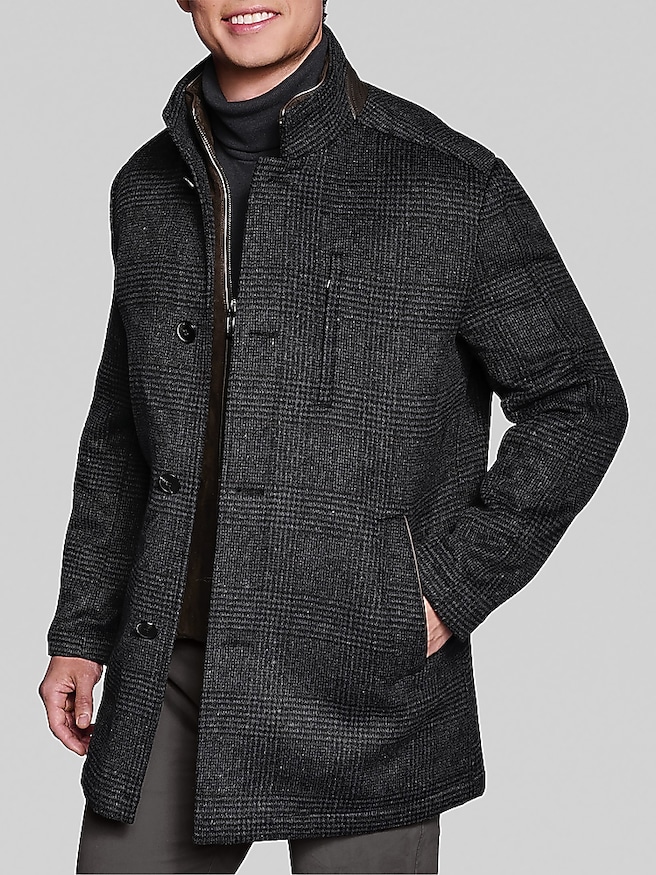
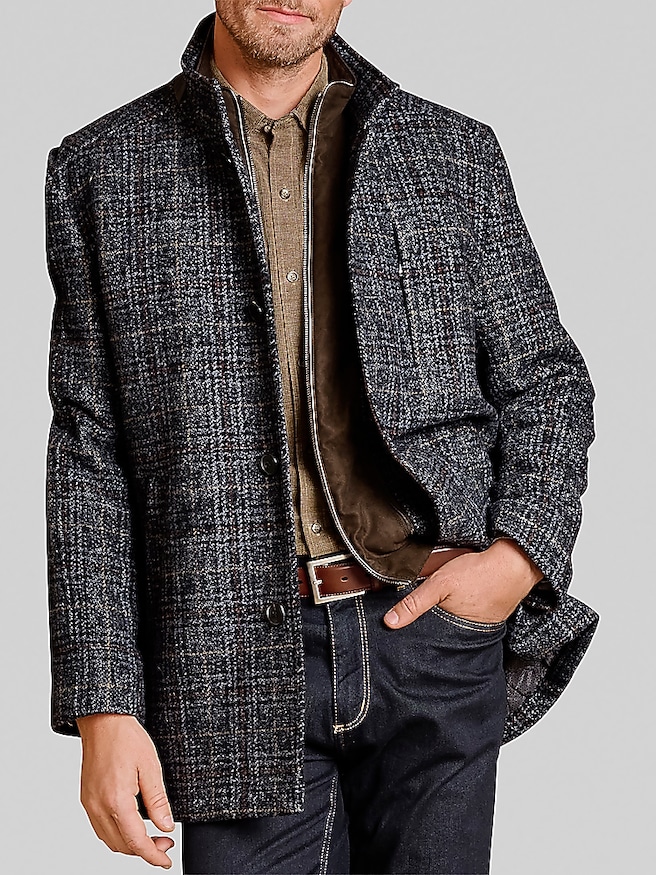
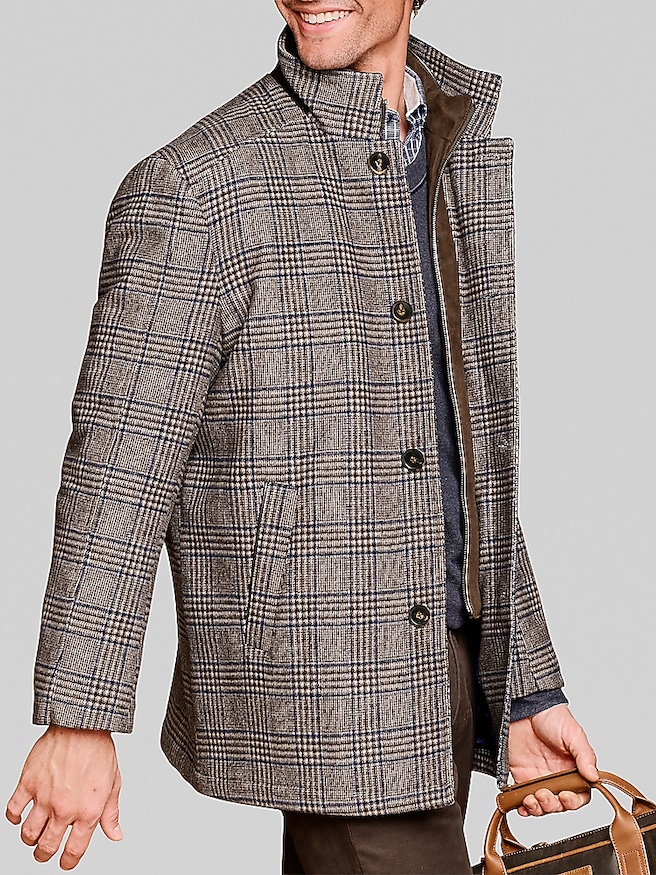
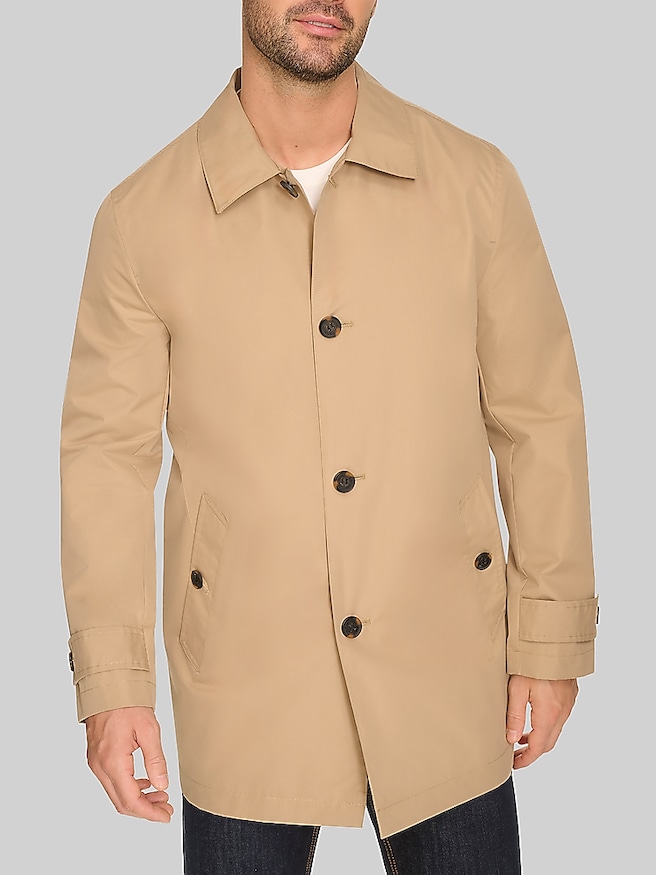
Men’s waterproof jackets bring practical rain protection to everyday outerwear, whether the day includes a walk from the train station, a damp stadium seat, or several blocks between appointments. Their defining feature is a barrier designed to keep liquid water from passing through the fabric, but the complete jacket matters as much as the material itself. A waterproof membrane or coating works with sealed seams, protected closures, and thoughtfully shaped coverage to help keep rain outside. Nylon and polyester are common shell materials, with textures ranging from smooth, lightweight weaves to more substantial fabrics that hold their shape over layered clothing. Some constructions bond the outer fabric, waterproof barrier, and interior backing together; others use a separate lining or a protective inner treatment. These differences affect how a jacket feels against the body, how easily it packs, and how well it stands up to repeated wear. A durable water-repellent finish, often called DWR, helps droplets bead on the surface, but that finish alone does not make a jacket waterproof. Water-resistant outerwear can handle lighter exposure, while waterproof construction is intended for more sustained rain, subject to the garment’s specifications and condition. Details such as a hood that adjusts around the face, cuffs that close neatly, and a storm flap or water-resistant zipper help limit the places where moisture can enter. Breathability also matters: walking quickly with a shoulder bag creates body heat, even when rain makes the air feel cool. A breathable waterproof barrier and ventilation openings can help manage that moisture, though no fabric eliminates perspiration under every condition. Published waterproof and breathability ratings can provide useful context, but test methods vary, so numbers are most meaningful when compared within the same testing system. Waterproof protection is also separate from insulation. An uninsulated shell provides coverage without substantial warmth, while an insulated design combines rain protection with added comfort in cold conditions.
Fit determines whether that protection feels natural throughout a full day. A waterproof jacket worn over a dress shirt needs a different amount of room than one layered over a textured sweater or suit jacket. Comfortable layering leaves space across the chest, shoulders, and upper arms without creating so much extra fabric that the jacket feels cumbersome on a crowded train or behind the wheel. Reaching forward, bending an elbow, and sitting down reveal more about everyday comfort than standing still in front of a mirror. Sleeves should maintain useful wrist coverage when the arms extend, and cuffs should adjust securely without pressing against a watch or restricting movement. A longer hem can provide extra coverage over tailored clothing and the upper legs, while a shorter silhouette may feel less restrictive for driving or active errands. Adjustable hems help manage drafts and keep the shape controlled; hood adjustments should preserve side visibility rather than allowing fabric to fall across the eyes. For office commutes, a clean front, restrained hardware, and a low-profile silhouette work comfortably with trousers and polished shoes. For weekends and travel, easy-moving sleeves, accessible pockets, and packable construction may carry more weight. Pocket placement deserves attention when a backpack strap or crossbody bag sits across the torso, and a covered pocket opening can help shield everyday essentials, though an ordinary jacket pocket should not be treated as a waterproof container for electronics. Dark neutrals create an understated look over business clothing, while lighter shades and richer colors offer a more casual expression. Men’s waterproof jackets can also make practical gifts for frequent travelers, daily commuters, college students, and anyone who spends time moving between indoor and outdoor settings. Familiarity with the recipient’s usual layers, preferred jacket length, and tolerance for a close or relaxed fit makes the choice more personal than simply matching a shirt size.
Durability comes from a combination of fabric, construction, and care rather than thickness alone. A lightweight waterproof shell can be an excellent companion for occasional showers and compact packing, while a more substantial face fabric may better suit repeated contact with bag straps, seat backs, and the demands of daily travel. Reinforced stress points, neatly finished seams, dependable zipper movement, and secure pocket construction all contribute to a jacket that remains comfortable and functional through regular use. Abrasion can gradually affect both the outer finish and the waterproof system, making intended use important: an everyday commuting jacket is not automatically designed for prolonged exposure on a remote trail or repeated contact with rough equipment. Care begins with the garment label, since membranes, coatings, linings, and insulation can require different treatment. When machine washing is permitted, the recommended cycle and an appropriate cleaner help remove dirt, skin oils, and residue that can interfere with performance. Fabric softeners and unapproved additives can affect technical finishes, so label directions take priority over a standard laundry routine. Some water-repellent treatments respond to carefully controlled dryer heat, but heat should only be used when the care instructions allow it. If rain stops beading and begins soaking into the outer fabric, that does not necessarily mean the waterproof barrier has failed; a saturated face fabric can feel heavier and reduce comfort even when the underlying barrier remains intact. Cleaning and, when appropriate, renewing the surface treatment may help restore performance. Letting a jacket dry fully before storage and avoiding prolonged compression also support its condition. For a broader view of outerwear silhouettes and everyday versatility, explore Best Men's Jackets. The appeal of a well-chosen waterproof jacket is straightforward: dependable coverage, comfortable movement, and a shape that belongs with the clothing underneath, from weekday tailoring to an easy weekend layer.