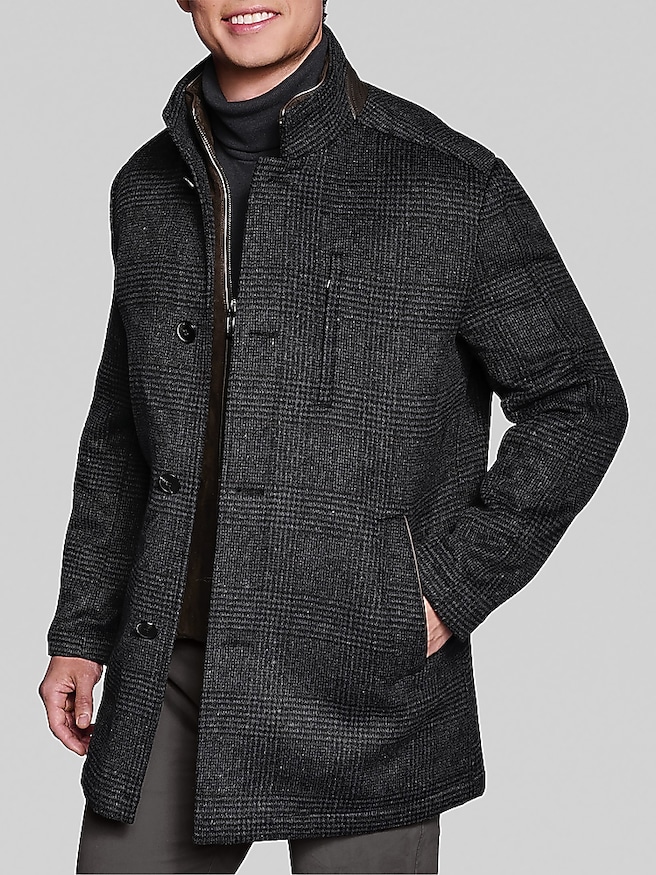
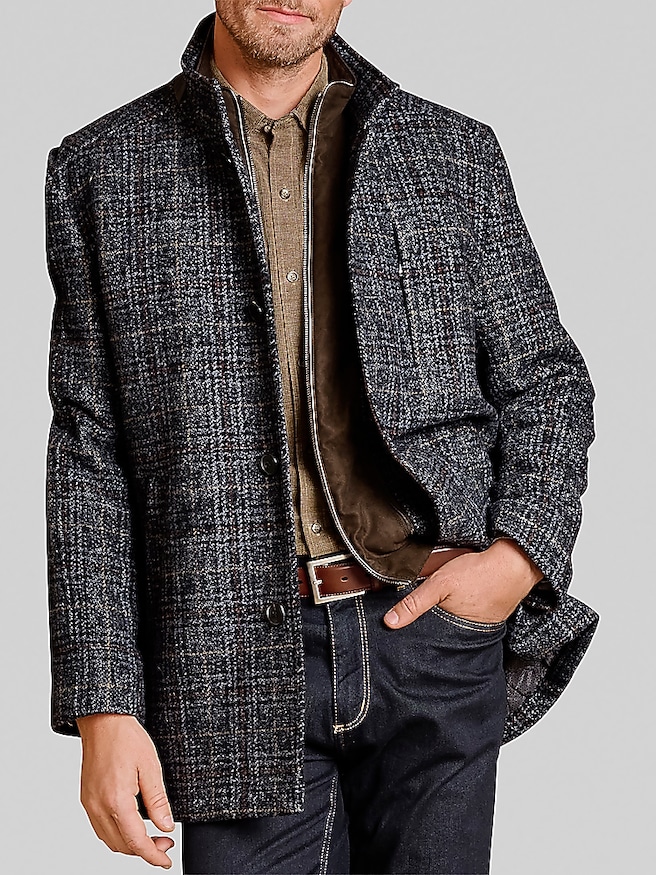
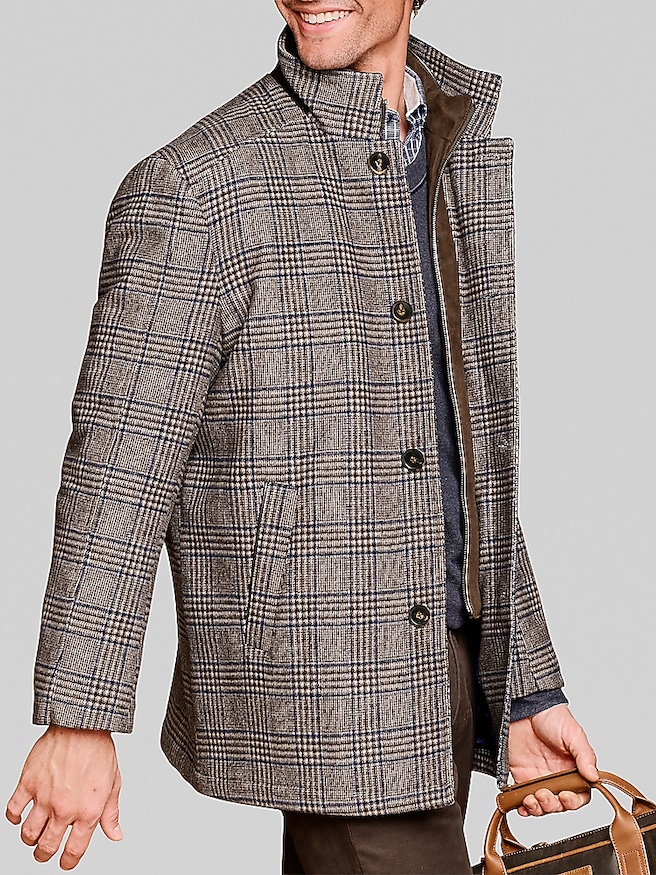
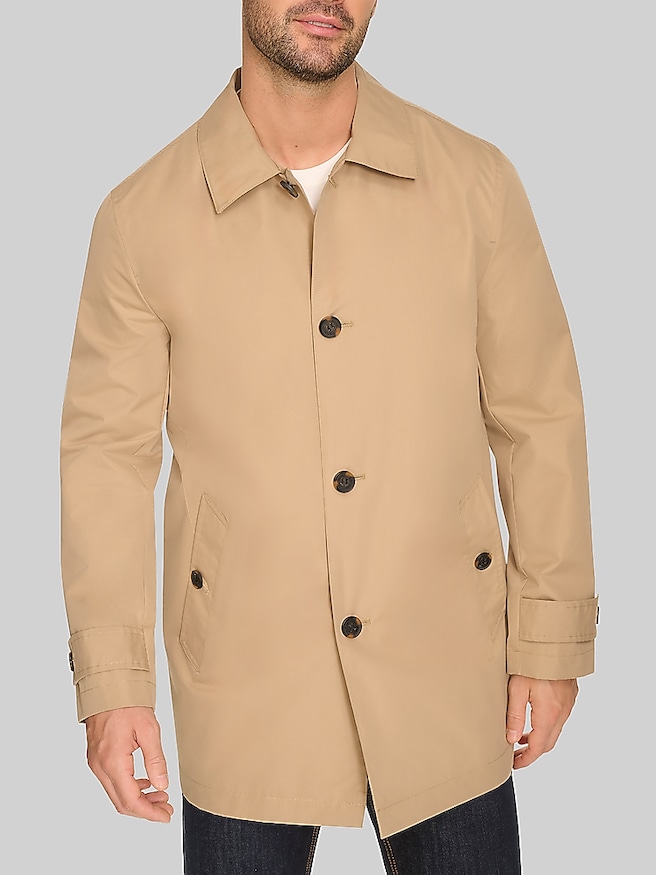
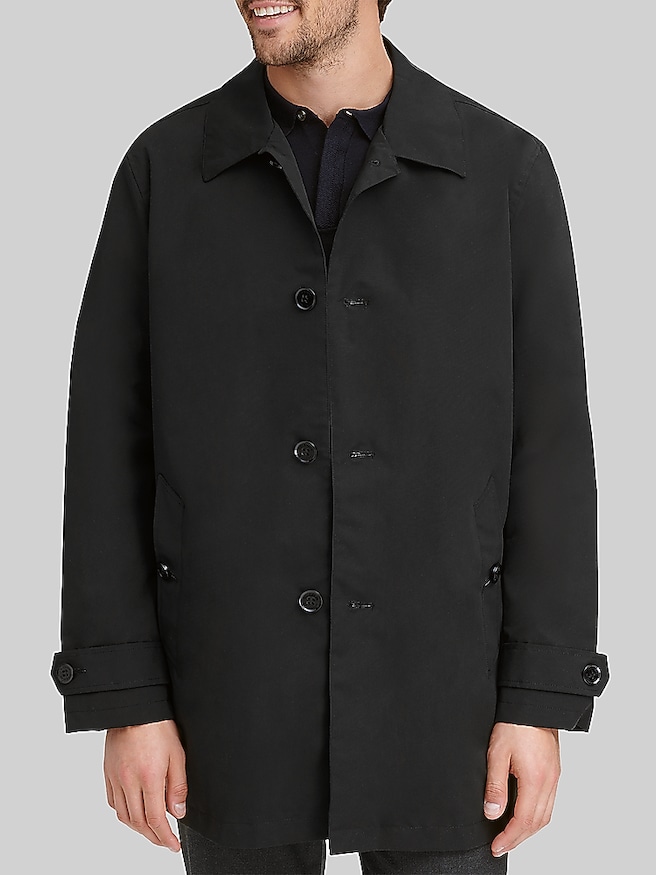
Water-resistant commuter jackets bring together light weather protection, comfortable movement, and a clean appearance that works between home, transit, and the office. Their role is practical: helping keep a passing shower from soaking a shirt, taking the edge off a breezy walk, and providing an outer layer that looks appropriate over work clothes. Water resistance is not the same as waterproof protection. A water-resistant jacket can handle limited exposure to moisture, but prolonged rain may penetrate its fabric, seams, or openings. Waterproof construction typically involves a protective membrane or coating, with sealed seams and protected closures helping complete the barrier. For a commute that includes a few blocks outdoors and a covered train platform, light rain protection may be enough; an extended walk in steady rain calls for more substantial protection. Fabric and construction matter as much as the silhouette. Tightly woven nylon and polyester are common shell materials because they can combine relatively light weight with resistance to everyday wear. A water-repellent finish helps droplets bead and roll off the surface, though that finish can lose effectiveness with use. Some stretch fabrics provide additional give across the shoulders and elbows, while a smooth lining can make a jacket easier to slip over a dress shirt or sweater. Breathability deserves equal attention: moisture can build up inside an outer layer during a brisk walk, even when rain stays outside. Breathable fabric construction, ventilation openings, and an adjustable front closure can help manage that buildup, depending on the design. Wind protection is another separate consideration, since a jacket’s ability to shed drizzle does not automatically establish how effectively it blocks gusts. The right balance depends on the route, walking pace, and time spent outside. A lightweight shell emphasizes easy carrying and layering, while an insulated commuter jacket adds warmth but may feel less comfortable on a crowded, heated train.
Fit gives a commuter jacket much of its everyday usefulness. There should be enough room for the clothing underneath without leaving so much extra fabric that the jacket feels bulky on a bus seat or catches against a shoulder bag. A close-fitting silhouette may sit comfortably over a shirt, yet feel restrictive over a blazer, so the intended layers should shape the choice. Shoulder seams, sleeve construction, and stretch panels all influence how naturally the jacket moves when reaching for an overhead rail, carrying a laptop bag, or steering a bicycle. With arms extended, sleeves should still provide useful wrist coverage; with the jacket closed, the chest and upper back should not pull noticeably. Hem length changes both coverage and appearance. A shorter jacket can feel easy to move in, while a longer cut offers more coverage over tailoring and across the seat. For someone who sits through much of the commute, a two-way zipper or thoughtfully placed back vent can make a longer silhouette more comfortable. Details earn their place through repeated use. An adjustable hood can improve coverage without falling into the line of sight, and a stand collar helps protect the neck when the hood is down. Adjustable cuffs help limit gaps at the wrists, while a front storm flap can provide another layer of protection around the zipper. Pocket placement matters when a backpack’s straps or a messenger bag cross the torso. Secure interior storage is useful for a transit pass or phone, although a zippered pocket should not be assumed waterproof unless its construction is specifically described that way. For office settings, restrained hardware, a matte finish, and simple lines pair easily with tailored trousers, chinos, or dark denim. Navy, charcoal, black, and muted earth tones are versatile choices. A commuter jacket does not need to look technical to be functional; discreet closures and a balanced shape can keep practical features from overwhelming the rest of an outfit.
Day-to-day comfort also depends on how the jacket handles the transition indoors. A lightly structured shell that folds into a work bag is convenient when the trip ends in a warm building, while a lined style may be preferable for longer waits outdoors. Water resistance and insulation serve distinct purposes, so warmth should be evaluated separately from rain protection. For commutes involving extended exposure to low temperatures, Warm Jackets offer a related category to consider alongside the need for moisture protection. A shell worn over a sweater gives flexibility as activity levels change; an insulated jacket keeps the layering routine simpler but takes up more space when removed. Durability comes down to more than fabric thickness. Reinforced stress points, neatly finished seams, secure pocket openings, and zippers that operate smoothly all contribute to an outer layer’s usefulness over repeated commutes. Backpack straps can create friction at the shoulders, and cuffs often encounter desk edges, railings, and bag handles, making those areas worth attention. Care should follow the garment’s label, especially when coatings, membranes, insulation, or bonded details are involved. Some technical fabrics require particular detergents or washing settings, and fabric softener can interfere with certain performance finishes. Avoid assuming that every shell can be dry-cleaned, ironed, or put through a hot dryer. After a wet trip, hanging the jacket where air can circulate helps it dry before storage; leaving it compressed in a bag can trap moisture. When surface water stops beading, an approved treatment may help restore repellency, but it will not turn water-resistant construction into a waterproof barrier. As a gift, a commuter jacket is especially useful for someone starting an office role, walking to public transit, or balancing business appointments with everyday errands. Knowing the recipient’s usual layers, preferred jacket length, and daily route makes the choice more personal. The most dependable match is a jacket whose protection, fit, and care requirements suit the routine it will actually serve.