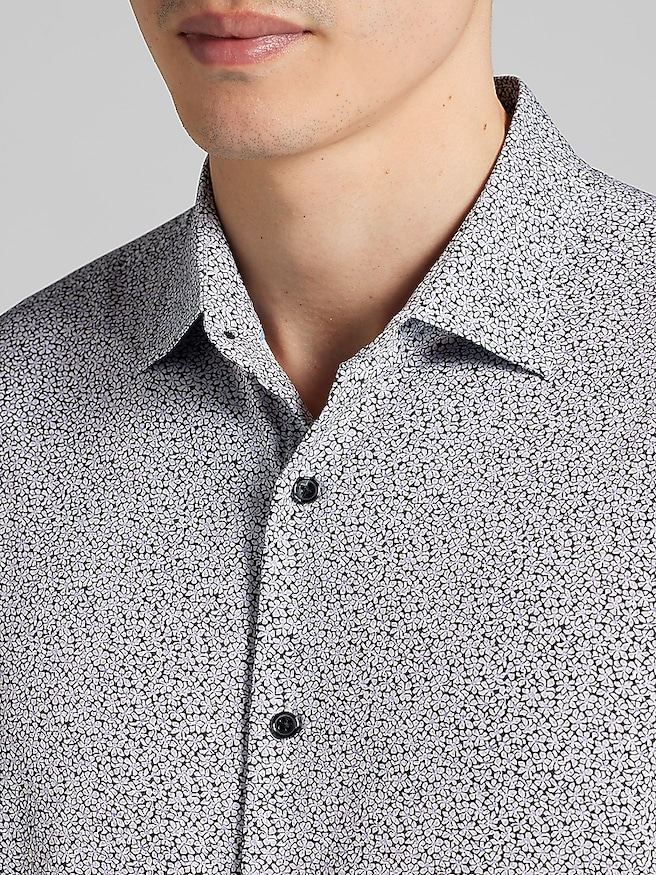
Vintage floral button-up shirts are defined by botanical prints and retro styling, often combining flowers, leaves, or trailing vines with camp collars, pointed collars, and relaxed or tailored silhouettes. Their appeal comes from the balance between an everyday shirt shape and a print with personality: faded-looking roses against a dark background, loosely sketched foliage, or oversized blossoms with the graphic quality of an old record sleeve. In this context, vintage can describe a design inspired by earlier decades rather than a garment made decades ago. That distinction matters for anyone who likes a nostalgic look but prefers the fit and construction of a newly made shirt. Small, closely spaced florals can read almost like texture from a distance, making them approachable for someone accustomed to solid colors. Larger motifs create a stronger focal point and give an outfit a more expressive feel. Muted olive, dusty blue, cream, rust, and deep burgundy can lend a print an aged character without making it look costume-like, while sharper contrasts emphasize the shapes of the flowers themselves. Collar design influences the overall effect just as much as color. A camp collar sits open at the neckline for an easy, relaxed appearance, while a conventional pointed collar offers a more structured frame beneath a jacket. Short sleeves emphasize the casual side of the style; long sleeves provide more styling flexibility through cuff placement and layering. The result can suit a concert, a dinner reservation, a birthday gathering, or an ordinary Saturday that calls for something more distinctive than a plain shirt. For men who enjoy clothing with a little visual history, vintage-inspired floral shirts offer character without requiring an outfit built entirely around one era. A restrained botanical pattern can become a familiar wardrobe staple, while a bolder print can serve as the piece that gives an otherwise simple outfit its identity.
Fabric and fit determine how that character translates when the shirt is worn. Cotton commonly provides a relatively crisp feel and helps a collar or sleeve retain definition, although its weight and weave affect how structured the finished garment feels. Rayon and viscose tend to have a fluid drape that lets a floral pattern move with the body rather than stand away from it. Linen has a distinctive surface texture and a naturally relaxed appearance, with creasing that becomes part of its character. Blends can combine qualities such as softness, shape retention, or easier maintenance, but the fiber percentages and care label are more useful than assumptions based on appearance alone. A smooth, lightweight fabric may make an oversized botanical print feel loose and flowing, while a firmer weave can give the same scale of pattern a more graphic effect. Fit deserves similar attention. A relaxed shirt should allow comfortable movement through the chest and shoulders without looking unintentionally oversized; a closer cut should follow the torso without pulling the button placket apart. Shoulder seams, sleeve openings, and overall length all influence that balance. Someone who usually wears a shirt untucked may prefer a hem that finishes around the middle of the fly, with enough coverage to stay comfortable when seated. A longer, curved hem generally lends itself more easily to tucking. Trying the usual reaching and sitting movements helps reveal tension across the upper back or stomach that may not be obvious while standing still. With a jacket, the sleeves and body need enough room to move without bunching beneath the outer layer. Construction details matter, too: securely attached buttons, tidy seams, and well-finished buttonholes support repeated wear. A print meeting neatly along the front can create a cohesive appearance, though intentional pattern placement varies by design. These details help distinguish a shirt chosen only for its print from one that feels comfortable and dependable throughout an evening.
Styling a vintage floral button-up shirt is often most effective when the surrounding pieces give the pattern room to stand out. Dark straight-leg jeans and understated leather shoes create a grounded look for dinner or a small music venue, while tailored trousers bring a cleaner line to a shirt with a soft, open collar. Chinos offer an easy middle ground for casual gatherings, especially when their color echoes a quieter shade within the print. A navy background might connect naturally with dark denim, while a cream-and-olive floral can sit comfortably beside stone-colored trousers. Under an unstructured jacket, a smaller botanical motif adds detail without competing heavily with the shape of the lapels. In an office that welcomes expressive casual clothing, that combination can feel polished without losing the shirt’s individuality. Keeping belts, shoes, and other accessories relatively simple helps the outfit look deliberate rather than crowded. Men who enjoy a similar retro sensibility in a geometric pattern may also appreciate Vintage Plaid Shirts as another way to introduce color and visual texture. For gifting, floral shirts work best when the recipient’s usual fit, preferred sleeve length, and comfort with pattern are already familiar. A subtle repeat may suit a dad or partner who favors understated clothing, while a friend known for expressive dressing may enjoy a larger, more graphic floral. Long-term enjoyment also depends on care that respects the fabric. The garment’s label should set the washing, drying, and ironing routine, particularly for materials that may shrink or lose shape with unsuitable handling. When machine washing is permitted, turning a printed shirt inside out can help reduce surface abrasion; prompt attention to spills can also limit the need for more intensive treatment later. Following the recommended drying method, fastening buttons gently, and storing the shirt without crowding the collar help preserve its appearance. Thoughtful care allows the floral design, comfortable fit, and retro details to remain the reasons the shirt gets worn again.