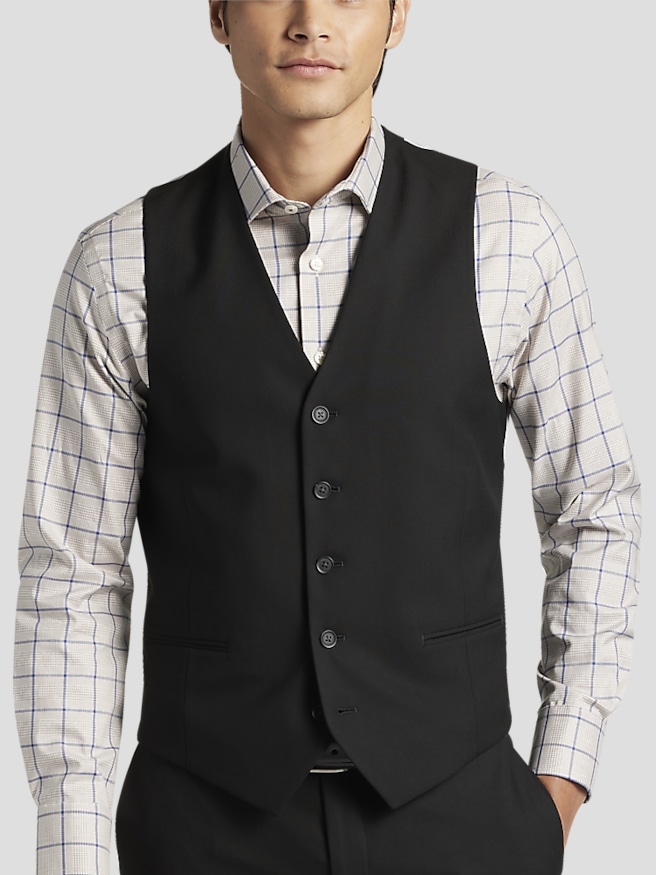
Vest suits bring an extra layer of structure to tailored dressing, with a coordinated vest connecting the jacket and trousers into a considered, complete outfit. Often called three-piece suits, they offer a distinctive silhouette: clean lines across the chest, a defined waist, and a smooth transition to the trouser waistband. The vest adds visual interest without requiring a bold color or elaborate accessory, making it useful for wedding celebrations, business presentations, graduation ceremonies, and dinners with a formal dress code. At a wedding reception, a matching vest keeps the outfit looking composed when the jacket comes off for dancing or conversation. In a professional setting, it can make the difference between an everyday suit and an ensemble that feels appropriate for a significant meeting. The same attention to tailoring that defines Work Suits matters here, especially when the schedule moves from a client presentation to an evening reception. Matching fabric across all three pieces creates the most unified appearance, while a contrasting vest introduces a more individual character. Charcoal, navy, and other understated shades let the shape of the outfit carry much of the impression; subtle checks or stripes add texture and depth without necessarily dominating the look. A solid shirt can give a patterned suit breathing room, while a restrained tie helps keep the vest’s neckline visually clear. Notched lapels generally support a familiar business-to-occasion look, while peak lapels can give the jacket a more pronounced presence. The vest itself may have a simple V-shaped opening, a higher button stance, or lapels that add another tailored detail. These differences affect how much shirt and tie remain visible and how formal the finished outfit feels. For someone who likes a suit to look intentional even without its jacket, the vest is more than decoration: it provides a finished front and a consistent shape throughout the occasion.
Fabric and fit determine how comfortably that structure wears. Worsted wool is a familiar choice for tailored suits because its smooth surface, natural resilience, and drape support a crisp outline without making the fabric look stiff. Wool blends can bring different textures or performance characteristics, depending on their composition, while cotton offers a less lustrous appearance and linen brings a visibly textured finish with characteristic creasing. A fabric’s weight, weave, and lining also influence how it moves, so fiber content alone does not tell the whole story. A tightly woven cloth may feel substantial and hold its shape well, while a softer construction can allow more movement through the body. Since the vest sits close to the torso, its fit deserves as much attention as the jacket’s shoulders or the trouser length. The front should lie smoothly when buttoned, without pulling into horizontal lines across the chest or flaring away at the sides. Armholes need enough clearance for comfortable movement without exposing excessive shirt fabric, and the neckline should rest neatly rather than standing away from the chest. Many vests include an adjustable back strap for small refinements, though that adjustment cannot compensate for a fundamentally incorrect size. The length and trouser rise work together: the vest should generally cover the waistband so that a strip of shirt does not interrupt the outfit when standing naturally. Someone with a longer torso may need particular attention to vest length, while a fuller chest may require additional room that does not leave the waist overly loose. The jacket still needs to close comfortably over the extra layer, with lapels lying flat and no strain at the fastening. Sitting at a dinner table, reaching for a handshake, and walking across a room all reveal aspects of fit that a stationary mirror check can miss. Tailoring can refine the waist, trouser hem, and other details, helping the three pieces function as one outfit rather than as separate garments competing for space.
The details around a vest suit can keep it restrained or give it a more celebratory character. A white dress shirt provides a clear backdrop for dark tailoring, while pale blue creates a softer contrast that works comfortably in many professional settings. A collar that sits neatly beneath the vest and jacket helps frame the face, and a tie with enough length to remain tucked behind the vest avoids a distracting break at the waist. On many traditionally styled vests, the lowest button is left unfastened to allow the hem to sit naturally, though the garment’s design may call for a different approach. Smooth-front trousers can preserve the line beneath a close-fitting vest, and suspenders may suit the outfit when their attachments and straps remain discreetly covered. A belt, when worn, should not create a bulky ridge beneath the vest. Shoes, a watch, and a pocket square offer room for personal taste without requiring every accessory to match exactly. For a groom, wedding guest, graduate, or professional marking a career milestone, those choices can make the same general suit style feel distinctly personal. A vest suit can also be a meaningful milestone gift when the recipient has a say in sizing, tailoring, and the occasions it will serve. Long-term appearance depends on care as well as construction. The care label should govern cleaning and pressing, particularly when the vest has a lining or back panel made from a different material than its front. Airing the pieces after wear and gently brushing away surface dust can help maintain the fabric between appropriate cleanings. Coordinated pieces may benefit from being cleaned together when professional cleaning is needed, helping preserve a consistent appearance. A supportive jacket hanger, properly hung trousers, and storage that avoids crushing the vest protect the shape of the ensemble. With thoughtful fit and routine care, the appeal of a vest suit remains straightforward: an outfit that looks complete, moves comfortably, and brings a deliberate sense of occasion to getting dressed.