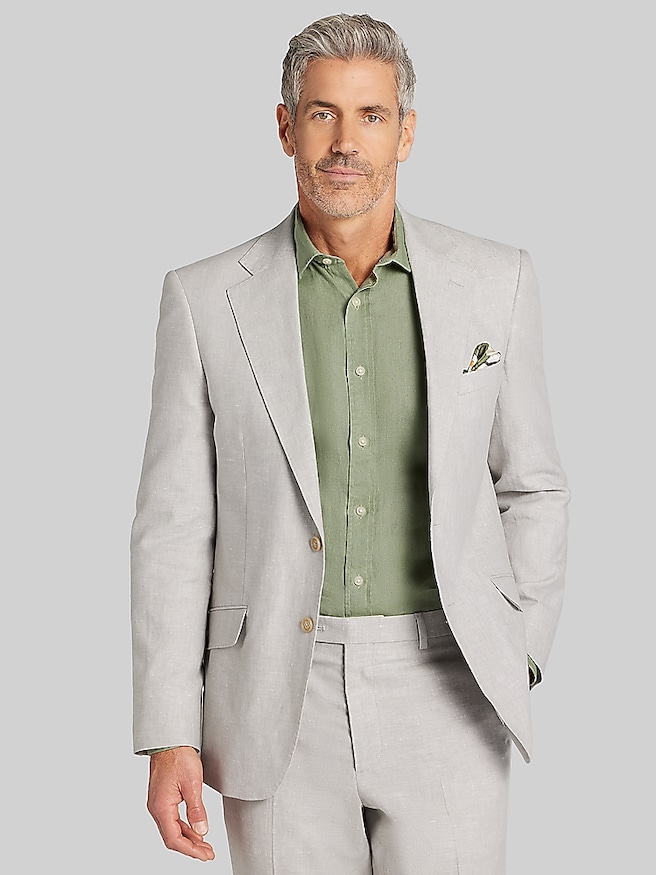
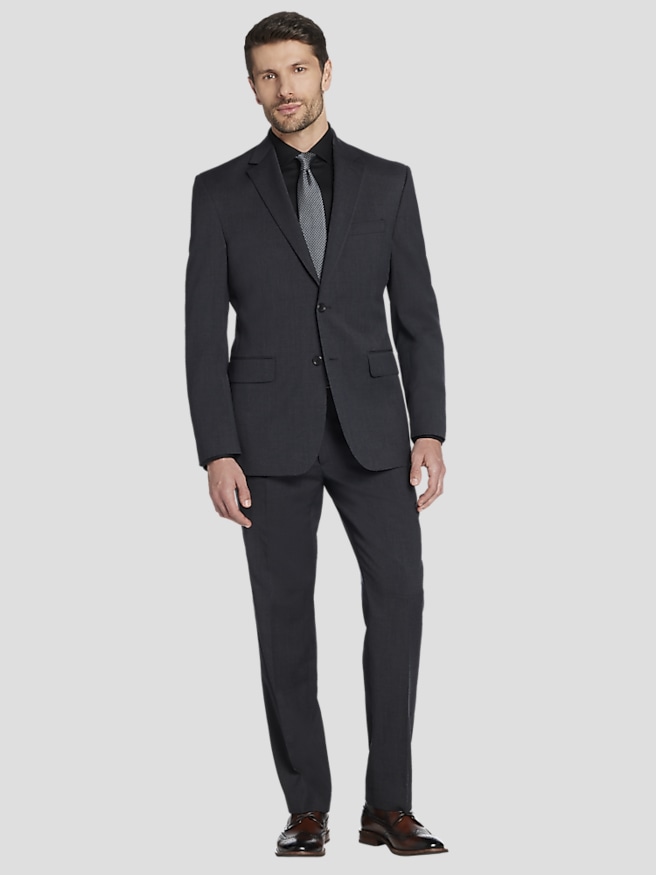
Navy blue and charcoal gray work suits are versatile foundations for a professional wardrobe, pairing easily with white or light blue shirts and understated ties. Their restrained colors suit interviews, client meetings, presentations, and offices where a polished appearance is part of the dress code. A work suit typically consists of a jacket and matching trousers cut from the same fabric, creating a consistent look from the first handshake to the final meeting of the day. That matching fabric matters: two pieces that are merely close in color can look noticeably mismatched under office lighting. Solid colors offer broad styling flexibility, while a fine pinstripe, subtle windowpane, or small woven pattern adds interest without competing with the person wearing it. Medium gray provides another useful option when the workplace allows a less formal look. In law, finance, consulting, and other client-facing settings, quiet details often carry more weight than dramatic styling. Notched lapels, balanced proportions, and simple buttons keep the emphasis on a clean silhouette rather than decoration. A single-breasted, two-button jacket is a familiar choice for everyday business wear, with enough flexibility for a boardroom presentation or a professional networking event. More relaxed workplaces may call for the same matching suit with an open-collar shirt, provided the office culture supports that approach. A tie can restore a more formal impression for an important appointment without requiring a completely separate outfit. For someone building a first professional wardrobe, navy or charcoal makes it easier to repeat a suit while varying shirts, ties, and shoes. For an established professional, subtle changes in texture and pattern can keep a regular rotation from feeling identical. The most useful work suits fit the actual demands of the job: sitting through long discussions, standing to present, walking between appointments, and maintaining a composed appearance throughout the day. A suit should support those routines rather than feel like clothing reserved only for a special occasion.
Fabric and construction influence how a work suit feels, drapes, and holds its shape through repeated wear. Wool is a traditional suiting material because of its natural resilience, breathability, and ability to fall cleanly over the body. Worsted wool often has a smooth, refined surface that works well in formal business settings. Wool blends can combine that familiar appearance with other performance characteristics, depending on the fibers and proportions involved. A small amount of stretch may make reaching, sitting, and commuting more comfortable, although stretch cannot compensate for a jacket or waistband that is too tight. Fabric weight, weave, lining, and internal construction all contribute to the wearing experience; the fiber name alone does not tell the whole story. A lining can help a jacket slide smoothly over a dress shirt, while internal structure helps shape the chest and lapels. For frequent use, a resilient cloth with a balanced drape is often more practical than an exceptionally delicate fabric. Fit deserves equal attention. Jacket shoulders should lie cleanly without extending far beyond the natural shoulder, and the collar should rest against the shirt collar rather than stand away from it. With the jacket buttoned while standing, strong pulling across the front or lapels that bow outward can signal a fit issue. Sleeves should allow a modest glimpse of shirt cuff, and trousers should sit securely without relying on an overtightened belt. The streamlined proportions associated with Modern Suits can offer a neat outline without requiring an excessively narrow cut. A fuller cut may better suit someone who prefers more room through the chest, seat, or thigh. Neither silhouette should restrict an ordinary stride or make sitting uncomfortable. Trouser length also changes the overall impression: a slight break creates a familiar business finish, while excessive fabric pooling over the shoes can make an otherwise well-fitting suit look unfinished. Alterations can refine sleeve length, trouser hems, and some waist adjustments, but a sound starting fit through the shoulders and torso remains important.
A dependable work wardrobe also considers what happens between meetings and between wears. Smooth dress shirts help a jacket settle properly, and collars should retain their shape whether worn with a tie or left open. Simple leather lace-ups provide a traditional business finish; understated loafers may suit offices with a more relaxed standard. Dark brown shoes pair naturally with many navy suits, while black shoes offer a particularly formal complement to charcoal. Accessories work best when they reinforce the outfit rather than interrupt it: a restrained tie pattern, coordinating belt, and unobtrusive socks keep attention on the overall presentation. For business travel, a garment bag can help protect the fabric from snags and surface dirt, while careful packing reduces hard folds across the jacket front. Care after wear is just as important to longevity. A broad, supportive hanger helps preserve the jacket’s shoulder shape, and trousers benefit from being hung neatly rather than left folded across a chair. Letting a suit rest between wears gives the fabric time to release minor creases and moisture from normal use. Gentle brushing with an appropriate clothing brush can remove surface dust before it settles into the weave. Cleaning should follow the garment’s care label, with professional attention for stains or cleaning needs that cannot be handled safely at home. Frequent dry cleaning is not automatically necessary after every wear, and aggressive pressing or excessive heat can damage some fabrics and finishes. Matching jackets and trousers generally benefit from being cleaned together when cleaning is needed so their appearance stays consistent. Rotating suits also reduces concentrated wear at the elbows, seat, and knees. For graduates entering an office, professionals moving into client-facing roles, or anyone whose schedule includes regular business meetings, these practical details matter as much as the initial impression. A well-considered work suit brings together appropriate color, comfortable movement, dependable construction, and manageable care, making professional dressing a consistent part of the workday rather than an added complication.