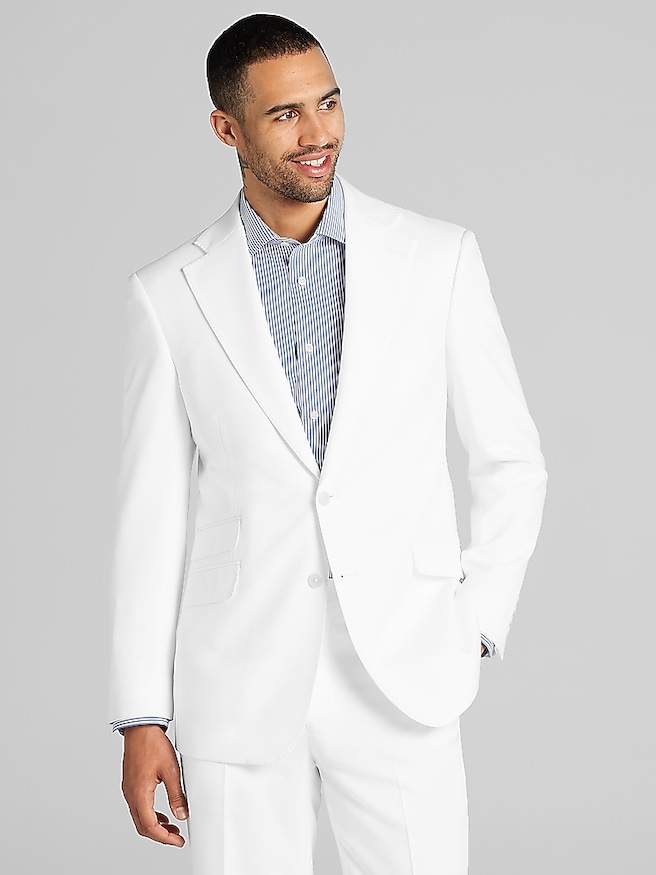
Modern suits bring clean lines, balanced proportions, and an easy sense of polish to occasions that call for more than everyday clothing. Their appeal is not tied to one narrow silhouette: a modern look can be trim and closely shaped or slightly more relaxed, provided the jacket and trousers work together without excess fabric or unnecessary tightness. Compared with more generously cut traditional tailoring, modern designs often have a more defined waist, a neater trouser leg, and a jacket length that keeps the overall outline crisp. The result should still look like a suit, not clothing pulled too tightly across the body. A well-balanced jacket rests smoothly across the shoulders, follows the chest without pulling at the button, and allows the lapels to lie flat. At the back, a clean collar and vents that remain settled help create a composed appearance, whether the wearer is standing for a wedding photograph or walking into a client meeting. Trousers contribute just as much to that impression. The rise should feel comfortable when seated, the pockets should lie close rather than flare, and the leg should fall cleanly toward the shoe. A slight break gives the hem a familiar tailored finish, while little or no break creates a sharper line that puts more attention on footwear. These details matter more than choosing the narrowest cut. Someone with broad shoulders or fuller thighs may get a more convincing modern silhouette from a little additional room, with shaping concentrated where it helps most. Sleeve length, trouser hems, and subtle adjustments through the jacket waist can refine the proportions without changing the character of the suit. That balance makes modern tailoring useful for a first professional wardrobe, an established work rotation, or milestone occasions where looking considered matters. It offers enough structure to feel dressed for the moment while leaving space for personal preferences in color, texture, and styling.
Fabric determines much of how a modern suit looks after the first few minutes of wear. Wool remains a familiar choice because it drapes well, breathes, and can recover from light creasing, helping a jacket retain its shape through a presentation, a ceremony, or several hours at a dinner table. A finer, smoother surface tends to read as more formal, while visible texture brings depth and a slightly less formal character. Worsted wool can create a clean outline with a crisp finish; more textured weaves can soften that impression without making the suit feel casual. Blends may combine wool with fibers chosen for resilience, softness, or easier movement, though the actual feel depends on the fabric composition and construction. A small amount of stretch can be helpful when reaching across a conference table or sitting through a long event, but it should support a comfortable fit rather than compensate for a size that is too small. The appeal of Smooth Suits fits naturally within this streamlined approach, where an even surface allows the shape of the tailoring to stand out. Color and pattern make a similar difference. Navy and charcoal provide versatile foundations for business settings and celebrations, while medium gray offers a softer alternative with plenty of styling flexibility. Subtle checks, narrow stripes, and quiet tonal patterns add interest without overwhelming the silhouette. Jacket construction also influences the experience of wearing the suit. Lining can help the jacket glide over a shirt, while internal structure supports the chest and lapels. A softer construction creates a less rigid feel, whereas more defined structure gives the shoulders and front a stronger outline. For frequent wear, durable fabric, secure stitching, and a trouser fit that avoids constant strain at the seat and knees are practical considerations. A suit that hangs comfortably is better positioned to maintain its appearance than one stretched taut whenever the wearer sits down.
The versatility of modern suits becomes especially clear when the same tailoring moves between occasions with a few thoughtful changes. A white shirt, restrained tie, and polished lace-up shoes create a focused combination for an interview, an important presentation, or a ceremony with a formal dress code. A pale blue shirt brings a little softness to navy or gray, while a textured tie can add depth without introducing a loud pattern. For a wedding guest, a pocket square with a quiet accent color can make familiar tailoring feel more celebratory; the invitation’s dress code should still set the level of formality. At a less formal dinner or reception, an open collar can work well when the shirt sits neatly beneath the lapels and the jacket retains a clean shape. A fine-gauge knit offers another understated option where the occasion allows it. Accessories do not need to compete for attention: a belt and shoes in compatible leather tones, a simple watch, and well-chosen socks often provide enough finish. Consistent care helps preserve that finish beyond a single event. After wearing, a suit benefits from time on a supportive, broad-shouldered hanger, with the trousers hung neatly and pockets emptied so they do not distort the fabric. Gentle brushing can remove surface dust, and airing between wears can reduce the need for frequent cleaning. The care label should determine the cleaning method, especially when fabrics contain stretch fibers or have a distinctive finish. Professional pressing can restore a crisp appearance, while direct, heavy ironing may leave unwanted shine on some cloths. Rotating suits when possible also gives fabric time to recover between outings. For a graduation, a new role, or another personal milestone, modern tailoring can be a meaningful gift when the recipient has a role in choosing the fit and finishing details. The most useful suit is one that feels natural on its wearer: polished enough for significant moments, comfortable enough to move in, and considered enough to become a dependable part of getting dressed.