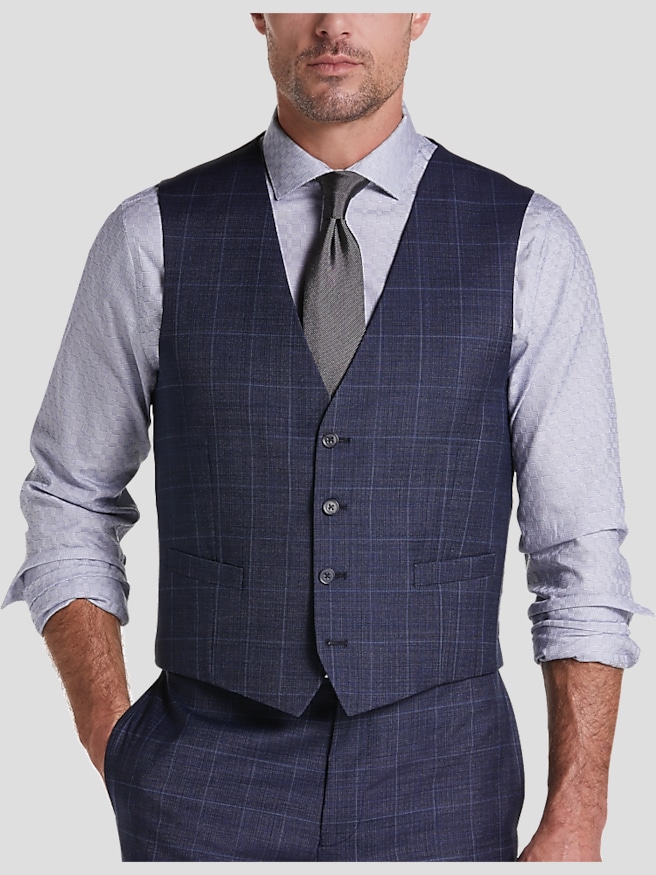
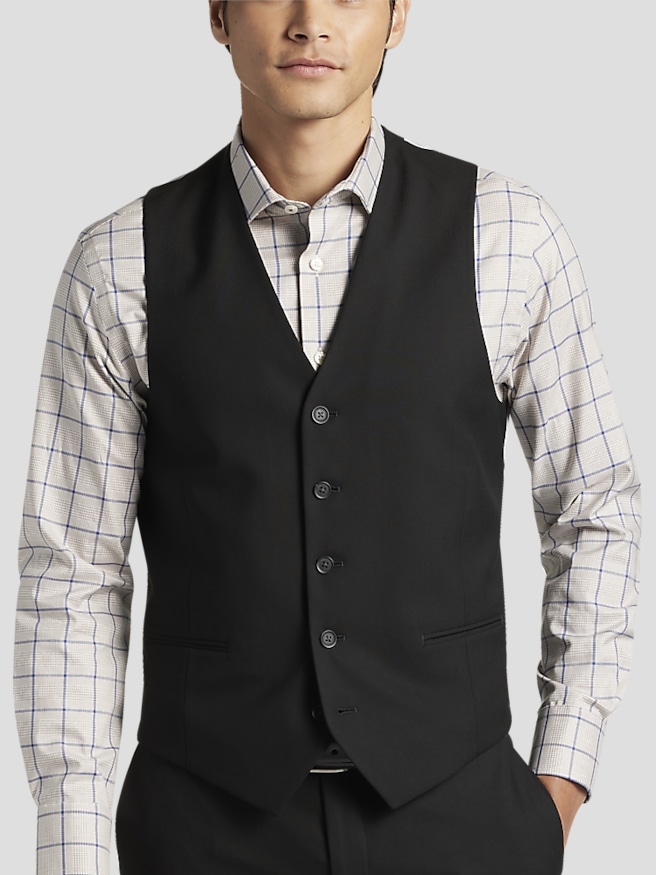
A vest set brings a tailored, sleeveless vest together with coordinating pieces, such as matching pants or complementary neckwear. The combination creates a unified look, whether the outfit is intended for an office, a wedding reception, a formal dinner, or a casual gathering. The pieces included in a set determine how it functions: a vest-and-pants combination provides the foundation of an outfit, while a vest paired with a tie or bow tie adds a coordinated finishing layer to separate trousers and a shirt. Matching fabric gives the vest and pants a continuous appearance, while accessories in related colors introduce contrast without making the outfit feel disconnected. Navy, charcoal, gray, and black offer familiar starting points for tailored dressing, though their effect changes with the shirt, shoes, and surrounding textures. A gray vest set with a crisp white shirt feels restrained and polished; the same gray beside a pale blue shirt has a softer character suited to a daytime celebration or a business lunch. Subtle checks and textured weaves add interest without needing a bold accessory, while solid fabrics leave more room for a patterned tie. For a layered outfit, the proportions of a Vest Under A Suit influence how neatly the neckline, shirt collar, and jacket lapels sit together. The vest should complement the jacket rather than crowd the chest or create a bulky line beneath the buttons. Worn without a jacket, a vest becomes a more visible part of the outfit, making its shoulder shape, back panel, and overall length especially noticeable. A full-fabric back creates a different impression from a smooth lining-style back, which is often associated with more traditional formal dressing. These details help distinguish a vest set intended as a visible outfit from one designed primarily to sit beneath a jacket. For brunch, a dinner out, or a celebration with a relaxed dress code, a coordinated vest-and-pants outfit can provide structure without requiring the full appearance of a three-piece suit.
Fabric and construction affect how a vest set drapes, moves, and holds its shape through repeated wear. Wool and wool-blend fabrics are valued in tailoring for their drape and resilience, helping a vest settle smoothly against the body rather than appearing stiff. Polyester blends can offer shape retention and resistance to wrinkling, although the fabric’s weight, weave, and finishing also influence its feel. Cotton often creates a more relaxed, matte appearance, while linen brings visible texture and natural creasing that belongs to its character. A fabric with added stretch may allow easier movement, but stretch is not a substitute for adequate room across the chest and through the waist. Smooth linings help the vest slide over a dress shirt, and neatly finished seams, secure buttons, and stable pocket edges are useful signs of careful construction. Fit is especially important because a vest follows the torso closely. The front should lie flat when fastened, without horizontal pulling around the buttons or loose folds beneath the chest. Shoulder sections should rest comfortably rather than lift away from the shirt, and armholes should allow movement without cutting into the underarm. A back adjuster can refine the waist, but pulling it too tightly may cause the front panels to pucker. The hem generally needs to cover the trouser waistband so that a strip of shirt does not interrupt the outfit when standing naturally. With matching pants, the rise matters as much as the vest length: a lower waistband may leave a gap even when the vest otherwise fits well. Sitting at a desk, reaching forward, and walking should all feel comfortable. For sets with matching trousers, both pieces need attention, since a comfortable vest does not guarantee the right fit through the seat or thighs. Conventional tailored waistcoats often leave the lowest button undone, although the intended styling and cut should guide that choice.
The most useful vest set is one that suits the occasions its wearer actually attends and remains easy to maintain between them. For a wedding party, coordinated color and fabric help create a consistent appearance in photographs, while individual fit keeps each outfit from looking borrowed or overly uniform. At a school dance or formal celebration, a vest with coordinated neckwear gives the shirt and trousers a deliberate focal point, especially after a jacket comes off. In an office where tailored separates are appropriate, a restrained vest-and-pants combination can look composed through meetings and an evening meal afterward. More relaxed settings allow a little more texture and less formal styling, provided the shirt, footwear, and accessories share the same level of dress. A patterned vest usually needs fewer competing details; a plain shirt and understated tie let the fabric remain visible without visual clutter. Practical care supports that polished appearance over time. The care label takes priority, since the outer fabric, lining, and internal structure may require different handling from an ordinary shirt. Some tailored pieces call for professional cleaning, while others permit specific washing methods. Matching pieces should receive consistent care to help limit uneven changes in color or texture. Prompt attention to marks, gentle brushing when appropriate for the fabric, and storage on suitable hangers help preserve the finish. Pockets are best kept lightly filled so that phones, keys, and other bulky belongings do not distort the front panels. Before pressing or steaming, confirm the recommended method for the fabric and lining; excess heat or direct pressure can leave shine or affect the garment’s shape. A vest set can also make a thoughtful gift for a graduate, a partner, or someone preparing for a milestone event, particularly when measurements and dress preferences are known. Familiar colors, comfortable proportions, and care requirements that fit the recipient’s routine help turn a coordinated outfit into something worn confidently more than once.