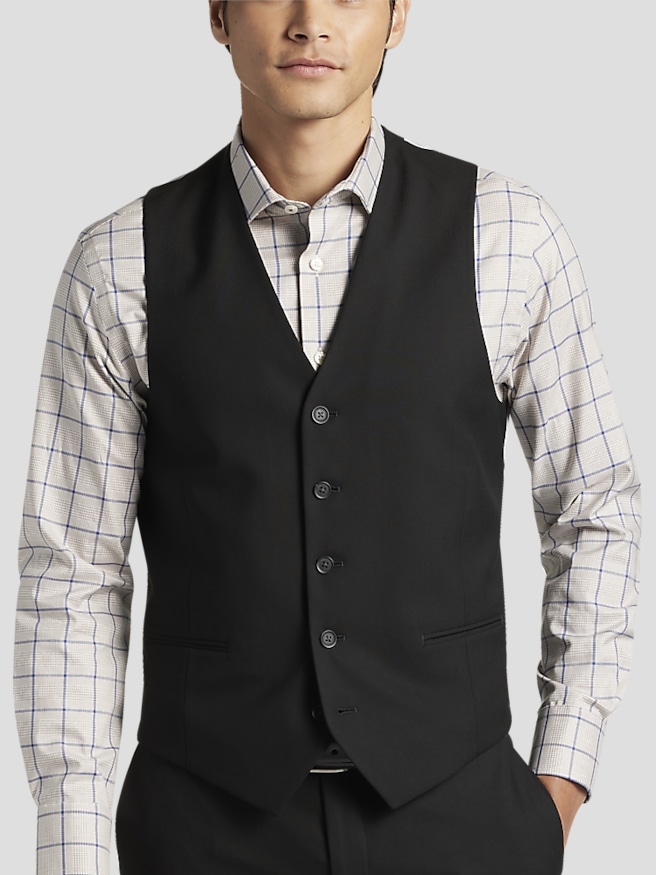
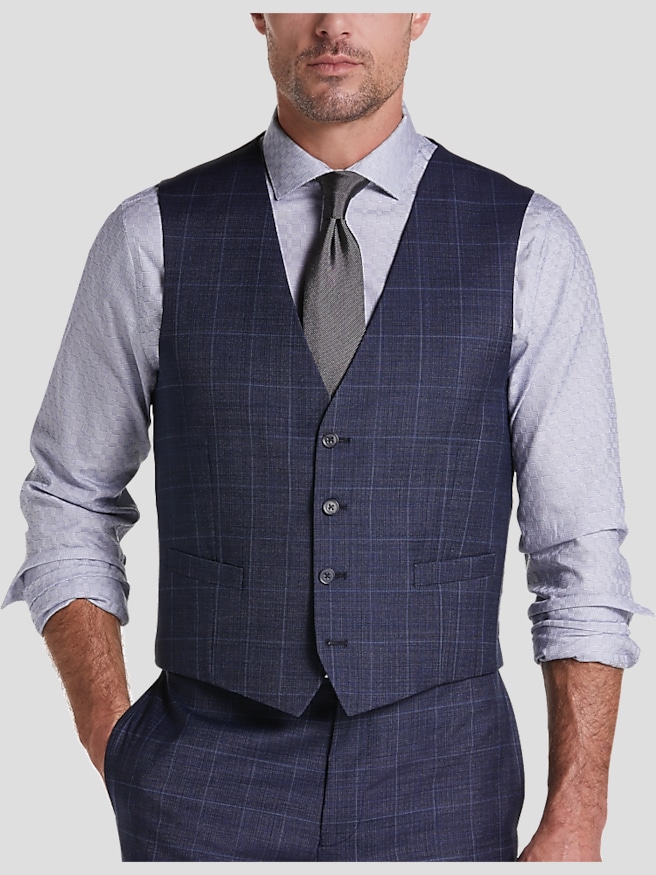
A vest under a suit adds a tailored layer between the dress shirt and jacket, creating the composed look associated with a three-piece suit. Also called a waistcoat, a suit vest defines the torso, covers the shirt at the waist, and keeps an outfit looking finished when the jacket is open or removed. A traditional three-piece suit uses a jacket, vest, and trousers made from the same fabric, while a contrasting vest introduces a separate color or texture. Both approaches have a place in a dress wardrobe, but they create distinct impressions. Matching cloth gives the outfit an uninterrupted appearance, particularly in photographs or settings where a polished presentation matters. Contrast draws attention to the center of the outfit and can make an existing suit feel more personal. Navy, charcoal, and medium gray provide versatile foundations, with subtle patterns adding interest without competing with a shirt and tie. For a wedding ceremony, a coordinated vest can help establish a consistent look across the wedding party. For a presentation, anniversary dinner, or formal reception, it adds definition without relying on bold accessories. The shape of the neckline also influences the overall effect: a higher opening reveals less shirt, while a deeper opening gives a tie more room to show. Single-breasted designs generally create a straightforward line down the front, whereas double-breasted designs add overlap and a more pronounced tailored presence. Neither shape needs excessive decoration to look distinctive. Button placement, pocket details, and the relationship between the vest opening and jacket lapels often do more to establish character than an elaborate pattern. The most successful combinations look connected from shoulder to shoe, with the vest supporting the suit rather than appearing to belong to an unrelated outfit. That balance makes the category useful for men building a dress wardrobe as well as those adding another option for important occasions.
Fit determines whether a suit vest looks integrated or feels like an extra layer squeezed beneath a jacket. A well-fitting vest follows the torso without pulling across the chest, and the buttoned front lies smoothly rather than forming horizontal strain lines. Armholes should sit close enough to avoid large gaps while leaving room for comfortable movement. At the waist, the vest should overlap the trouser waistband so that a band of shirt does not interrupt the outfit when standing naturally. Trouser rise affects that relationship, which is why vest length makes the most sense when considered alongside the trousers it will accompany. A back adjustment can refine the waist, but it cannot fully correct a chest or shoulder fit that is too large. The jacket needs enough room to settle over both the shirt and vest without bunching at the sides or tightening through the middle. For someone who spends part of an event seated at a dinner table or moving between conversations, that ease matters as much as the appearance in a fitting-room mirror. Fabric contributes to the result, too. Wool is valued for its drape and resilience, making it a dependable choice for structured tailoring. Wool blends can offer a range of textures and performance characteristics, depending on their composition and construction. Cotton and linen bring a less formal surface, while fabrics with a pronounced sheen create a dressier effect that needs thoughtful coordination with the jacket. A smooth lining can help the vest move over a shirt, and a lining-backed design may sit differently beneath a jacket than one made with matching fabric across the back. Fabric weight and texture should feel compatible with the suit rather than noticeably heavier or more casual. When an exact match is the goal, color alone is not enough: weave, finish, and pattern scale all influence whether separate pieces read as a coordinated set. Two nearly matching shades can appear less intentional than a clear, restrained contrast.
The practical details of a vest become especially noticeable over repeated wear. Secure buttons, even stitching, smoothly finished buttonholes, and a lining that lies flat are useful signs of considered construction. Pockets contribute to the tailored appearance, though keeping their contents light helps preserve the front’s clean shape. A bulky phone or crowded pocket can distort an otherwise good fit and create an uneven line beneath the jacket. Care requirements depend on the fabric and internal construction, so the garment’s care label remains the best reference for cleaning and pressing. Machine washing is not appropriate for every vest, even when the outer fabric seems familiar. Between cleanings, allowing the garment to air out and gently removing surface dust with a suitable clothing brush can help maintain its appearance. Prompt attention to spills, careful storage, and avoiding prolonged compression also help protect the shape. Pressing deserves similar care because excessive heat or pressure can leave shine, flatten texture, or affect the lining. These considerations are particularly useful for a vest that will accompany the same suit through business functions, ceremonies, and dinners over several years. Styling choices can stay uncomplicated: a crisp shirt, a tie that sits neatly within the neckline, and restrained accessories allow the tailoring to remain the focus. Some traditional single-breasted vests are worn with the lowest button undone, although the cut and intended closure of the garment should determine whether that convention makes sense. A vest can also be a thoughtful gift for a graduate preparing for professional events, a partner marking an anniversary, or someone who enjoys dressing for special occasions. Accurate measurements and a clear sense of the recipient’s existing suits make that choice more personal and useful. When comparing Best Suit Vests, the meaningful distinctions are fabric compatibility, comfortable proportions, dependable construction, and a shape that works beneath the jacket. Together, those details give a familiar suit a more complete appearance without making the outfit feel overworked.